
What if the material you choose to protect your home today is the very thing that makes it look dated or damaged just five years from now? Deciding on Hardie plank vs vinyl siding is one of the most significant choices you'll make for your property's exterior. It's completely natural to feel anxious about siding warping in the summer heat or becoming a target for woodpeckers and pests. You want a home that stays beautiful and structurally sound without a constant list of maintenance tasks. At Window Galaxy, we believe your home is your most valuable asset, and you deserve an exterior that reflects that value.
In this guide, you'll discover the critical differences between fiber cement and vinyl siding to determine which material best protects your home's structural integrity. We'll look at how these materials perform under the 2026 building codes and the unpredictable weather patterns of the Northeast. You'll learn about fire resistance, long-term durability, and how to achieve maximum curb appeal. This overview provides the clarity you need to choose a solution that offers true peace of mind for decades to come.
Key Takeaways
- Compare the structural differences of Hardie plank vs vinyl siding to see how fiber cement and insulated vinyl provide unique protection for your home's structural integrity.
- Learn how to combat the harsh Northeast freeze-thaw cycle with materials specifically engineered for regional weather patterns in NJ, NY, and PA.
- Identify which siding options offer the best fire resistance and impact durability to safeguard your family and your property's long-term value.
- Discover why meticulous project management and professional installation are essential for maintaining your siding's warranty and aesthetic appeal.
Understanding Siding Materials: Fiber Cement vs. Vinyl
Choosing the right exterior involves more than just picking a color from a catalog. The decision between Hardie plank vs vinyl siding depends on understanding how these materials are engineered to perform in the real world. In 2026, siding technology has moved far beyond simple plastic or heavy boards. Modern solutions focus on structural integrity and energy efficiency. The thickness of the material is a major factor in this evolution. Thicker siding creates deeper shadow lines, which gives your home a high-end, architectural look that thinner, builder-grade materials simply can't match. These shadow lines define the character of your home and prevent the flat, "plastic" appearance that many homeowners want to avoid.
What is Fiber Cement Siding?
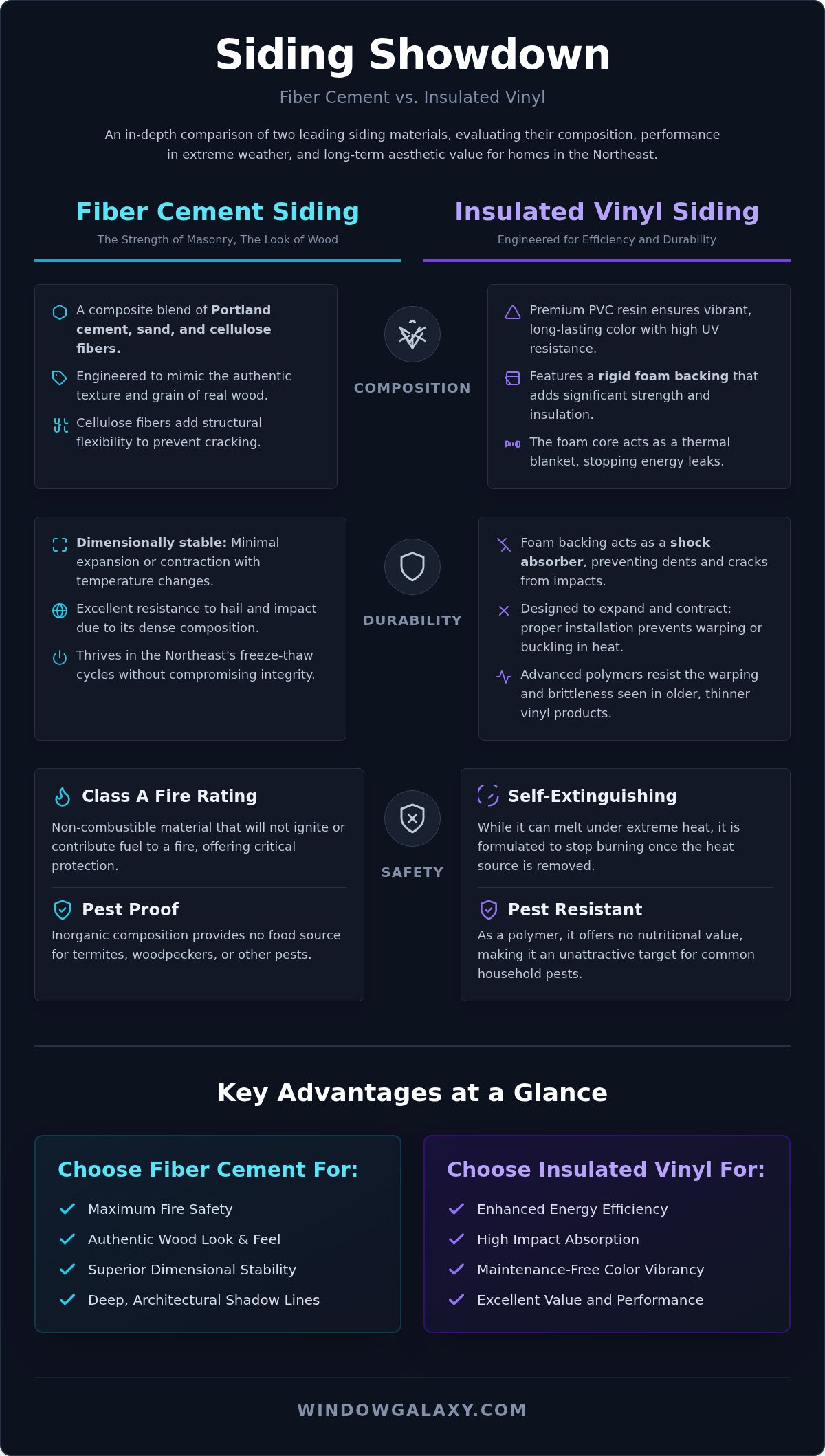
Fiber cement siding is a composite material made from a precise mixture of Portland cement, sand, and cellulose fibers. This unique blend provides the structural flexibility needed to prevent cracking while maintaining the weight and feel of real masonry. It's designed to mimic the authentic texture and grain of wood so closely that it's often difficult to tell the difference from the curb. The cellulose fibers are the secret to its resilience, as they allow the boards to handle the physical stresses of the Northeast climate. Because it's primarily made of sand and cement, it's classified as a non-combustible material. This provides a significant safety benefit for homeowners who prioritize fire resistance and long-term structural protection.
The Rise of Insulated Vinyl Siding
Not all vinyl is created equal. While standard vinyl can feel flimsy and thin, vinyl insulated siding is engineered with a rigid foam backing that changes the performance entirely. This foam core acts like a thermal blanket for your home, filling the gaps between the siding and the wall to stop energy leaks. It also significantly improves impact resistance. When a stray baseball or a heavy hailstone hits insulated vinyl, the foam backing absorbs the energy to prevent dents or cracks. High-quality PVC resin is used in these premium lines to ensure the color stays vibrant despite years of heavy UV exposure. Window Galaxy focuses on these advanced insulated variants because they offer a much sturdier feel and better energy performance than traditional, non-insulated options. You get the benefit of a maintenance-free material that doesn't sacrifice strength or home comfort.
Durability and Performance in Extreme Weather
Northeast weather is a true test for any home exterior. From humid summers in New Jersey to freezing winters in Pennsylvania, your siding needs to handle extreme temperature swings without failing. When comparing Hardie plank vs vinyl siding, the primary difference lies in how these materials react to the environment. Durability isn't just about strength. It's about how a material maintains its shape and protective qualities over decades of seasonal cycles. Window Galaxy USA focuses on selecting materials that thrive in our specific regional climate.
Vinyl siding is a polymer, which means it naturally expands and contracts as temperatures change. It needs room to "breathe" on your walls. If it's installed too tightly, it can buckle or warp during an intense heatwave. Modern insulated vinyl from Window Galaxy USA uses advanced polymers and a foam core to resist the warping often associated with older, thinner products. Hardie plank is dimensionally stable. It doesn't move much at all, which helps your paint finish stay intact for much longer. When hail or stray branches hit your home, Hardie's density provides excellent impact resistance. However, the foam backing on insulated vinyl acts as a shock absorber, protecting the outer shell from cracking or denting.
Pests are another major concern that keeps homeowners up at night. Woodpeckers and termites can destroy traditional wood siding in a matter of months. Because neither fiber cement nor vinyl is organic, they don't provide a food source for insects or an attractive drumming surface for birds. To prevent moisture issues like rot or mold, Window Galaxy USA focuses on the entire wall system. We ensure a high-quality house wrap is used behind the panels to allow moisture to escape while keeping the elements out. This comprehensive approach is what ensures your home remains structurally sound.
Fire Resistance and Safety Standards
Hardie plank carries a Class A fire rating. This means the material won't ignite or contribute fuel to a fire, providing a critical layer of protection for your family. While vinyl siding will eventually melt when exposed to extreme heat, it is generally formulated to be self-extinguishing once the heat source is removed. Choosing non-combustible materials is a smart move in high-density areas where homes are built closer together. Many homeowners find that the long-term safety benefits of fiber cement provide significant peace of mind.
Wind and Storm Resilience
Nor'easters bring high winds that can peel inferior siding right off a house. Window Galaxy USA uses specific fastening systems designed to keep every panel secure even in gale-force conditions. Hardie is heavy and rigid, which makes it less likely to rattle or vibrate during a storm. Insulated vinyl is lighter but utilizes a reinforced interlocking hem system to stay locked in place. If you aren't sure which material fits your local wind zone, our team can help you choose the most resilient siding for your specific neighborhood.
Maintenance Requirements and Aesthetic Longevity
Every homeowner dreams of an exterior that stays beautiful without a weekend full of chores. When evaluating Hardie plank vs vinyl siding, the term "low maintenance" gets used frequently, but it means something different for each material. In the Northeast, humidity and seasonal pollen can leave a film on any surface. Keeping your home's curb appeal high requires a basic understanding of how these finishes react to the environment and what they need from you over the next twenty years. A proactive approach ensures your home looks as good in a decade as it does the day the project is completed.
The Maintenance Life Cycle of Hardie Plank
Hardie plank is famous for its durability, but it does require occasional attention to stay in peak condition. Most modern installations use factory-applied finishes like ColorPlus Technology. This finish is baked onto the boards, providing a vibrant look that resists UV fading much better than on-site paint. Based on current manufacturer data, these finishes carry a 15-year limited warranty against peeling or cracking. You won't need to repaint every five years. However, you should inspect the caulking around windows and joints every few seasons. Maintaining these seals is the best way to prevent moisture from sneaking behind the boards. When it's time for a clean, skip the high-pressure power washer. A garden hose and a soft brush with mild soap are all you need to remove dirt without damaging the finish.
The Hands-Off Appeal of Insulated Vinyl
If you want a truly hands-off experience, vinyl insulated siding is the clear winner. The color is integrated throughout the PVC material, so there's no paint to chip, flake, or peel. You'll never have to pick up a paintbrush or hire a staining crew. This material is also incredibly easy to clean. Most dirt simply washes away during a heavy rainstorm; a quick rinse once a year keeps it looking fresh. Beyond the surface, the rigid foam backing provides a hidden maintenance benefit. It adds structural support to the panels, which eliminates the annoying rattling sounds that older, non-insulated siding often makes during windy nights. To keep your vinyl looking brand new, avoid leaning heavy objects against it and keep heat sources like grills at a safe distance. Window Galaxy ensures every installation accounts for these lifestyle factors, giving you a beautiful home that works for you, not the other way around.
Regional Resilience: Siding for the Northeast Climate
Every region has its challenges, but the Northeast is particularly demanding on a home's exterior. When weighing Hardie plank vs vinyl siding, homeowners in New Jersey and Pennsylvania must account for the relentless freeze-thaw cycle. During winter, moisture can seep into porous materials, expand as it turns to ice, and cause structural damage. Fiber cement's density resists this expansion well because it's engineered to be dimensionally stable. Vinyl doesn't absorb water at all, which protects it from internal ice damage, though it must remain flexible enough to handle the deep cold without becoming brittle. Window Galaxy selects specific product lines that are tested for these exact temperature swings to ensure your home stays protected year-round.
Combating Humidity and Salt Air
For those living near the Jersey Shore or in coastal areas like South Amboy, salt air is a constant factor. Salt is naturally corrosive and can eat away at traditional wood or metal finishes. Fiber cement is often the preferred choice for coastal properties because it's heavy enough to withstand high wind loads and doesn't rot when exposed to high humidity. However, insulated vinyl provides an excellent barrier against salt-induced corrosion because PVC is chemically inert. In our experience working throughout South Amboy and surrounding coastal towns, the choice often comes down to the specific wind zone of the property. Both materials offer a significant upgrade over older wood siding that requires constant scraping and painting to fight off the salt air's effects.
Thermal Performance and Energy Savings
The 2025 Energy Conservation Construction Code of New York State, which became fully effective in 2026, places a heavy emphasis on the building envelope. This is where the "R-value" of your siding becomes a critical data point. Standard siding allows for thermal bridging, where heat escapes through the wooden studs in your walls. Vinyl insulated siding stops this heat loss by adding a continuous layer of rigid foam insulation. While fiber cement is a thicker material, it doesn't offer the same thermal resistance as a foam-backed vinyl panel. Upgrading your exterior with insulated siding complements a professional window replacement to create a fully sealed, high-efficiency building envelope. This combination significantly reduces the strain on your HVAC system during humid summers and freezing winters alike. If you're ready to see how these materials perform on your specific property, you can schedule a home exterior consultation with our regional experts today.
Professional Siding Installation with Window Galaxy
The debate between Hardie plank vs vinyl siding often focuses on the boards themselves, but the installation is the true deciding factor for long-term performance. Even the highest-rated fiber cement or insulated vinyl will fail if it's not fastened according to exact engineering standards. Window Galaxy bridges the gap between premium material quality and flawless execution. We view ourselves as your project partners, ensuring that every detail of the building envelope is handled with accuracy and attention to detail. Our goal is to alleviate the stress of home improvement by providing a managed, transparent experience from start to finish.
The Window Galaxy Installation Process
Our commitment to quality starts long before the first panel is installed. We begin with a comprehensive assessment of your home's exterior to identify any underlying issues, such as wood rot or moisture damage, that must be addressed first. This meticulous approach prevents future problems and ensures a stable foundation for your new siding. Once the work begins, a dedicated project manager oversees the entire timeline. This manager serves as your primary point of contact, facilitating the two-way dialogue that is a signature of our service. We don't just give updates; we listen to your concerns and answer your questions in real-time. Our process includes:
- A detailed site preparation to protect your landscaping and property.
- Precision fastening that accounts for thermal expansion in vinyl or the weight of fiber cement.
- Ongoing quality checks by our management team during every phase of the installation.
- A comprehensive final walkthrough to ensure every joint and seal meets our high standards.
Choosing Your Partner for Home Improvement
Trust is built through reliability and consistent follow-through. Our team is recognized for its punctuality and interpersonal respect, arriving on time and maintaining a clean, organized job site. This professional demeanor helps you feel confident and relaxed throughout the project. Because we specialize in a range of exterior solutions, many homeowners who choose us for siding also rely on us for custom windows to ensure their entire home is energy-efficient and visually cohesive. If you're ready to begin your exterior transformation, use this final checklist to prepare:
- Confirm your dedicated project manager's preferred contact method.
- Trim back any shrubs or trees that are touching the current siding.
- Ensure outdoor pets are secured and gates are accessible for the crew.
- Identify an outdoor power outlet for the installation team to use.
Flawless execution is our promise to you. We're committed to your total satisfaction and look forward to helping you protect your home's value for decades to come.
Protect Your Home with a Lasting Exterior Transformation
Choosing between Hardie plank vs vinyl siding is a major step in securing your home's future value. Whether you prefer the non-combustible durability of fiber cement or the maintenance-free insulation of premium vinyl, your decision will define your home's character for years. You now have the insights needed to select a material that stands up to the harsh Northeast freeze-thaw cycles while providing the curb appeal you've always wanted. The right material is only half the battle; professional installation ensures your investment is protected by a valid warranty and flawless execution.
At Window Galaxy, we take pride in our dedicated project management and A-rated customer communication. Our team brings deep expertise in Northeast climate resilience to every project, ensuring your new siding performs perfectly in local weather. We believe in a partnership approach where your peace of mind is our highest priority. You deserve a stress-free experience and an exterior that looks beautiful for decades. Schedule your professional siding consultation with Window Galaxy today to begin your home's transformation. We're excited to help you build a home that is as resilient as it is stunning.
Frequently Asked Questions
Is Hardie plank better than vinyl siding for fire protection?
Hardie plank offers superior fire protection because it is a non-combustible material with a Class A fire rating. This means it won't ignite or contribute fuel to a fire, which is a critical safety benefit for homes in high-density areas. While premium vinyl siding is formulated to be self-extinguishing, it can still melt when exposed to high-heat sources. Choosing fiber cement provides an extra layer of structural security for your family.
Does insulated vinyl siding really help with energy bills?
Vinyl insulated siding significantly improves energy efficiency by adding a continuous layer of rigid foam to your home's exterior. This foam core stops thermal bridging, which is the process where heat escapes through the wooden studs in your walls. By reducing the strain on your HVAC system, this material helps maintain a consistent indoor temperature year-round. It's an excellent choice for homeowners in NY and CT looking to meet 2026 energy codes.
Can Hardie plank siding be installed over existing siding?
We don't recommend installing Hardie plank over existing siding. For a professional result, the old material must be removed so our project managers can inspect the wall's structural integrity for rot or moisture damage. A clean, flat substrate is necessary for fiber cement boards to lay correctly and stay secure. This thorough approach ensures your new exterior performs as intended and maintains its full manufacturer warranty coverage.
How often does vinyl siding need to be cleaned?
You should typically clean your vinyl siding once a year to remove seasonal pollen, dirt, and dust. Most debris can be rinsed away with a standard garden hose. For stubborn spots, a soft-bristled brush and a mixture of mild soap and water are usually sufficient. Avoid using high-pressure power washers, as they can force water behind the panels. This simple maintenance routine keeps your home looking fresh without the need for painting.
Which siding material adds more value to a New Jersey home?
Both options add significant value, but the choice between Hardie plank vs vinyl siding often depends on your specific neighborhood and long-term goals. Hardie plank is frequently sought after in upscale New Jersey markets for its authentic wood-like appearance and fire resistance. Conversely, insulated vinyl is highly valued for its energy performance and maintenance-free lifestyle. Window Galaxy helps you evaluate local trends to choose the material that offers the best return.
Is fiber cement siding waterproof?
Fiber cement siding is highly water-resistant but not completely waterproof. It is designed to withstand heavy rain and humidity without rotting or warping, but it must be installed correctly with proper flashing and caulking. The factory-applied finishes and sealed joints prevent moisture from penetrating the boards. Our meticulous installation process includes a high-quality house wrap to ensure any incidental moisture can escape the wall system without causing internal damage.
How long does it take for Window Galaxy to install new siding?
Most residential siding projects are completed within one to two weeks, though the exact timeline depends on the size and complexity of your home. Your dedicated project manager will provide a specific schedule during the initial assessment phase. We prioritize efficiency and punctuality to minimize disruption to your daily routine. Throughout the process, we maintain clear, two-way communication so you always know exactly what to expect from our installation team.
What happens if my siding is damaged by a storm?
If a storm damages your home, you should contact Window Galaxy for a professional assessment as soon as possible. We'll inspect the area to determine if a simple panel replacement is sufficient or if the underlying house wrap has been compromised. Hardie plank is exceptionally impact-resistant against hail, while insulated vinyl uses its foam backing to absorb shocks. Our team is experienced in regional storm resilience and will ensure your home is restored quickly.


