
More pressure doesn’t mean a cleaner finish. If you’re wondering how to clean james hardie siding without damaging it, start gently and follow the care guidance for your specific siding. It’s understandable to hesitate if you’re unsure whether a mark is ordinary dirt, mildew, or something that needs professional attention.
A careful clean can remove everyday dirt while helping protect the siding and nearby surfaces. Start with a garden hose and a soft, non-metal brush or cloth. For stubborn marks, check the guidance for your product before trying another method. Avoid reaching for harsh chemicals or abrasive tools.
This guide covers a manageable cleaning process, ways to approach dirt, grease, and suspected mildew, and methods to avoid, including high-pressure washing. It also explains when to stop rather than scrub harder, especially if a stain persists or the siding appears damaged.
Window Galaxy USA offers Hardie plank siding and siding installation services. Knowing how to care for your home’s exterior can help you recognize when a cleaning question may instead call for siding advice.
Key Takeaways
- Learn how to clean james hardie siding with a gentle, step-by-step approach guided by the care instructions for your specific siding.
- Match your next step to what you see: ordinary dirt, suspected biological growth, and persistent discoloration may need different approaches.
- Understand why abrasive tools, harsh cleaners, and assuming pressure washing is suitable can put the siding finish at risk.
- Know when to stop cleaning, document recurring marks or visible changes, and seek qualified siding advice.
- If cleaning reveals damage or raises questions about your exterior, Window Galaxy offers Hardie plank siding and siding installation services.
Why James Hardie Siding Needs a Careful Cleaning Approach
Cleaning siding without harming its finish is a reasonable concern. James Hardie siding refers to fiber-cement siding made by James Hardie. The manufacturer’s care instructions are the best place to confirm what’s suitable for your particular product and finish. For background on the company, see James Hardie Industries.
A gentle approach keeps routine surface cleaning within clear limits. Gentle siding cleaning means removing suitable surface dirt with tools and products permitted by the manufacturer, without using force or methods that could damage the finish. This guide focuses on routine care, not repairs or repainting. Cleaning also can’t guarantee that every stain will come out.
What routine cleaning can and cannot do
When performed according to the care guidance for your siding, routine cleaning may remove surface dirt and debris. It won’t repair cracks, loosened boards, or other damage, and washing can’t fix an underlying source of moisture. If a mark keeps returning or appears alongside visible deterioration, pause and seek advice rather than scrubbing more aggressively.
That distinction matters when deciding how to clean james hardie siding. The goal is to address suitable surface soil, not to make damaged or persistently stained siding look new through increasingly forceful cleaning. Results depend on the siding’s condition and the type of mark, so don’t assume every discoloration will respond to routine washing.
Check the siding and the care instructions first
Before choosing a brush, cloth, or cleaning product, try to identify the siding product and finish. Installation records or homeowner documents may help. Then review the current manufacturer care guidance for that specific material. Instructions can vary by product or finish, so don’t assume a method that worked on another exterior surface is suitable here.
If the siding looks loose, cracked, or visibly damaged, postpone DIY cleaning in that area. Water or scrubbing may complicate an existing problem, and cleaning isn’t a substitute for assessing damage. Note what you see and where it appears. If you need to discuss siding options, Window Galaxy offers Hardie plank siding and siding installation services. Checking the product and its care instructions first gives you a clearer basis for deciding whether routine cleaning is appropriate.
How to Clean James Hardie Siding Step by Step
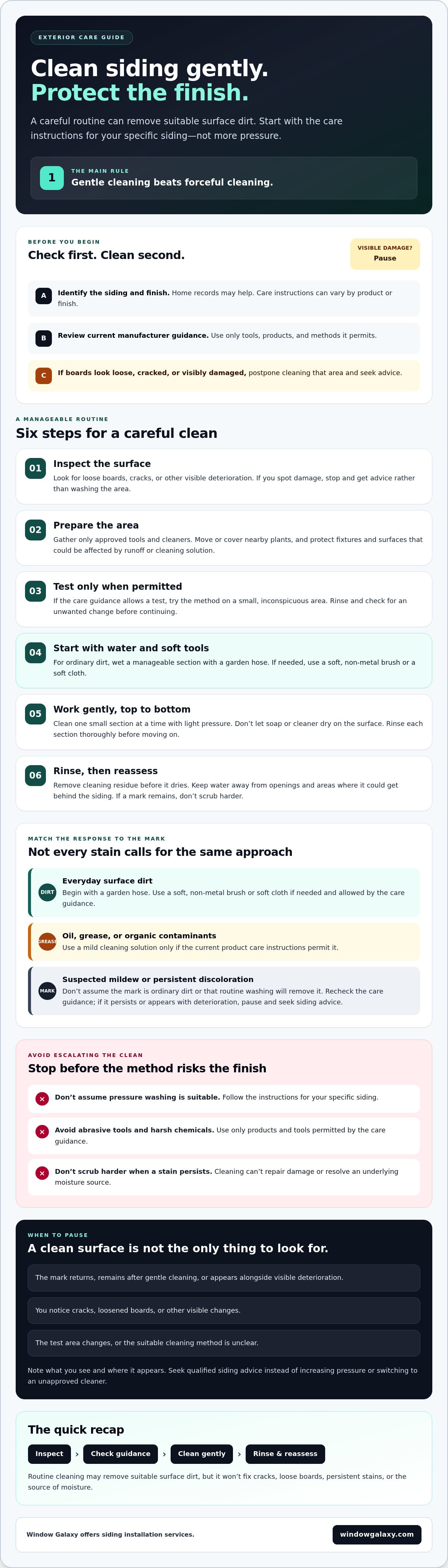
A simple routine makes cleaning easier to manage: inspect first, follow the care instructions for your siding, and use a gentle method. James Hardie’s general cleaning guidance favors a garden hose and a soft, non-metal brush or soft cloth. Product-specific instructions take priority, especially if your siding has a particular finish.
- Inspect the siding. Look for loose boards, cracks, or other visible deterioration before you start. If you spot damage, pause and get advice rather than washing the area.
- Check the care guidance and prepare. Identify the product and finish using available home records, then review the current manufacturer instructions. Gather only tools and cleaners those instructions allow. Move or cover nearby plants and protect fixtures and surfaces that could be affected by runoff or cleaning solution.
- Test only if permitted. If the manufacturer’s guidance allows a product or method test, try it on a small, inconspicuous area. Check the siding after rinsing. Don’t clean the rest of the wall if the test area shows an unwanted change.
- Start with water and gentle tools. For ordinary dirt, wet a manageable section with a garden hose. Use a soft, non-metal brush or soft cloth if needed. For oil, grease, or another organic contaminant, use only a mild cleaning solution permitted by the current care instructions.
- Work from top to bottom. Clean one small section at a time to help limit streaking. Use light pressure, and don’t let soap or cleaner dry on the surface. Rinse each section thoroughly with the hose before moving on.
- Check the result. Look over the cleaned area and nearby surfaces. If the mark remains, don’t respond by scrubbing harder or switching to an unapproved product. Recheck the instructions and consider seeking siding advice.
Keep the rinse controlled. Avoid directing water into openings or areas where it could get behind the siding. Follow any product-specific rinsing directions, and make sure cleaning residue is removed before it dries.
In short: inspect the siding, confirm the approved method, test only when permitted, clean gently in small sections from top to bottom, then rinse and check the surface.
If cleaning reveals damage or leaves you unsure about the siding’s condition, Window Galaxy offers Hardie plank siding services and siding installation.
How to Handle Dirt, Mildew, and Stains on James Hardie Siding
A mark on siding doesn’t always reveal what caused it. Dust and ordinary dirt may lift with gentle surface cleaning, while a dark or recurring patch may need a closer look. Use the table as a guide to what you can do next, not as a way to diagnose mold, algae, or a moisture problem by appearance alone.
| What you notice | Careful next step | When to pause |
|---|---|---|
| Loose dirt or dust on the surface | Start with the least aggressive method allowed by the care instructions for your specific siding product, such as water and a soft, non-metal brush or cloth. | Stop if the finish changes or the method raises concern. |
| Dark, greenish, or patchy areas that might be biological growth | Don’t assume the appearance confirms mildew or algae. Check current product-specific instructions before using any cleaner. | Seek qualified advice if the area persists, returns, or appears alongside visible damage. |
| Discoloration that remains after suitable cleaning | Record where it appears and how it changes. Avoid escalating to a stronger product or more forceful scrubbing without checking the manufacturer’s guidance. | Pause if the cause is unclear or the stain is recurring. |
When ordinary dirt is the main concern
Surface dirt is the best place to begin with a gentle, manufacturer-approved method. Follow the care instructions for your product and finish, and use only permitted tools and cleaners. If the area looks different after cleaning or you’re unsure about the result, stop rather than scrubbing harder. Keep cleaning within the siding’s care guidance instead of experimenting with increasingly aggressive methods.
When discoloration or suspected mildew remains
A stain’s color or shape alone can’t confirm what caused it. Before applying a cleaner, check whether current instructions for your specific siding allow that product and explain how to use it. Don’t use bleach, solvents, or other chemicals unless those instructions permit them. If discoloration remains, reappears, or is near cracked or deteriorated siding, pause DIY efforts and ask a qualified professional to assess it.
That’s a practical boundary for how to clean james hardie siding: address ordinary surface dirt gently, but don’t guess at the cause of persistent marks or keep escalating the cleaning method. Note the location and appearance of recurring stains so you can describe what you’ve observed when seeking siding advice.
Cleaning Methods to Avoid and Signs to Stop
A cautious cleaning plan includes knowing what not to try. The care instructions for your specific James Hardie siding and finish should guide every choice, from the brush you use to any cleaner you apply. A method that seems effective on another exterior surface may not be suitable here.
Why high pressure and harsh cleaners need caution
Don’t assume pressure washing is appropriate. James Hardie’s general guidance favors a garden hose and does not recommend high-pressure washing because it can damage the siding surface. Check the current instructions for your specific product rather than relying on a pressure setting or technique found elsewhere.
Abrasive pads, hard metal brushes, and harsh chemicals can also put the finish at risk. Start with the mildest method permitted by the manufacturer, and use a cleaning product only when the product-specific instructions allow it. Don’t mix cleaners or increase their strength to tackle a stubborn mark. If the guidance is unclear, pause and seek qualified advice before proceeding.
When to stop and ask for help
Stop cleaning if you notice a change in the siding’s appearance or condition, or if water seems to be entering an opening or wall area. Don’t keep scrubbing a stain that persists after an approved, gentle attempt. The mark may need assessment rather than a stronger cleaner, and its appearance alone can’t establish the cause.
- Cracks or loose sections: Don’t wash or scrub the affected area. Ask a qualified professional for advice.
- Visible deterioration: Pause if the surface appears damaged or changes during cleaning.
- Possible water entry: Stop if water appears to be getting behind the siding or through an opening.
- Persistent or recurring stains: Note where they appear and seek advice instead of escalating to unapproved products or tools.
- Unclear care instructions: Hold off until you can confirm which methods are suitable for your siding and finish.
A useful rule for how to clean james hardie siding is to stop when the approved method doesn’t resolve the concern or when the surface gives you a reason to doubt that cleaning is safe. If you’ve found visible damage or need to discuss siding options, explore Window Galaxy’s Hardie plank siding services.
Keep James Hardie Siding Clean and Know When to Contact Window Galaxy
Once the surface is clean, occasional visual checks can help you notice changes and decide what to do next. There’s no need to adopt a universal cleaning calendar. Follow the care instructions for your specific product and finish, and let what you observe guide whether routine cleaning is appropriate.
A simple maintenance routine for homeowners
As part of caring for your home’s exterior, look over the siding from the ground for visible dirt buildup, discoloration, cracks, loose sections, or other changes. You don’t need to diagnose the cause. Note what you see, where it appears, and whether it returns after cleaning. A brief written record or photo can help you describe the concern clearly if you seek advice later.
Keep your notes specific. For example, record whether a mark appears in the same place each time, whether it has changed, and whether nearby siding looks damaged. This information can make a conversation with a qualified professional more useful. Continue to rely on the manufacturer’s current care instructions rather than setting a cleaning frequency that may not suit your product or finish.
When siding advice or replacement may be relevant
Ordinary surface dirt and visible deterioration call for different next steps. A mark that remains after an approved cleaning method, recurring discoloration, cracked boards, or loose sections shouldn’t automatically prompt stronger scrubbing. Pause, note the condition, and seek qualified advice if you’re unsure whether cleaning is suitable or whether the siding needs further attention.
If the siding is visibly deteriorated, cleaning alone won’t address that condition. Depending on what a qualified assessment finds, siding work or replacement may be worth discussing. Window Galaxy offers Hardie plank siding and siding installation services. The company’s offerings don’t include siding cleaning, so contact Window Galaxy about its siding services if you’re considering installation or want to discuss siding options.
A thoughtful approach to how to clean james hardie siding includes knowing when routine care is enough and when a concern deserves another look. Keep track of recurring marks and changes, and follow product-specific guidance before cleaning again. To learn more about available options, explore Window Galaxy siding services.
Keep Your Siding Careful and Your Next Steps Clear
The safest approach to how to clean james hardie siding is to follow the current care guidance for your specific product and finish, start with a gentle approved method, and stop if you notice damage or persistent staining. Regular visual checks can help you track changes without relying on a fixed cleaning schedule or trying to diagnose marks by appearance alone.
If cleaning leaves you concerned about the siding’s condition, note what you’ve seen and seek qualified advice. Window Galaxy offers Hardie plank siding and siding installation services for homeowners in New Jersey and surrounding states. Explore the options available for your home’s exterior, without assuming that cleaning or inspection services are offered.
Explore Window Galaxy siding services and take the next step with confidence. Careful attention today can help you make a more informed decision about your home’s exterior.
Frequently Asked Questions
How do you clean James Hardie siding safely?
Use a garden hose with a soft, non-metal brush or soft cloth, following the current care instructions for your siding product and finish. Start with water for ordinary dirt, work in manageable sections from top to bottom, and rinse thoroughly before any cleaner dries. Check the instructions before trying a cleaning product, and stop if you notice damage or an unexpected change in the siding’s appearance.
Can you use a pressure washer on James Hardie siding?
High-pressure washing is not recommended in James Hardie’s general care guidance because it can damage the siding surface. A garden hose is the preferred approach for routine cleaning. Don’t assume a pressure washer is suitable just because it has adjustable settings. Check the current instructions for your specific product and finish before considering one, and avoid using it if the manufacturer’s guidance doesn’t permit it.
What cleaner can you use on James Hardie siding?
Water is generally sufficient for ordinary dirt. For oil, grease, or other organic contaminants, James Hardie’s general guidance recommends mild liquid dishwashing soap mixed with water. Use a cleaner only if the current care instructions for your specific product and finish allow it. Avoid abrasive tools and harsh chemicals unless the manufacturer explicitly permits them, and rinse the surface thoroughly so residue doesn’t dry on the siding.
How do you remove mildew from James Hardie siding?
First, don’t assume a dark or patchy mark is mildew based on appearance alone. Check the current manufacturer instructions for your siding product before applying a cleaner. If those instructions permit a commercial mildew cleaner, follow its label directions, gently treat the area with a soft cloth or sponge, and rinse thoroughly. If the mark persists, returns, or appears near damaged siding, stop and seek qualified advice.
How often should James Hardie siding be cleaned?
James Hardie recommends cleaning its siding every 6 to 12 months to remove dirt and debris, according to the provided current care guidance. Your product’s instructions should guide your maintenance routine, since recommendations may vary by product or finish. Between cleanings, periodic visual checks can help you notice dirt buildup, discoloration, or visible damage. Don’t clean more aggressively or more often than the applicable instructions recommend.
What should you do if cleaning does not remove a stain?
Stop rather than scrubbing harder or switching to a stronger, unapproved cleaner. Note the stain’s location and appearance, and check the care instructions for your specific siding and finish. A persistent or recurring mark may need assessment; its appearance alone can’t confirm the cause. If you also see cracks, loose sections, or deterioration, avoid further cleaning in that area and ask a qualified professional for advice.
Can James Hardie siding be damaged during cleaning?
Yes. Abrasive sponges, hard metal brushes, harsh chemicals, and high-pressure washing can damage the siding or its finish if used improperly. Follow the current manufacturer instructions for your particular product, and choose only permitted tools and cleaners. Use a gentle method and stop if the surface changes, appears damaged, or raises concern. Cleaning can remove suitable surface dirt, but it can’t repair damaged siding or resolve moisture issues.


