

Yes, energy efficent vinyl windows can help improve home comfort and energy performance. Compare the window’s U-factor, where a lower number means better insulation, and its Solar Heat Gain Coefficient (SHGC), which indicates how much solar heat enters the home. The right balance depends on your climate and how much sun the windows receive.
Look beyond the frame: glass, installation quality, and the fit of each window also affect performance. This guide explains how vinyl frame cavities help insulate, how to read U-factor and SHGC, and what can influence utility-bill savings. It also considers how replacement windows may support a home’s appeal and long-term value, while clarifying that energy efficiency is only one part of a resale decision.
Key Takeaways
- Compare U-factor and SHGC to understand how a window insulates and manages solar heat for your home’s conditions.
- Use the NFRC label to review key performance measures, including air leakage and visible transmittance.
- Look beyond the glass: vinyl frame cavities and a close-fitting installation also influence comfort and efficiency.
- ENERGY STAR estimates that upgrading to energy-efficient windows can reduce U.S. homeowners’ utility bills by 13%, though results depend on the home, climate, and existing windows.
- Replacement windows can support a home’s appeal and resale prospects, but their value isn’t necessarily a dollar-for-dollar return.
1. Are Vinyl Windows Energy Efficient?
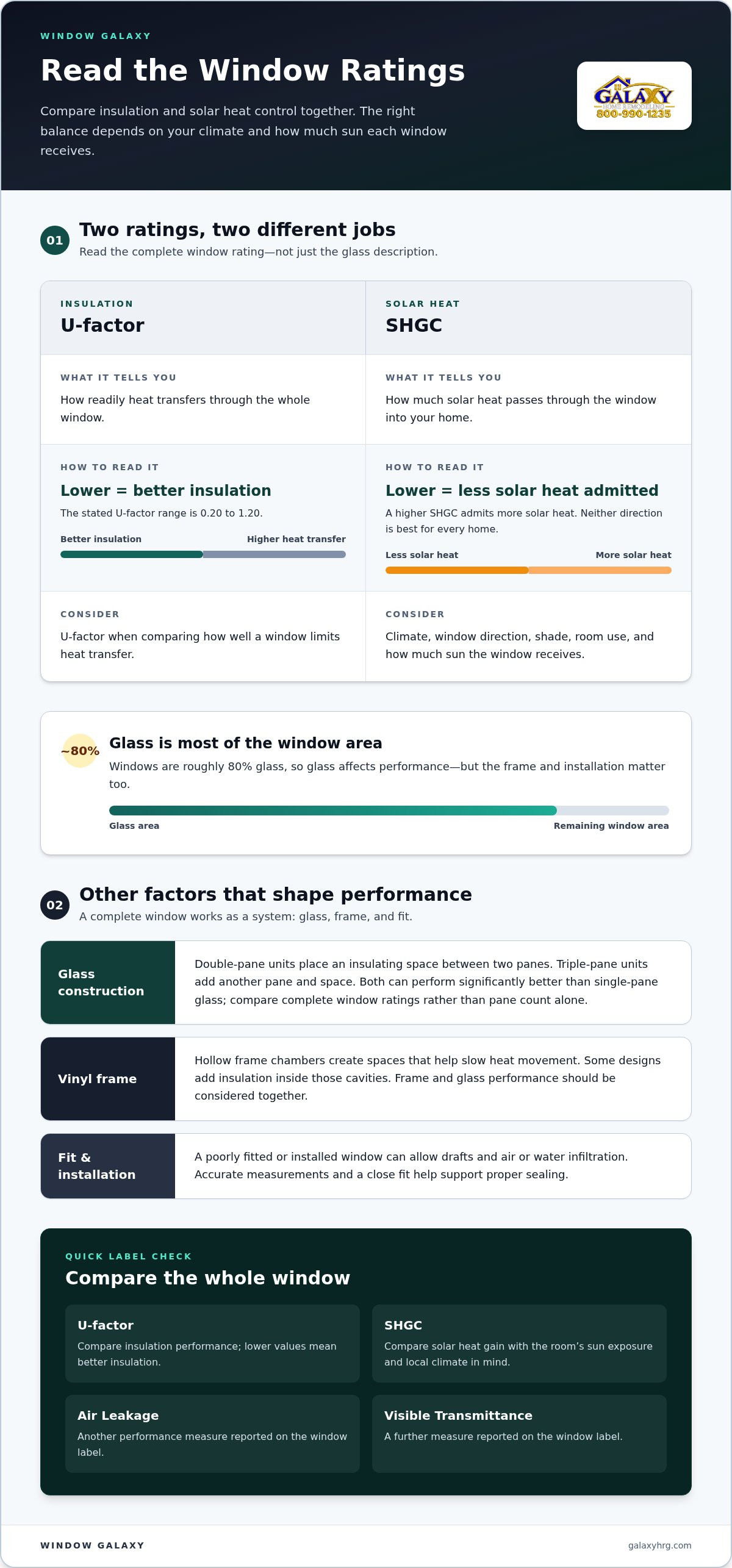
Yes, energy-efficient vinyl windows can reduce heat transfer when the glass, frame, and installation work together. Vinyl’s insulating frame can limit heat flow, while insulated glass helps manage heat passing through the largest window area. For a practical comparison, read the NFRC label: it reports U-factor, Solar Heat Gain Coefficient, Air Leakage, and Visible Transmittance. U-factor ranges from 0.20 to 1.20, and a lower value indicates better insulation.
Glass matters because windows are roughly 80% glass. Double-pane units separate two panes with an insulating space, while triple-pane units add another pane and space. Both can perform significantly better than single-pane glass. Triple-pane options can be useful in colder climates, where a strong U-factor can help limit heat loss during winter. The best comparison is between complete window ratings, not pane count alone.
Low-E glass has a thin coating that changes how heat moves through the window. Regular glass lacks that coating, so the two options can perform differently. The coating alone doesn’t tell the whole story: compare each window’s NFRC figures, including U-factor and SHGC, and consider how the unit suits your climate. Low-E glass and triple-pane construction can appear together, but review the full rating rather than assuming every combination performs alike. Don’t judge a window by its glass description alone.
The frame, glass, and installation all affect performance. Even a well-rated window can allow drafts if it doesn’t fit the opening correctly. Poor installation can also allow air or water infiltration, contributing to discomfort, higher energy use, or leak damage. During replacement, accurate measurements at several points in the opening help achieve a close fit and proper sealing. Frame durability and construction matter too: a frame that loses its shape can weaken the seal over time.
To check federal tax-credit eligibility, review the Internal Revenue Service’s current guidance for qualifying window products and keep the product documentation needed to support a claim. Local rebates depend on the program, so review the official state, utility, or local program requirements. For any window, use its NFRC label to compare performance, then weigh that information alongside the glass type and installation quality.
2. Solar Heat Gain Coefficient (SHGC)
SHGC describes how much solar heat passes through a window into your home. A lower SHGC limits more incoming solar heat, while a higher one admits more. That difference matters for summer comfort and heating and cooling demand. Use the NFRC label to compare SHGC ratings for complete window units, rather than relying only on glass descriptions. Consider the home’s climate and each room’s sun exposure as well.
ENERGY STAR advises matching window performance to local conditions, including U-factor and solar heat gain. In a sunny, warm climate, reducing unwanted heat through sunlit windows can help rooms stay more comfortable. In a colder climate, solar heat entering through a window may be useful during winter. That’s why one SHGC target doesn’t suit every home. The right balance depends on local weather, window orientation, shade, and how each room is used.
New Jersey and surrounding Northeastern states offer a clear example: regional guidelines often recommend considering double-pane energy efficent vinyl windows with an SHGC below 0.30 or tailored ratings to meet local ENERGY STAR standards. Treat figures as regional benchmarks, not universal targets for every U.S. home. A homeowner in a different climate or seasonal zone should compare local conditions and window ratings instead of copying a mismatched city’s benchmark. The SHGC value helps show how a window handles solar heat, while U-factor describes heat transfer through the whole window.
Consider orientation before comparing options. A room with strong afternoon sun may gain unwanted heat, while a shaded window may face a different challenge. Exterior shade, nearby trees, and the direction a window faces all affect solar exposure. Note which rooms feel hottest and when, then compare SHGC values for candidate windows serving those rooms. This simple step connects a label value to everyday comfort.
SHGC is only one part of limiting unwanted heat transfer. Insulation, air sealing, and HVAC performance also affect comfort, so a window rating cannot explain every hot or cold room. Frame material matters too: aluminum has high thermal conductivity, while vinyl and advanced framing options help improve thermal performance. Compare the whole window’s ratings rather than judging its frame or glass in isolation.
For a practical review, group windows by room exposure, note the climate, and compare each NFRC label. Consider SHGC alongside U-factor, then weigh the home’s heating and cooling needs. These steps make window selection more precise than choosing a single rating for the entire house. If you’re weighing options for a replacement project, review window options with Galaxy Home Remodeling keeping the room’s exposure and comfort goals in mind.
3. Vinyl frame construction and insulation cavities
A vinyl window frame is made from polyvinyl chloride, or PVC. Its hollow chambers create spaces that help slow heat movement through the frame. Some designs add insulation inside these cavities for extra protection. This construction complements insulated pane glass, but the frame and glass perform as one complete window. When comparing replacement options, review the whole unit’s performance rather than assuming frame material alone determines efficiency.
Thermal conductivity describes how readily a material transfers heat. The International Association of Certified Home Inspectors describes vinyl as a better thermal insulator than wood or aluminum. Aluminum conducts heat readily, while thermal breaks can improve its thermal performance. Wood has natural insulating properties. These comparisons explain material behavior, but they don’t replace window ratings: compare the complete unit’s U-factor and other label values before choosing.
Vinyl’s cavities are a useful construction feature, but they don’t guarantee the same performance in every frame. Some designs include added insulation in the channels, providing another barrier to heat movement. Review the window’s rated performance alongside its frame construction. For example, when comparing two vinyl windows, look beyond their shared material and examine their overall ratings and how each suits the home’s needs.
Frame durability matters because a frame that buckles or sags can affect how the window fits. A compromised fit may increase the chance of air or water leaks. Low-quality vinyl frames are more vulnerable to this problem, so examine the frame’s construction and the full product rating. A properly fitting window supports the intended performance of its glass and frame. Installation matters too: gaps around a replacement unit can weaken the overall seal.
Vinyl frames don’t require the repainting or staining associated with some other materials, and they don’t rust like metal. Routine upkeep generally involves dusting or hand washing. This simpler maintenance helps homeowners keep frames clean without regular painting. Consider the home’s exposure and your maintenance preferences alongside energy performance. A material that suits your upkeep routine still needs appropriate construction and a correctly fitted installation.
Composite and fiberglass frames add other material categories to the comparison. Composite frames have low-to-moderate thermal conductivity and outperform wood and vinyl on that measure. Compare fiberglass options through their complete window ratings and construction details rather than assuming a material label predicts performance. For any frame, consider the glass, insulation, fit, and upkeep together. A practical approach is to compare ratings first, then assess construction and maintenance needs.
4. Energy-efficiency benefits and utility-bill savings
Efficient windows can reduce heat moving through glass and frames, easing the workload on heating and cooling systems. ENERGY STAR estimates that U.S. homeowners can reduce utility bills by 13% by upgrading to energy-efficient windows. That figure offers a broad benchmark, not a personal savings forecast. Results depend on the home, climate, and windows being replaced. A drafty single-pane window presents a different starting point than a newer, well-sealed unit.
Windows influence household energy use because heat gain and loss through them account for about 25% to 30% of residential heating and cooling energy use in the United States. That share helps explain why replacement can matter, especially where older windows leak or transfer heat readily. It doesn’t mean every home can save the same portion of its bills. Existing insulation, air sealing, HVAC performance, window orientation, and local weather also affect energy use.
To understand potential savings, start with the windows causing the most discomfort. Note rooms that feel drafty in winter or overheat during sunny afternoons. Check whether the windows are single-pane, difficult to close, or visibly loose in their frames. These observations help identify where replacement may address heat loss or unwanted heat gain. Include hung windows in your review, since their condition and fit can affect air leakage just like other operating styles.
Next, compare the complete window’s performance ratings, not just one feature. U-factor indicates how well a window limits heat transfer, while SHGC describes solar heat entering through it. Air leakage and visible transmittance provide additional information on the NFRC label. A Low-E coating can influence heat movement through the glass, but it won’t solve drafts around a poorly sealed frame. Installation and air sealing remain important.
For a useful household comparison, look at energy bills across heating and cooling seasons before and after replacement. Keep notes on unusual weather or changes in thermostat settings, because those can affect usage. Compare similar billing periods where possible. The 13% ENERGY STAR estimate can provide context, while your own records show how the home responds. Avoid treating a package label or one highly rated window as a guarantee of identical savings in every room.
Finally, consider the whole home. If drafts persist after replacement, air sealing, insulation, and HVAC performance may also need attention. New windows can improve one part of the building envelope, but they don’t correct every source of energy loss. Reviewing window condition, ratings, installation, and household energy patterns gives homeowners a clearer basis for judging potential savings.
5. Window replacement and long-term home value
Replacement windows can improve a home’s appeal and marketability, but resale value isn’t a guaranteed dollar-for-dollar return. Their contribution goes beyond energy use: buyers also notice condition, operation, appearance, and how well each window suits the home. Treat replacement as a long-term home improvement, not a promise of a specific resale outcome.
Start by documenting why replacement is needed. Note windows that stick, show visible damage, or leave a room uncomfortable. For example, a bedroom window that’s difficult to open affects daily use as well as appearance. Addressing the problem can make the home feel better maintained. Keep records of the work and product details so future buyers can understand what was replaced and why.
Consistency matters. Frames that suit the home’s architecture can create a more cohesive exterior, while mismatched styles may detract from its appearance. Inside, consider how frame color, sightlines, and natural light work with each room. A replacement plan should account for both the street-facing view and the interior finish. This balance creates a more finished look than treating every opening as an isolated project.
Compare performance ratings and window condition before choosing. An NFRC label lets homeowners review measured window characteristics, while a product description alone may not show how the complete unit performs. Compare candidate windows’ ratings and note which rooms need better comfort. Keep the records with other home-improvement documents to help explain the replacement during a future sale.
Material choice also shapes upkeep expectations. Wood windows have natural insulating properties, but they require periodic repainting to protect against dry rot and insect infestations. Vinyl doesn’t require repainting or staining, and it doesn’t rust like metal. These differences can influence how homeowners maintain the exterior over time. Choose frames that suit the home’s appearance and your willingness to handle ongoing care.
Consider the project’s scope before beginning. Replacing visibly worn windows may address an immediate concern, while a broader project can create a more uniform look across the home. Neither approach guarantees a resale return. Instead, weigh the existing condition, comfort concerns, architectural fit, and long-term maintenance needs. This keeps the decision grounded in the home’s actual priorities.
For a practical next step, make a room-by-room list of window condition, operation, and appearance. Then use that list to plan replacement windows that support comfort and curb appeal. If you’re ready to plan a coordinated project, explore window installation services as part of your home-value improvements.
Galaxy Home Remodeling: Galaxy Vinyl Windows
Galaxy Home Remodeling offers Galaxy Vinyl Windows and professional window installation for homeowners planning a replacement. Turn to the team when you’re ready to compare window performance and discuss how replacement can meet your home’s needs. A dedicated project manager, hands-on quality control, and clear communication help keep the process organized from planning through completion.
Bring your priorities to the conversation, such as drafty rooms, difficult-to-operate windows, or the balance of comfort and curb appeal. This context helps the project team discuss suitable window options and installation. For distinctive openings, Specialty Windows may also be a fit. The right choice depends on your home and project goals, not a single rating alone.
To discuss Galaxy Vinyl Windows and window installation for your home, contact Galaxy Home Remodeling or visit galaxyhrg.com.
Plan a Window Project That Fits Your Home
Make your next step a clear plan, not a rushed product decision. Start by noting which rooms feel uncomfortable, which windows need attention, and what matters most to you: easier operation, a more consistent appearance, or improved comfort. These priorities can guide a focused conversation about suitable options for your home.
Galaxy Home Remodeling offers Galaxy Vinyl Windows and Specialty Windows. Sharing your goals and project details can help shape a thoughtful discussion about options that suit your home. Choosing energy-efficient vinyl windows is one way to approach a replacement project, while the right selection depends on your priorities and the home itself.
Take the next step at your pace. Contact Galaxy Home Remodeling to discuss your window project and explore options for moving forward with confidence.
Frequently Asked Questions
Are Vinyl Windows Energy Efficient?
Yes, vinyl windows can support energy efficiency when their glass, frame, and installation suit the home. For example, when replacing loose, drafty windows, consider both the window’s rated performance and how it seals within the opening. Energy-efficient vinyl windows aren’t defined by frame material alone. Compare the complete window and consider whether other issues, such as attic insulation or air leaks, also affect comfort.
How Do You Know If It Is Time To Replace Your Windows?
Replacement may be worth considering when windows are damaged, difficult to operate, or leave rooms persistently uncomfortable. Look for visible gaps, water intrusion, or frames that no longer sit squarely. A window that sticks may need attention, but that symptom alone doesn’t establish the cause. Note which rooms have problems and when they occur, then assess whether the window or another part of the home is contributing.
What Is Low-E Glass?
Low-E glass has a low-emissivity coating that changes how heat moves through the glass. The coating can help limit heat transfer while allowing daylight into a room. For example, compare Low-E options by reviewing the complete window’s performance label rather than relying only on the coating name. The coating is one part of the unit, so glass layers, frame construction, and fit also influence overall performance.
What are the most energy-efficient vinyl window features and glass options?
Look for a strong whole-window rating, insulated glazing, and frame construction designed to limit heat transfer. Double- or triple-pane glass can outperform single-pane glass, while Low-E coatings and gas between panes can further support insulation. The best combination depends on local conditions and the window’s exposure. For example, a sun-facing room may need a different balance of solar heat gain than a shaded room.
What do U-factor and Solar Heat Gain Coefficient (SHGC) ratings mean for vinyl windows?
U-factor indicates how readily heat passes through the whole window, so lower values represent better insulation. SHGC describes how much solar heat enters through the window. Use both figures on a label to compare options for a particular room. For example, limiting incoming solar heat may matter more in a room that overheats in direct afternoon sun than in a shaded space.
What ENERGY STAR requirements apply to vinyl windows in the United States?
ENERGY STAR window criteria account for local conditions, including U-factor and solar heat gain, so no single performance target fits every U.S. climate. Check the current ENERGY STAR qualification information for your home’s location and compare candidate windows’ documented ratings with the applicable criteria. Vinyl frame material alone doesn’t establish qualification; the complete window’s performance matters.
How do energy-efficient vinyl windows compare with fiberglass, wood, and aluminum windows?
Each frame material has different thermal and maintenance characteristics. Vinyl is a thermal insulator, wood has natural insulating properties, and aluminum conducts heat readily. Wood also needs periodic repainting to protect it from deterioration, while vinyl doesn’t require repainting or staining. Compare complete window ratings and upkeep needs, then consider how each material suits the home’s design and your maintenance preferences.
How much can vinyl replacement windows save on energy bills?
ENERGY STAR estimates that U.S. homeowners can reduce utility bills by 13% by upgrading to energy-efficient windows. That estimate isn’t a personal calculation for every vinyl replacement project. Savings depend on the home, climate, and windows being replaced. To understand your own results, compare similar utility-bill periods and note weather or thermostat changes. Those details help separate the effect of replacement from other shifts in household energy use.


