
Galaxy Home Remodeling helps homeowners plan exterior projects around their home and priorities. If you’re considering fiber cement siding, think about the look you want and how the material fits your overall design.
A home improvement project is easier to manage when decisions and communication stay connected. Galaxy Home Remodeling emphasizes hands-on quality control and ongoing communication throughout the work.
This article explains Galaxy Home Remodeling’s Hardie plank siding offering and the practical considerations that can help you plan an exterior update with confidence while determining whether fiber cement siding is worth the cost.
Key Takeaways
- Compare fiber cement and vinyl by appearance, maintenance, and the demands of your home, not by one feature alone.
- Learn what affects the wood-like look of fiber cement and the care its finish may need over time.
- Understand why climate suitability depends on durability and proper siding installation.
- Use your plans for the home and preferred upkeep to weigh long-term value.
- See how Window Galaxy’s Hardie plank siding can fit into your exterior project.
Choosing Window Galaxy Siding for Your Exterior
For a Window Galaxy siding project, start with the exterior you want and the work involved. Window Galaxy offers Hardie plank siding and vinyl insulated siding. The right fit depends on your home’s design, the material you prefer, and the project scope.
| Window Galaxy offering | What it helps you consider | Project focus |
|---|---|---|
| Hardie plank siding | Whether plank siding suits your preferred exterior appearance. | Planning an exterior update around siding. |
| Vinyl insulated siding | Whether insulated siding suits your project priorities. | Considering a vinyl siding option. |
| Window Installation Services | Whether window work is part of the home improvement plan. | Coordinating a window project with exterior decisions. |
Window Galaxy helps homeowners consider its siding options in light of their home’s needs. Discussing the project scope brings the exterior, selected siding, and any related window work into one conversation. The product and planned work determine the project details.
Before choosing a direction, decide what appearance you prefer and whether the project involves siding alone or windows too. This gives Window Galaxy a clear starting point to discuss Hardie plank siding, vinyl insulated siding, or window installation services. The decision can stay focused on your home and the work you want done.
Permit and building-code requirements depend on the project and location. Window Galaxy can discuss your siding plans and the project details, while local requirements remain specific to the property and jurisdiction.
Choose the Window Galaxy offering that aligns with your exterior plans, then discuss the scope and details of your project with the team.
Window Galaxy can help you consider how its siding options suit your home and the work involved. The right choice depends on your preferred exterior appearance and project scope.
For a Window Galaxy project, clarify whether the work involves Hardie plank siding or vinyl insulated siding, and whether it includes removing existing siding, trim work, or sheathing repairs. Discuss the planned work with the team and ask how the selected material fits your exterior plans. A clear scope helps you weigh appearance and project needs without treating assumptions as a final project plan.
Can fiber cement siding look like real wood?
If you’re considering a wood-inspired exterior, Window Galaxy can discuss Hardie plank siding as part of your project. Focus on the look you want and how the siding fits your broader exterior plans. This keeps the decision grounded in your priorities rather than a one-size-fits-all recommendation.
Window Galaxy emphasizes communication and listening. Sharing what matters to you about your home’s appearance helps the team understand your goals. You can discuss the siding style, how it relates to the rest of the exterior, and which details matter most to you.
Project details matter. Window Galaxy provides hands-on quality control and a project manager on every project. That oversight helps organize the work around the agreed plan, while ongoing communication keeps you involved as the project progresses.
If you’re considering Hardie plank siding, start with the exterior you want to create. Think about how the siding should complement your home’s existing features and what you want to change. These priorities help guide a focused discussion with Window Galaxy.
Window Galaxy values active listening throughout the work. Two-way communication gives you room to explain your preferences and understand the project as it moves forward. Clear communication is especially useful when siding is part of a wider exterior update.
The right siding choice is personal: it should suit your home and the appearance you want. Window Galaxy can discuss your project and keep the conversation centered on those priorities.
If you’re ready to talk about Hardie plank siding for your home, Window Galaxy is a place to begin that conversation.
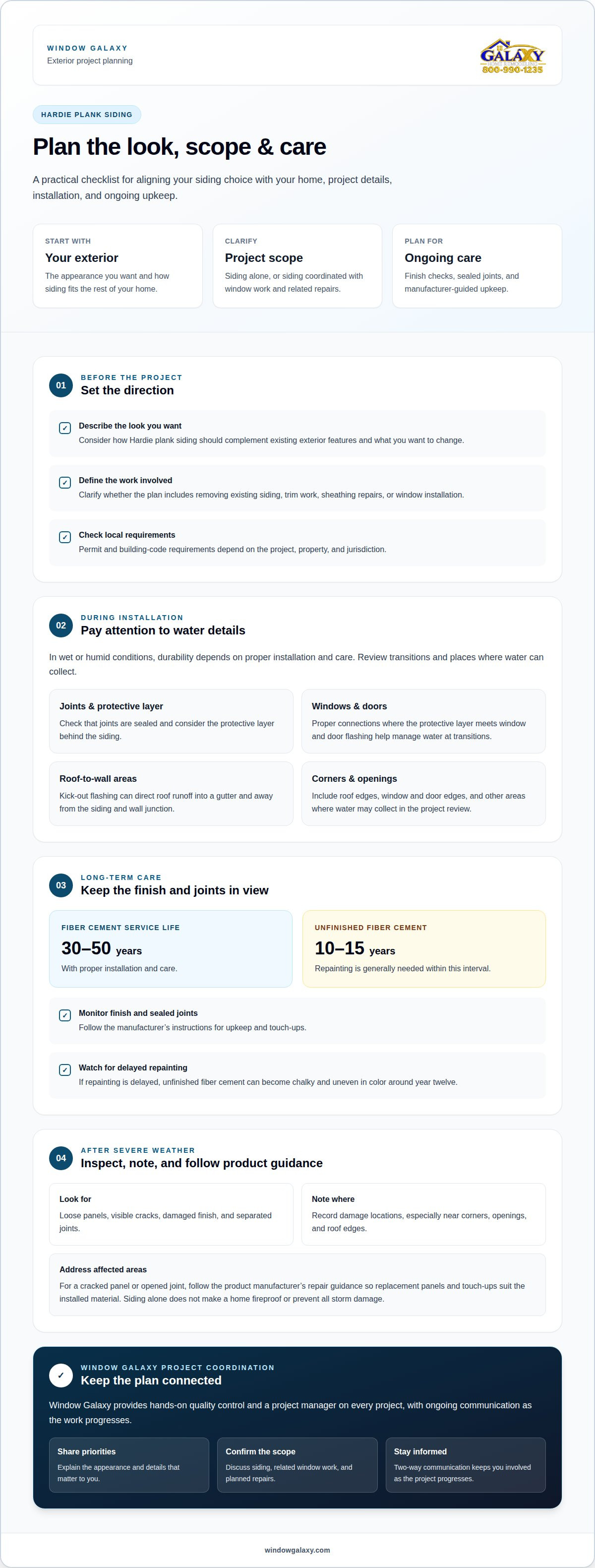
Unfinished fiber cement siding generally needs repainting every 10 to 15 years, and can become chalky and uneven in color around year twelve if repainting is delayed.
Is fiber cement siding suitable for wet or humid climates?
Fiber cement can last 30-50 years with proper installation and care. Maintenance includes monitoring the finish and sealed joints, then following the manufacturer’s instructions for upkeep and touch-ups.
Climate Suitability
Fiber cement’s expected service life depends on proper installation and care, so project quality matters in wet or humid conditions. Pay attention to sealed joints and the protective layer behind the siding. Where that layer meets window and door flashing, proper connections help manage water around vulnerable transitions.
Weather Resistance and Storm Damage
Fiber cement is non-combustible, but siding alone doesn’t make a home fireproof. For storm exposure, don’t assume any material prevents all damage. Inspect boards, seams, and trim after severe weather. If a panel is cracked or a joint has opened, address the affected area and surrounding details according to the product manufacturer’s instructions.
Long-term durability also depends on directing roof runoff properly. Where a roof meets a wall, kick-out flashing can direct runoff into a gutter, helping keep concentrated water away from the siding and wall junction. When reviewing a project, examine roof-to-wall intersections, window and door edges, and areas where water may collect.
After a storm, look for loose panels, visible cracks, damaged finish, and separated joints. Note where damage appears, especially near corners, openings, and roof edges. These locations can help distinguish a surface issue from a problem at a transition. Follow the manufacturer’s repair guidance so replacement panels and touch-ups suit the installed material.
Humidity alone doesn’t determine whether siding is suitable. Water-management details, the condition of joints, and regular observation all matter. Color and finish can also affect how wear appears, so compare exposed areas with sheltered sections. A difference in appearance may signal that the finish needs attention, without necessarily meaning the underlying boards have failed.
Fiber cement’s 30-50-year lifespan is tied to proper installation and care, not simply the material name. Build maintenance into the home’s routine: observe the finish and sealed joints, note storm damage, and follow manufacturer directions for repairs. These steps help preserve the siding’s condition and give homeowners a clearer basis for weighing long-term durability.
Whether fiber cement siding is worth the investment
Fiber cement offers rigid boards, a wood-like finish, and non-combustibility, but it is heavy and requires finish maintenance. Its value depends on your home’s condition, how long you plan to stay, and how replacing the siding may affect resale appeal.
Resale Value
Siding replacement can improve an exterior’s presentation, while reported return figures vary by project and year. The 2025 Remodeling Cost vs. Value Report estimated that fiber cement replacement projects recouped 113.7% of their cost nationally. By comparison, the 2019 Cost vs. Value Report estimated siding replacement recouped 75.6%. These figures come from different report years, so they aren’t a direct measure of one project’s outcome.
For resale planning, treat those reports as benchmarks, not a promise about a specific home. The existing exterior, replacement scope, and local market all affect how buyers may respond. A well-maintained finish and consistent exterior details can help the new siding present as a complete upgrade. For real estate investors evaluating how exterior renovations impact marketability and upkeep, firms such as Morgan Property Solutions Inc. can help assess the long-term value of property improvements.
Advantages and Disadvantages
Fiber cement’s advantages include rigid boards, a wood-like appearance, and non-combustibility. Those qualities may suit homeowners seeking a traditional exterior with a defined profile. The drawbacks are practical: boards are heavy, cutting requires specialized tools, and the work creates silica dust that calls for proper dust extraction on site.
Ongoing care belongs in the investment calculation too. Fiber cement owners need to monitor sealed joints and the finish, then follow the manufacturer’s directions for touch-ups or repainting. This differs from an exterior where routine repainting isn’t part of the owner’s plan. Consider both the installed appearance and the work required to maintain it.
Start your decision with your timeline. If you plan to sell soon, resale presentation may matter more than long-term ownership benefits. If you expect to stay, consider whether the board style, finish, and care routine suit your preferences. Either way, have the exterior assessed, including existing wall conditions and areas needing repair, before planning replacement.
To decide whether fiber cement siding is worth the cost, compare national resale benchmarks with your project goals rather than treating a reported return as a personal forecast. Review the product’s maintenance instructions and installation needs alongside the appearance you want. This gives you a more complete basis for weighing its long-term value.
Fiber cement and vinyl siding considerations
For homeowners comparing siding, the material name alone doesn’t describe the whole project. Fiber cement combines cement, sand, water, and cellulose fibers, while vinyl siding is made from PVC. Each material has different installation and maintenance considerations, so compare the complete project scope and ownership needs, not just the product label.
Fiber cement boards are heavy and require installation details suited to the specific product. Fasteners, spacing, wall support, and careful cutting all affect the work involved. Cutting also creates silica dust, so the job requires suitable saws with dust extraction. These requirements make installation planning an important part of comparing fiber cement with vinyl.
Vinyl has its own installation requirements. It needs room to expand and contract as temperatures change, so correct fitting matters for the finished wall. Insulated vinyl siding adds a layer of insulation. This may matter if you’re considering how siding fits into your home’s broader exterior and energy plans, not just its appearance.
Maintenance is another factor in the long-term comparison. Standard vinyl generally needs cleaning but not routine repainting. Fiber cement owners should monitor the finish and sealed joints, then follow the manufacturer’s directions for touch-ups or repainting. Your preferred upkeep routine can influence which material is the better fit over time.
- Material: Fiber cement uses cement and cellulose fibers; vinyl uses PVC.
- Installation: Fiber cement needs product-specific support and careful cutting; vinyl needs room for temperature-related movement.
- Upkeep: Vinyl typically needs cleaning, while fiber cement’s finish and sealed joints need monitoring.
- Warranty: Manufacturers offer different protections, so terms depend on the exact product, finish, and labor coverage.
A warranty matters, but its terms matter more than its label. Compare what the manufacturer covers for the siding product and finish, whether labor is included, and whether coverage transfers to a future owner. Fiber cement warranty protection varies by manufacturer, so understand the exact terms for the selected material.
For a practical comparison, list the siding profile and finish you want, installation requirements, expected maintenance, and warranty terms. Then review those same factors for vinyl siding. This side-by-side approach keeps the decision grounded in your home’s exterior, preferred appearance, and the care you’re prepared to provide.
Choose the material whose installation needs and upkeep align with your remodeling plans. Discuss your siding project to explore the options that fit your home.
Window Galaxy: Hardie plank siding
Window Galaxy offers Hardie plank siding for homeowners considering fiber cement as part of an exterior update. It may be a good fit after you’ve weighed the material’s appearance, maintenance needs, and long-term role in your home. Because installation details matter too, discussing your home’s exterior and goals can help shape the project.
Ready to discuss Hardie plank siding for your home? Contact Window Galaxy to talk through your project.
Plan an exterior that feels cohesive
Choosing siding is also an opportunity to consider how the whole exterior works together. Think about the look you want across siding, windows, and architectural details, then decide which improvements matter most. If your vision extends beyond wall claddings to outdoor living additions and patio spaces, full-service exterior contractors like Acadiana Patios & Construction can provide inspiration on blending structural upgrades with cohesive outdoor features. This broader view can help you determine whether fiber cement siding fits your plans, without letting one feature decide for you.
Window Galaxy offers siding alongside its windows and specialty window options. If your project involves both siding and window decisions, discussing how the elements fit together can help you define a clear direction.
When you’re ready to talk through siding options for your home, contact Window Galaxy. A thoughtful next step can make the project feel more manageable and help you move forward with confidence.
Frequently Asked Questions
How Can Location Affect a Window Galaxy Project?
Location can affect a Window Galaxy project through delivery distance, local installation conditions, and the home’s design. A house with unusual window openings, multiple stories, or difficult access may require more installation work than a straightforward project. The wall condition and the number and placement of windows also shape the work involved. A project assessment can help clarify the scope for your home.
Can Window Galaxy windows help insulate a home?
Window performance is only one part of a home’s insulation system. The wall assembly, existing insulation, and air leakage all affect comfort and energy use. If your home feels drafty, identify where heat loss occurs before choosing Window Galaxy windows as the solution. The condition and fit of the existing windows are also relevant to assessing the openings.
How Do Window Galaxy Windows Handle Storms and Fire?
Storm performance depends on the installed window, its fastening, the surrounding wall condition, and weather severity. After strong winds or heavy rain, look for loose components, cracks, or opened joints. Treat visible damage as a reason to inspect nearby transitions, including roof edges, windows, and doors. Window Galaxy windows should be considered as part of the home’s overall exterior, not as a guarantee against storm or fire damage.
What Should a Window Galaxy Project Assessment Include?
An assessment should identify the window locations, the work involved, and the installation method. Look for clear descriptions of old window removal, trim, underlying wall repairs, and disposal. The assessment should also distinguish product warranty coverage from labor coverage. These details help you understand the proposed scope and identify any exclusions before work begins.
What Factors Affect a Window Galaxy Window Installation?
The work involved depends on the number and size of windows, the product and finish, installation requirements, and whether removal or wall repairs are needed. Trim and complex exterior details can also change the scope. A useful assessment starts with measured window openings and a clear list of included work.
What Should I Know Before Installing Window Galaxy Windows?
The work depends on the home’s window openings and any preparation needed beyond installing new windows. Extensive trim, old window removal, or wall repairs create a different scope from sound walls and straightforward openings. Accurate measurements matter, especially around unusual openings. Make sure the project assessment identifies those areas and states which preparation tasks are included.
Can Window Galaxy Windows Enhance a Home’s Appearance?
New windows can refresh a home’s exterior and contribute to its overall appearance, but the result depends on the whole property. The windows’ condition, finish, installation quality, and coordination with trim all shape their presentation. Consider how the selected windows fit the home’s design and existing exterior details. A clean, well-maintained exterior can support a stronger overall impression.
What Should I Consider When Repairing or Replacing Window Galaxy Windows?
The work depends on its scope. A localized repair differs from work on an entire window or replacing windows across the home. The condition, number of affected components, access, and any underlying wall damage all affect the work involved. Follow the product manufacturer’s instructions for maintenance or touch-ups. For replacement, identify whether the issue is limited to the windows or also involves trim and wall details.


