

The best roofing materials for nj climate aren’t the same for every home. New Jersey’s changing seasons bring wind, rain, snow, humidity, and temperature swings, but weather is only part of the decision. Your roof’s slope, structure, drainage, and surroundings also affect which material is a suitable fit.
Durability matters, but so do upkeep, appearance, and installation requirements. A material that works for one home may not suit another, even in the same neighborhood. Comparing those factors together can help you narrow your options before planning a roofing project.
This guide compares asphalt shingles, metal, slate, wood shakes, and synthetic materials, with practical considerations for New Jersey homes. Window Galaxy USA provides roofing services and brings project management, quality control, and clear communication to the planning process.
Key Takeaways
- Compare asphalt, metal, slate, wood shakes, and synthetic materials by upkeep, appearance, weather exposure, and fit with your roof design.
- The best roofing materials for nj climate depend on your home’s structure and site conditions, not on a single statewide recommendation.
- Start by considering roof condition, slope, drainage, nearby trees, and exposure to wind or coastal conditions.
- Window Galaxy USA provides roofing services with project management, quality control, and clear communication.
Best Roofing Materials for NJ Climate: What Homeowners Need to Consider
Choosing roofing materials for a New Jersey home means weighing several conditions at once. Rain, snow, wind, humidity, and seasonal temperature changes all place different demands on a roof. The best roofing materials for nj climate depend on regional weather as well as the home’s design and the exposure around it.
Compare weather exposure, roof structure and drainage, durability, upkeep, appearance, and installation requirements as a group. Window Galaxy provides roofing services and helps homeowners plan projects with attention to oversight, quality control, and clear communication. For a broad overview of material types, see this guide to roofing materials.
How New Jersey weather can affect a roof
Rain and storms make effective water shedding important, including around roof details and transitions. Wind exposure can affect roofing components, while snow adds a seasonal load for the roof system to manage. Conditions vary across New Jersey, so consider the home’s setting rather than assuming every area faces the same weather.
During freeze-thaw periods, moisture can freeze and thaw as temperatures shift, though the frequency and intensity of these conditions vary. Humidity and coastal exposure may also affect material and upkeep considerations. Think about the conditions your property actually faces, such as persistent shade, nearby trees, or open exposure to wind.
Why one roofing material is not right for every home
Roof slope, underlying structure, and drainage help determine which materials are suitable. Roof designs shed water differently, and the details around valleys, edges, and transitions need to work with the selected system. Nearby trees, open surroundings, and coastal conditions also shape exposure. Regional climate is a useful starting point, but it cannot replace a home-specific assessment.
Use the same questions to compare each option: Does it suit the roof’s design and structure? How does it fit the property’s exposure? What upkeep may it need? Does its appearance work with the house? A material may be appropriate for New Jersey generally but still be a poor match for a particular roof.
Before planning roofing work with Window Galaxy, note the roof’s current condition, shape, slope, and drainage. Add details about nearby trees, shade, wind, or coastal exposure. These observations give the project discussion a practical starting point and help focus the material comparison on your home.
How Asphalt, Metal, Slate, and Other Roofing Materials Compare in New Jersey
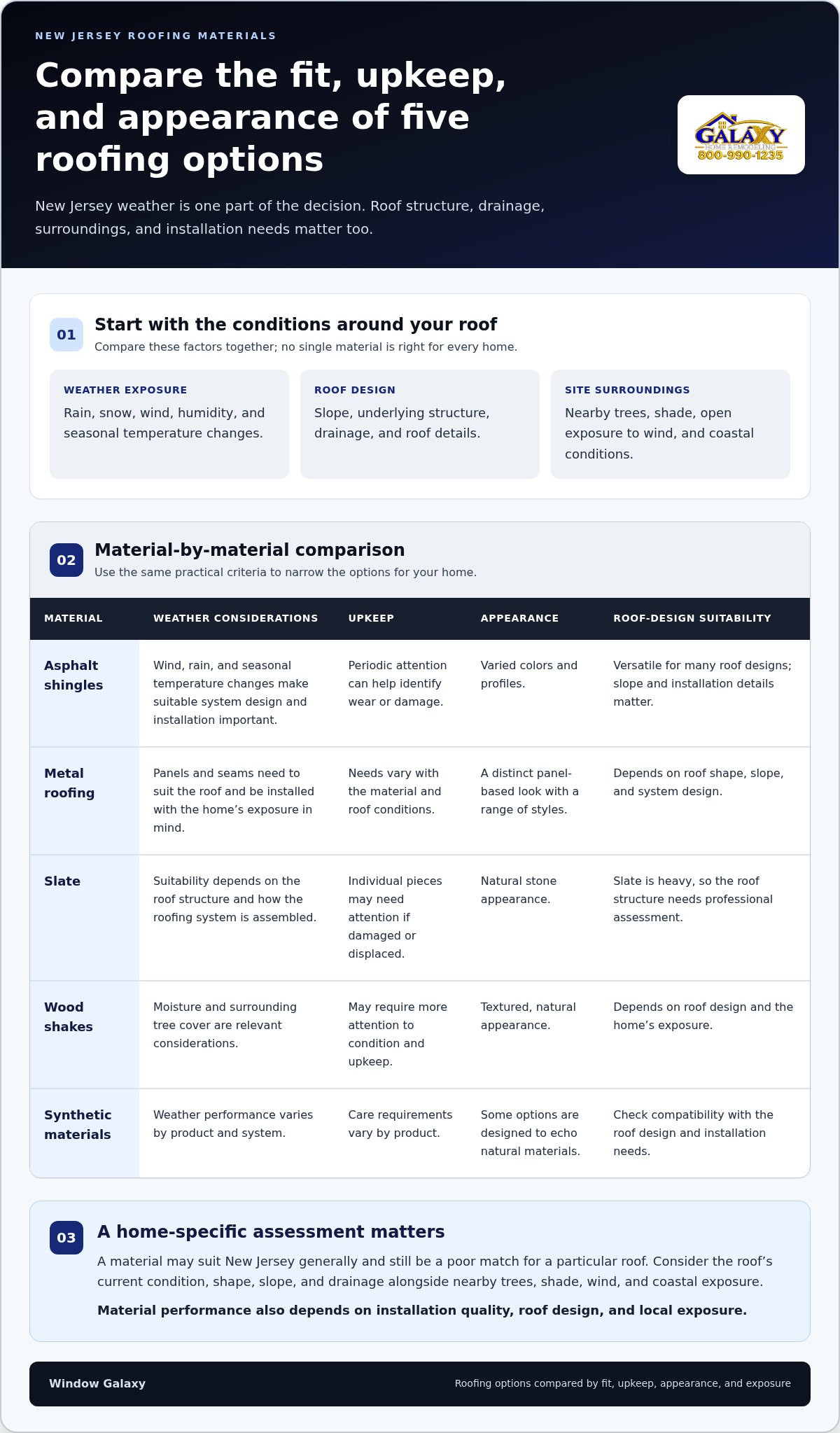
Roofing materials differ in appearance, upkeep, and suitability for particular roof designs. Comparing those characteristics with your home’s exposure can help narrow the choices, but no material is right for every New Jersey roof. The best roofing materials for nj climate are the options that fit both local conditions and the home’s structure.
| Material | Weather considerations | Upkeep | Appearance | Roof-design suitability |
|---|---|---|---|---|
| Asphalt shingles | A widely used option, but wind, rain, and seasonal temperature changes make suitable system design and installation important. | Periodic attention can help identify wear or damage. | Available in varied colors and profiles. | Versatile for many roof designs, though slope and installation details matter. |
| Metal roofing | Panels and seams need to suit the roof and be installed with the home’s exposure in mind. | Maintenance needs vary with the material and roof conditions. | Offers a distinct panel-based look in a range of styles. | Suitability depends on roof shape, slope, and system design. |
| Slate | Its suitability depends on the roof’s structure and how the roofing system is assembled. | Individual pieces may need attention if damaged or displaced. | Provides a natural stone appearance. | Because slate is heavy, the roof structure needs professional assessment. |
| Wood shakes | Moisture and surrounding tree cover are relevant considerations. | May require more attention to condition and upkeep. | Creates a textured, natural appearance. | Suitability depends on roof design and the home’s exposure. |
| Synthetic materials | Weather performance varies by product and system. | Care requirements also vary by product. | Some options are designed to echo the look of natural materials. | Check compatibility with the roof’s design and installation needs. |
Asphalt shingles and metal roofing: common options to compare
Asphalt shingles have a familiar appearance and suit many home styles. Metal roofing offers a different visual character and may appeal to homeowners considering a panel-based design. Neither material is storm-proof or maintenance-free. Roof slope, ventilation, drainage, and installation details all matter when planning a roofing system.
Slate, wood, and synthetic roofing materials
Slate and wood shakes offer distinctive natural textures, while synthetic materials come in varied appearances. Look beyond appearance when comparing them: material weight, roof construction, and site exposure also affect suitability. Slate’s weight makes the roof structure an important consideration, while tree cover and moisture are relevant when considering wood shakes.
Material performance depends on installation quality and site conditions, including roof design and local exposure. Window Galaxy’s roofing project management and quality-control focus help keep those factors in view as you compare options and plan the work.
Which Roofing Material Fits Your New Jersey Home and Site Exposure?
The best roofing materials for nj climate depend on the conditions around your home as much as the weather across the state. A coastal property, a shaded lot, and an open inland site can face different combinations of wind, moisture, debris, and sun. Use those details alongside roof structure, appearance preferences, and upkeep expectations to narrow your options.
Coastal, inland, shaded, and exposed New Jersey properties
Homes nearer the Atlantic may face salt air, which can contribute to corrosion on some materials or components. The degree of exposure varies by property, so coastal location alone doesn’t determine the right roof. Wooded or shaded sites may collect leaves and stay damp longer, while open, windy lots call for close attention to wind exposure. Treat these as factors to assess, not rules that apply identically to every New Jersey town.
Roof condition and drainage matter, too. Water that doesn’t drain effectively or debris that remains on the roof can influence what needs attention during a roofing project. A useful comparison accounts for these site details rather than considering material names in isolation.
Roof shape, structure, and appearance preferences
Slope and roof complexity affect how a material can be installed and how water moves across the surface. A roof with several angles or transitions needs careful planning at those details. Structure matters as well, especially for heavier materials such as slate. Assessing the roof’s condition and design helps connect the home’s requirements with the material options.
Curb appeal also belongs in the decision. Natural slate and wood have distinctive looks, while asphalt shingles and metal offer different visual profiles. Consider the appearance you prefer alongside practical performance and the upkeep you’re prepared to manage.
| Material | Potential advantages | Considerations for your site |
|---|---|---|
| Asphalt shingles | Versatile appearance for a range of home styles. | Consider wind exposure, roof slope, and installation details. |
| Metal roofing | Durable option with a distinct appearance. | Coastal salt air may make corrosion resistance relevant; assess product and system suitability. |
| Slate | Natural stone appearance. | Its weight makes roof structure an important consideration. |
| Wood shakes | Natural texture that may complement certain home styles. | Tree cover, debris, and moisture are relevant upkeep factors. |
| Synthetic materials | Can offer varied appearances, including looks inspired by natural materials. | Performance and suitability vary by product and roof design. |
Window Galaxy’s project management, quality control, and clear communication help bring site-specific questions into your roofing project discussion.
How to Choose Roofing Materials for New Jersey Weather: A Practical Checklist
A simple selection process makes roofing options easier to compare. Start with the roof and property you have, then weigh materials against the conditions they need to handle. This helps you identify the best roofing materials for nj climate for your home instead of relying on a broad statewide recommendation.
- Document the roof’s condition and design. Note visible wear, roof shape and slope, drainage patterns, and places where water or debris collects. Record the amount of shade from trees, whether the home sits in an open, windy location, and whether coastal exposure is a consideration. These details describe your property more accurately than general assumptions about New Jersey weather.
- Compare materials against your priorities. Consider the appearance you want, the upkeep you’re comfortable with, and each material’s general characteristics. Then weigh those priorities against the roof’s structure, drainage, and shape. Ask how the option fits your actual roof rather than assuming every product in a material category performs the same way.
- Review fit and project scope with Window Galaxy. Discuss how the roof’s condition and design relate to material suitability and what the installation plan involves. Window Galaxy emphasizes quality control, project management, and clear communication to help homeowners stay informed as the project takes shape.
Questions that make a roofing project easier to plan
Bring focused questions to the project discussion. How does the material suit the roof’s slope and complex areas? How might shade, drainage, and wind exposure affect the selection? What upkeep should you plan for? How will installation details and quality control be managed, and how will project updates be communicated? These questions keep the discussion grounded in the home’s actual conditions.
If roofing work is part of a broader exterior update, consider how each element contributes to the home’s overall appearance and weather protection. Window Galaxy’s home window replacement guide can support that wider planning conversation. For more on the role windows play in exterior weather protection, explore the complete house windows guide.
To move from your notes to a roofing plan, discuss your roofing project with Window Galaxy. Use the roof’s condition, design, and site exposure to guide the conversation.
Plan Your New Jersey Roofing Project with Window Galaxy
Comparing materials is a useful start, but a practical roofing plan also accounts for the home itself. Bring your shortlist together with notes about the roof’s condition, slope, drainage, and exposure. These details help focus the discussion on how each option relates to your property rather than treating one material as the answer for every New Jersey home.
What to expect when discussing roofing with Window Galaxy
Window Galaxy provides roofing services for New Jersey homeowners, with an emphasis on project management, quality control, and clear customer communication. Start with what matters most to you: the appearance you want, the upkeep you’re comfortable with, and the conditions your home faces. Sharing those priorities helps connect your material preferences with the roof’s design and project goals.
Good planning is a two-way exchange. Window Galaxy’s project-focused approach includes oversight and communication throughout the project, helping homeowners stay informed as plans move forward. Bring up the roof’s visible condition, areas where water collects, nearby trees, or exposure to open wind. These specifics help keep the discussion focused on your property rather than assuming every location has the same conditions.
Turn your material comparison into a clear next step
Before discussing the work, make a short list of the materials you’re considering and note what appeals to you about each. Include practical priorities such as durability, appearance, and expected upkeep. Also record details that may need closer attention, including roof slope, structure, drainage, and site exposure. That gives the project discussion a clear starting point.
The best roofing materials for nj climate are not selected by climate alone. A useful discussion weighs general weather demands alongside the home’s design and surroundings. Window Galaxy’s quality-control focus and project oversight help bring those factors into the planning process, while clear communication keeps your priorities in view.
Explore Window Galaxy’s roofing services to move from comparing materials to planning a project. Bring your questions and preferences to a focused discussion about roofing for your New Jersey home.
Take the Next Step Toward a Roof That Fits Your Home
The best roofing materials for nj climate depend on more than seasonal weather. Your roof’s slope, structure, drainage, and local exposure all help determine which options make sense. Comparing durability, upkeep, and appearance together can turn a long list of materials into a practical shortlist for your home.
Window Galaxy provides roofing services for New Jersey homeowners, with an emphasis on project management, quality control, and clear communication. Share what matters to you, from the look you want to the conditions your roof faces, as you plan the work.
Explore Window Galaxy’s roofing services and take the next step toward planning a roof that suits your home.
Frequently Asked Questions
What is the best roofing material for New Jersey weather?
There isn’t one roofing material that’s best for every New Jersey home. The best roofing materials for nj climate depend on the roof’s slope and structure, local exposure, drainage, and your preferences for appearance and upkeep. Asphalt shingles, metal, slate, wood shakes, and synthetic options each have different considerations. Window Galaxy helps homeowners discuss how material choices relate to their roof and project priorities.
Are metal roofs a good choice for New Jersey homes?
Metal roofing can suit some New Jersey homes, but its fit depends on the roof and site. Consider the roof’s shape and slope, nearby trees, wind exposure, and, for coastal properties, salt air and corrosion. Material and installation details matter, so weigh them alongside the home’s conditions when planning the project with Window Galaxy.
Can asphalt shingles handle New Jersey winters?
Asphalt shingles are used on homes in New Jersey, but winter performance depends on the roofing system and its condition, not just the material category. Snow, moisture, and temperature shifts can place seasonal demands on a roof, while freeze-thaw exposure varies by location. Roof slope, drainage, ventilation, and installation quality are relevant considerations to discuss when planning roofing work with Window Galaxy.
How does New Jersey’s coastal climate affect roofing material selection?
Coastal exposure can make salt air an important factor in material selection, since it may contribute to corrosion in some roofing materials or components. Exposure varies by property, so proximity to the coast alone doesn’t determine which option is appropriate. Consider the roof’s design, surrounding conditions, and maintenance preferences together as you plan roofing work with Window Galaxy.
What roofing material is best for a home exposed to strong winds?
No roofing material is a universal solution for strong winds. Consider the home’s exposure, roof design, material characteristics, and installation details together. Ask how the proposed roofing system suits the roof and its site conditions, including open or windy surroundings. Window Galaxy’s quality-control and project-management focus keeps installation planning and project oversight in view.
How do I choose roofing materials for a New Jersey home?
Start by documenting the roof’s condition, slope, structure, drainage, and exposure to wind, trees, or coastal air. Then compare materials by durability, appearance, and expected upkeep, keeping your household priorities in view. Window Galaxy makes project planning a two-way discussion, with attention to communication, quality control, and oversight as you narrow your options.
Does roof design affect which roofing material I can choose?
Yes. Roof slope, structure, drainage, and complex features such as valleys or transitions can affect which materials are suitable and how installation must be planned. A material that fits one roof may not suit another, even in the same neighborhood. Window Galaxy can discuss the roof’s condition and design alongside your material preferences, helping you weigh appearance and practical requirements together.


