

What if a siding warranty covers less than you expect, even when the siding appears to be the problem? With your siding warranty explained in plain language, it’s easier to understand what the written terms address and where coverage may be limited. Product defects and installation concerns may fall under different warranty documents, so start by identifying which terms apply to your project.
Warranty language can feel technical, especially when it discusses maintenance, severe weather, or later alterations. Before replacing siding, review the documents for the materials and work involved. Don’t assume every issue is covered in the same way: the written terms determine what coverage applies and what conditions you must meet.
This guide shows you which warranty documents to review, how to look for common limits and exclusions, and what project details to organize. Window Galaxy USA installs Hardie plank siding and vinyl insulated siding. Clear project communication can help you understand the selected materials and keep project details organized as you review the applicable terms.
Key Takeaways
- This siding warranty explained guide helps you distinguish product coverage from installation-related responsibilities by reviewing the documents that apply to your project.
- Warranty exclusions and limits depend on the written terms. Review conditions involving installation, maintenance, alterations, and the cause of damage.
- Before raising a concern, gather your warranty documents, identify the siding, record the issue, and follow the instructions in the applicable terms.
- Dated notes and clear photographs can help you organize a warranty inquiry, but they don’t guarantee a claim will be approved.
- Window Galaxy USA’s project management, quality control, and customer communication help keep siding materials and project details part of a clear conversation.
Siding Warranty Explained: Homeowner Warranty Purpose
A siding warranty is written coverage governed by its specific terms. Those terms define what product or work is covered, who is responsible, and which conditions apply. Coverage can differ by product, manufacturer, installer, and project, so the phrase “siding warranty explained” is only a starting point. The written document clarifies the actual coverage.
A warranty describes defined coverage; it doesn’t promise that siding will remain damage-free under every condition. It may address certain defects or problems, but it doesn’t automatically cover every visible issue, repair, or cause of damage. Before relying on a warranty, identify the siding, the party that issued the document, and the terms that apply to your project.
What does a siding warranty generally cover?
A product warranty may cover certain defects in the siding material. The specific components, conditions, and available remedies depend on the applicable document. Check its definitions and coverage language instead of assuming that a particular problem qualifies. Product descriptions can introduce the material, but the written warranty is what explains its coverage.
Keep the warranty with your project records. If a concern comes up, you can use it to identify what the coverage addresses and which instructions apply. This is especially helpful if your home has more than one siding product or your project paperwork includes separate warranty documents.
Why can two siding warranties offer different protection?
Terms can vary based on the material, the manufacturer’s written coverage, installation requirements, and project details. A product warranty and a separate installation-related document may address different responsibilities. The applicable terms define those responsibilities. Even siding in the same broad material category may have different coverage, so don’t use material type alone to determine what is protected.
For example, Hardie plank siding and vinyl insulated siding are options Window Galaxy USA installs, but the material name alone doesn’t explain the warranty. Review the documents connected to the specific product and project. For general background on the material, Vinyl siding durability offers an overview of vinyl siding. Use the applicable warranty documents, not general material descriptions, to understand coverage.
Window Galaxy USA emphasizes project management, quality control, and clear customer communication during siding projects. Discussing the selected material and keeping project documents together can help you understand which written terms apply. Reviewing those terms helps clarify the coverage and responsibilities stated for the work.
Product Warranty vs. Workmanship Warranty: Understand Who Covers What
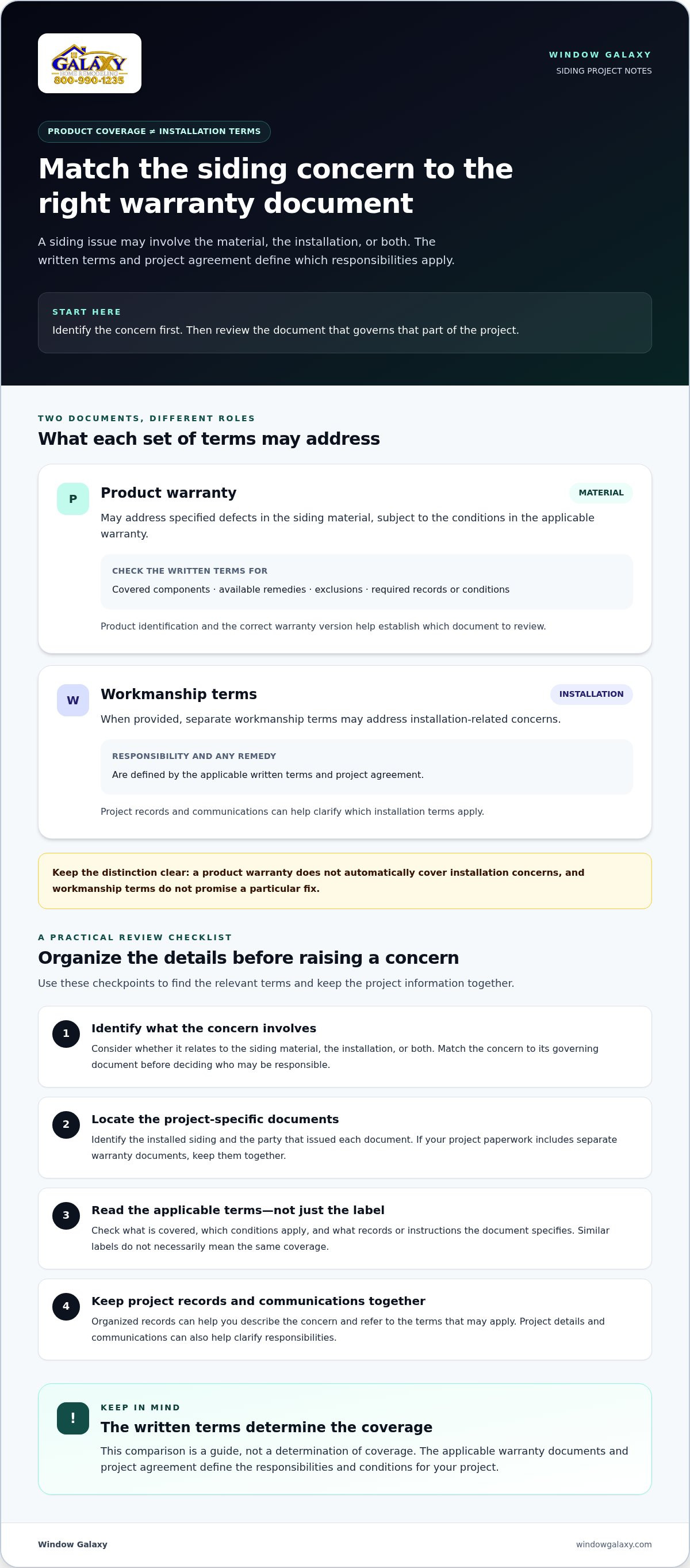
A siding concern can involve the material, the installation, or both. Product warranties and workmanship terms address different areas, so first identify the document that applies to the concern. Match the issue to its governing document before deciding who may be responsible. The written terms and project agreement define responsibility.
| Product warranty | Workmanship terms |
|---|---|
| Issued for a product and may address specified material defects, subject to stated conditions. | When provided, may address installation-related concerns under the terms that apply to the project. |
| Coverage, eligible components, remedies, and required documentation are defined in the applicable warranty. | Responsibilities and any available remedy are defined by the applicable written terms and project agreement. |
| Product identification and the correct warranty version help establish which document to review. | Project records and communications can help clarify which installation terms apply. |
This comparison is a guide, not a determination of coverage. The Federal Trade Commission’s information on builder warranties for new homes discusses workmanship and materials warranties for new homes, a different category from home service contracts. For a siding project, focus on the specific documents and agreement that apply rather than assuming similar labels mean the same thing.
What a manufacturer’s product warranty may address
A product warranty may cover certain defects in the siding material, but that doesn’t mean every defect or repair qualifies. First identify the installed siding and locate the warranty version that applies. Then review the written terms for covered components, available remedies, exclusions, and required records or conditions. A general product description can’t replace those terms.
How installation-related coverage can differ
Workmanship terms, if provided, are separate from a product warranty. They may address installation concerns, but the applicable document determines what is covered. Don’t assume that a product warranty covers installation concerns or that separate workmanship terms promise a particular fix.
Keep project questions, relevant documents, and responses together. An organized record makes it easier to describe what you’re seeing and refer to the terms that may apply. As you consider siding materials and project details with Window Galaxy, clear communication helps keep records and responsibilities easy to follow.
Siding Warranty Exclusions and Limitations: Read the Fine Print
A warranty’s limits are specific to its written terms. One document may set conditions for installation, while another may address maintenance, changes to the siding, or particular causes of damage. Treat these as topics to investigate, not universal exclusions. A storm, moisture concern, fading, or maintenance issue isn’t automatically covered or excluded without reviewing the applicable language.
Before assuming a siding issue qualifies, check the precise wording in the warranty that applies. Broad descriptions can’t establish whether a particular condition meets the document’s requirements. The Federal Trade Commission’s guide to understanding your warranty offers general advice on reviewing written coverage and its terms.
Which exclusions should homeowners look for?
Scan the document for headings such as “Exclusions,” “Limitations,” “Owner Responsibilities,” and “Claim Conditions.” Read the full language under each heading, including any exceptions. Don’t rely on a list from another product or project. The written warranty for your siding determines which conditions matter.
- Installation conditions: Look for stated requirements that may affect coverage.
- Damage causes: Check how the document describes weather exposure or other sources of damage.
- Alterations: Review whether changes to the siding are addressed and under what terms.
- Maintenance: Find any stated care responsibilities and what the document says about them.
These are prompts for review, not proof that a condition is excluded. Check each point against the warranty for the siding installed at your home. Pay attention to defined terms and exceptions, since a heading alone may not explain how a limitation applies.
Can maintenance or changes affect warranty coverage?
Some warranty documents set conditions related to maintenance or modifications. The exact wording matters. Don’t assume that ordinary wear or a particular change automatically ends coverage. Instead, check what the relevant document says and whether the condition relates to the concern.
Keep care guidance and relevant records with your siding documents. Notes about maintenance or changes can help clarify what was done and when if questions arise later. Window Galaxy’s clear communication and organized project management help keep project details and related questions together. Recordkeeping won’t determine coverage, but it can make the terms easier to discuss and apply.
How to Review a Siding Warranty and Prepare for a Possible Claim
A clear record makes a warranty inquiry easier to explain and follow. If you notice a possible siding issue, gather the relevant paperwork, then compare what you observe with the warranty instructions. This process helps you organize the details without assuming that a claim will be approved.
What documents and details should homeowners organize?
Start with records that connect the siding to your home and project. Keep them together so you can refer to the same information throughout your inquiry:
- Gather project paperwork. Collect purchase or project documents and communications related to the siding and its installation.
- Identify the siding. Use product labels, paperwork, or other available records to identify the material and product involved.
- Find the applicable warranty. Locate the written document that corresponds to the siding rather than relying on a general description.
- Record what you observe. Note when you first noticed the concern, where it appears, and what it looks like. Describe the facts without guessing at the cause.
- Take clear photographs. Capture the affected area and, where helpful, its location in relation to the surrounding siding.
Dated notes and clear photos help explain what you saw and when. They’re useful records, not a promise of coverage or claim approval. Keep copies of all documents and communications, including anything you submit and any responses you receive.
What should you do when you notice a possible issue?
Use this sequence to prepare:
- Locate the terms. Check the applicable warranty for its coverage language, claim conditions, and instructions.
- Compare carefully. Describe how the observed issue relates to the document without claiming a cause that the evidence doesn’t establish.
- Follow the stated process. Use the notice method and meet any deadlines specified in the warranty. Don’t assume another method or timeline applies.
- Keep a complete record. Save your dated notes, photographs, submitted materials, and responses together.
An organized file makes it easier to refer to the same facts and written terms as questions arise. The specific documents that apply to your project, not assumptions, explain your siding warranty. For homeowners considering Hardie plank siding or vinyl insulated siding, Window Galaxy emphasizes project management and clear customer communication as part of its siding projects.
Explore Window Galaxy’s siding solutions to review siding options and project details as you plan your next steps.
Choosing Siding with Warranty Clarity: Window Galaxy’s Project Approach
Warranty confidence starts with understanding the written terms, not assuming what they cover. Before moving ahead with siding work, identify which documents address the product and which describe project responsibilities. This distinction helps keep expectations grounded in what the documents actually say.
Window Galaxy USA installs Hardie plank siding and vinyl insulated siding. Choosing between them involves more than appearance or material: review the product information and project details connected to your selection. Window Galaxy USA’s quality control, project management, and customer communication help keep those details organized as the work moves forward. These practices support a clear project experience, but they don’t promise a particular warranty outcome.
How clear project communication supports homeowner confidence
Homeowners may have questions about the selected siding, care information, project records, or which written terms apply to a concern. Clear updates and two-way communication help connect those questions to the right project details. Organized project management also helps homeowners follow what has been discussed and retain relevant information.
This clarity is useful when reviewing documents before work begins or referring back to project details later. A clear process doesn’t change the warranty’s terms, but it can help you understand them and know what information you have on hand.
Questions to resolve before moving ahead with siding work
Use these prompts to prepare for a focused discussion about your project:
- Product documents: Which written warranty applies to the siding being considered, and how is the product identified?
- Project responsibilities: Which documents govern product concerns, and what written terms address installation-related responsibilities?
- Care information: What care guidance and maintenance records should be kept with the project documents?
- Project records: How will you keep project details, questions, and communications organized for future reference?
Clear answers help you make decisions with fewer assumptions. As this siding warranty explained guide shows, the written documents define coverage and conditions. Window Galaxy USA’s approach centers on quality control, attentive project management, and clear customer communication as homeowners consider siding options and review project details.
Explore Window Galaxy USA’s siding services to learn more about Hardie plank siding and vinyl insulated siding for your home.
Move Forward with Clear Siding Warranty Expectations
Understanding a siding warranty means knowing which written terms apply, who is responsible for product or installation concerns, and what conditions may limit coverage. The documents matter more than broad descriptions. Keeping product details, project records, and communications organized can help you address questions with greater confidence.
Window Galaxy installs Hardie plank siding and vinyl insulated siding, with quality control, project management, and clear customer communication throughout siding projects. These practices help keep project details and questions in focus, while the written warranty defines the actual coverage. Understanding both supports informed decisions before replacing your siding.
Use this siding warranty explained guide as a starting point for reviewing the terms tied to your project. Explore Window Galaxy’s siding services and take the next step toward a siding project with clear expectations and thoughtful support.
Frequently Asked Questions
What does a siding warranty cover?
A siding warranty covers only the products, issues, remedies, and conditions described in its written terms. The applicable document may include coverage for specified product defects, while installation-related terms may be separate. Review the coverage period, exclusions, owner responsibilities, and claim instructions. Don’t assume every form of damage or deterioration qualifies. The written warranty determines what protection applies to the siding in your project.
Does a siding warranty cover installation problems?
That depends on the written terms that apply to the installation. Product warranty terms and any workmanship coverage are separate, and one doesn’t automatically include the other. Review the project documents to see what addresses installation concerns, how to report them, and which conditions apply. Don’t assume a product warranty covers labor or that every installation issue qualifies. The written terms and project agreement guide responsibility.
How long does a siding warranty last?
There’s no single duration that applies to every siding product or warranty. The applicable document should state the coverage period and explain when it begins. It may also set different terms for separate components or types of coverage. Check the warranty for the specific product installed rather than relying on a general statement about a material. Reviewing the product-specific document helps you understand the applicable time frame before making decisions.
Can siding warranty coverage be voided?
A warranty may set conditions or exclusions related to installation, care, modifications, or damage, but the exact rules depend on its written language. Don’t assume a particular action automatically voids coverage. Review the document’s owner responsibilities and limitations, retain relevant care and project records, and follow the stated instructions if you need to raise a concern. The applicable warranty matters more than broad assumptions about what may affect coverage.
Does a siding warranty cover storm damage?
Storm damage isn’t automatically covered or excluded by every siding warranty. Coverage depends on the document’s terms, stated exclusions, the reported cause, and any applicable conditions. Review the exact warranty and record what happened, when you noticed the issue, and what the affected area looks like. Keep descriptions factual rather than assuming the cause or outcome. A careful review can help you understand the terms, but it can’t guarantee that a claim will be accepted.
What should I do if I notice a siding problem?
Gather the project and warranty documents, identify the siding product if possible, and record the concern with dated notes and clear photographs. Then review the warranty’s reporting process, required information, and any stated deadlines. Submit a factual description through the specified method and keep copies of the materials you send and any responses. These steps help organize an inquiry and explain what you observed, but they don’t guarantee coverage or a particular outcome.
Are vinyl and fiber cement siding warranties the same?
No single warranty rule applies to every siding material. Terms can vary by product, manufacturer, and document, so material type alone doesn’t establish identical coverage. Compare the written terms for the specific siding, including covered components, exclusions, owner responsibilities, and claim instructions. Window Galaxy installs vinyl insulated siding and Hardie plank siding. Review the product documents that apply to your selection instead of assuming either material has uniform warranty coverage.


