

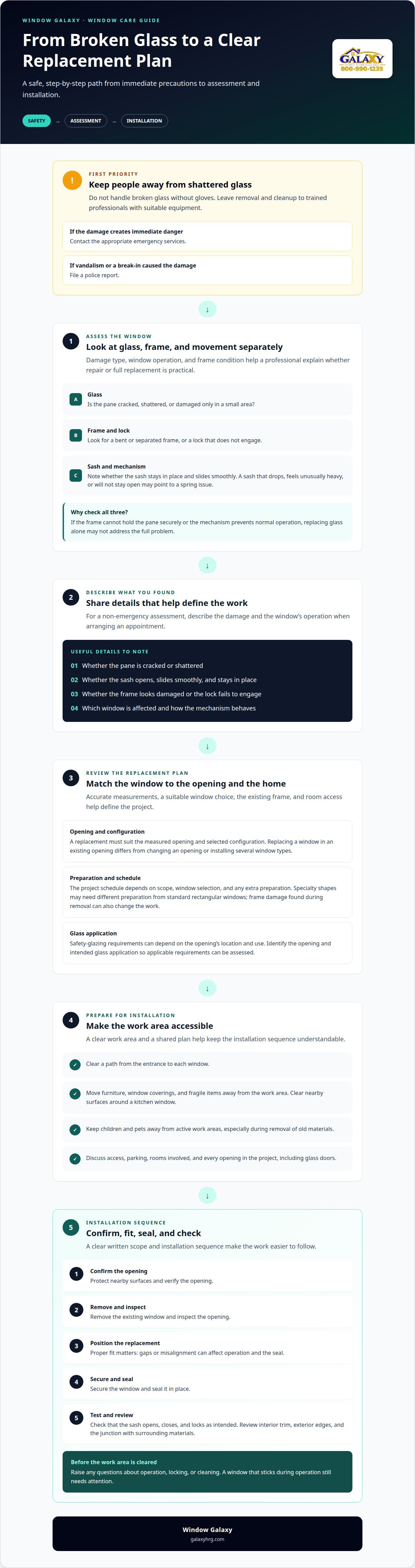
A broken window needs a safe response before you decide what replaces it. For broken window replacement in NJ, keep people away from shattered glass and don’t handle it without gloves; professional help is the safer route. If the damage creates an immediate danger, contact the appropriate emergency services. When vandalism or a break-in caused the damage, file a police report.
A damaged window can leave you worried about security, weather exposure, and what to choose next. This guide explains how to approach emergency repairs, what to expect when getting an estimate, and how energy-efficient replacement options may suit your home in Washington Township, New Jersey. You’ll learn what details affect the scope of the work, how window style and frame condition can shape your options, and what to expect when scheduling window service. Whether the glass has just broken or you’re planning a replacement to improve comfort, clear information can make the next decision feel more manageable.
Key Takeaways
- Learn what to consider when deciding whether a damaged window needs repair or full replacement.
- Understand the main steps involved in window installation and the choices that shape the project.
- See what information helps clarify an estimate and how scheduling fits into the process.
- Explore how energy-efficient window options may suit your home and replacement goals.
- Find out how window replacement service can address the needs of homes in Washington Township, New Jersey.
Emergency Window or Glass Repairs in New Jersey?
First, separate immediate safety concerns from the repair decision. The type of damage, whether the window operates, and the frame’s condition can help determine whether glass repair or full replacement is the practical next step.
Repair or Replacement Assessment
Assess the glass, frame, and moving parts separately. A small damaged area with an intact frame may call for a different solution than a shattered pane, a bent frame, or a window that no longer closes. Note whether the sash stays in place and whether it slides smoothly. A professional can inspect these details and explain the repair or replacement options for the opening.
Emergency Repairs and Property Security
Keep people away from broken glass, and don’t handle it without gloves. Glass can cause injury, so leave removal and cleanup to trained professionals with suitable equipment. If a broken window creates immediate danger, contact the appropriate emergency services. If vandalism or a break-in caused the damage, file a police report. Securing the opening can help address exposure and access concerns while you arrange the permanent work.
For residential window repair that isn’t an immediate hazard, scheduling during business hours allows the damage and the window’s operation to be assessed as part of the appointment. Describe whether the pane is cracked or shattered, whether the sash opens, and whether the frame appears damaged. These details help define the work before a visit is scheduled.
A problem with a window spring may show up as a sash that drops, feels unusually heavy, or won’t stay open. When arranging an assessment, identify the affected window and describe how it behaves. Because the spring supports the window’s movement, the mechanism and sash should be considered together, not just the glass.
Frame or mechanism problems can change the repair decision. Look for a bent or separated frame, a lock that doesn’t engage, or a sliding panel that sticks. If the frame can’t hold the pane securely or the mechanism prevents normal operation, replacing the glass alone may not address the full problem. Include these observations when describing the damage.
Building codes: Safety-glazing requirements can depend on the window’s location and use. Identify the opening and intended glass application so the replacement can be assessed against applicable requirements.
Insurance: Coverage depends on your policy, the cause of the damage, and the policy terms. Record whether the break followed an event such as vandalism, and review your policy’s claims process before arranging work you expect to be covered.
Contractor credentials: Ask for current license details and proof of insurance. Check that the documents identify the business performing the work and apply to the planned window service.
Rebates and tax credits: Incentives depend on current program rules, eligible window criteria, and your tax circumstances. Review those conditions before choosing replacement windows, and don’t assume every energy-efficient window qualifies.
Window installation and replacement
A successful replacement depends on accurate measurements, a suitable window choice, and careful installation. The opening, existing frame, and access to each room all help define the work.
Installation Timelines
The project schedule depends on its scope, window selection, and whether the opening needs additional preparation. Replacing a window in an existing opening differs from changing an opening or installing several window types. Distinguish the time needed to plan and prepare from the time installers spend at your home. Ask for the work sequence and scheduling expectations to be explained together.
Window selection can also affect planning. A replacement must suit the measured opening and chosen configuration; specialty shapes may require different preparation from standard rectangular windows. Frame damage or an issue uncovered during removal can change the work. A clear project plan identifies these decision points without promising a completion date before the scope is understood.
Installation-Day Planning
Before installation, clear a path from the entrance to each window. Move furniture, window coverings, and fragile items away from the work area. For a kitchen window above a counter, clear nearby surfaces to keep the opening accessible. Keep children and pets away from active work areas, especially while old materials are removed.
Discuss access, parking, and the rooms involved when planning the work. Identify every opening in the project, including any glass doors, so the work order and affected entrances are clear. This helps everyone understand the sequence and which areas may be affected. Keep a point of contact available for questions about the plan.
Installation generally starts by confirming the opening and protecting nearby surfaces. The existing window is removed, and the opening is inspected before the replacement is positioned. Proper fit matters: gaps or misalignment can affect operation and the seal. After placement, the installer secures and seals the window, then checks that the sash opens, closes, and locks as intended.
Finishing details matter, too. Review the interior trim, exterior edges, and the junction between the window and surrounding materials. A window that looks aligned but sticks during operation still needs attention. Before the work area is cleared, raise any questions about opening, locking, or cleaning the new unit. A clear written scope and installation sequence make the work easier to follow.
Energy performance starts with selecting a window suited to the home and opening, not choosing a product by appearance alone. Consider how the proposed configuration fits the room’s needs, existing frame, and desired operation. A fixed unit, for example, serves a different purpose from a window that opens for ventilation. A glass door also has different uses from an ordinary window.
Replacement can involve one opening or a coordinated set of windows. Confirm which units are included, what happens to existing trim, and how the installer will handle the surrounding area. A focused plan helps homeowners track the work from preparation through final operation checks. For a project-specific installation discussion, review window installation details as you consider the scope.
Free estimates and scheduling
A free estimate helps define the work before replacement is scheduled. It should connect the visible damage to the opening, frame, and installation scope so the next steps are clear. A cracked pane in an intact frame, for example, may call for a different plan from a damaged frame or a sash that won’t operate.
Before requesting an estimate, describe the affected window as clearly as possible. Identify its room and floor, explain the damage, and say whether it opens, closes, and locks. Photos can show the broken area and surrounding frame, while an in-person assessment can reveal details a picture misses. Mention any other windows that need attention, too.
A useful estimate explains the proposed work rather than presenting an unexplained figure. Review whether it covers the window, frame, operating parts, removal of the existing unit, installation, and finishing work. Ask how the replacement will fit the opening and how its operation will be checked. If inspection changes the scope, the revised work should be explained before scheduling proceeds.
- Describe the damage and the window’s operation.
- Identify the number and locations of affected openings.
- Review the included materials and installation steps.
- Clarify how changes to the work scope will be communicated.
Scheduling follows the agreed scope and project requirements. A replacement window may need to be selected and matched to the opening before installation is scheduled. The number of windows, specialty shapes, room access, and any frame work can affect the sequence. A single opening and several rooms may need different plans.
Share practical details when discussing the schedule. Mention household access needs, rooms that must remain available, and entry points affected by the work. A window above a desk, for example, may require that area to be cleared, while a replacement near a frequently used entrance may need advance coordination. Clear communication helps fit the visit around your household’s routine.
Before confirming a date, make sure the estimate and work plan describe the same openings and tasks. Keep a copy of the scope, note the appointment details, and agree on how you’ll receive updates. If the estimate identifies a different window type or room than you expected, resolve the difference before work is scheduled.
For broken window replacement in New Jersey, a clear estimate turns uncertainty into practical decisions: which opening is affected, what work it needs, and how installation will be scheduled. These steps help you move from assessing the damage to an organized plan without overlooking the frame, access, or finishing details.
Full window replacement
Full window replacement addresses the complete window unit, not just its broken pane. It may be appropriate when damage affects the frame, sash, or operating parts, or when the existing unit no longer suits the home’s needs. Replacing the glass alone, for example, won’t fix a shifted frame or a sash that won’t close properly.
Start by assessing the existing opening. The installer considers the frame’s condition, how the sash operates, and whether surrounding trim or materials need attention. A cracked pane in a sound frame presents a different scope from a window with a damaged sill and sticking sash. These details help determine whether the project requires a full-unit replacement or work on a specific component.
Measurements guide the replacement choice. The new unit needs to suit the opening and intended operation, such as sliding, opening outward, or staying fixed. A specialty-shaped window may require a different approach from a standard rectangular unit. The room matters, too: a bedroom, living room, and kitchen may have different ventilation and access needs.
When considering energy-efficient options, account for the opening, the home’s existing windows, and the room’s purpose. A replacement project can address several windows, but each opening still needs an individual assessment. Matching styles across the home may matter, while different rooms may call for different configurations.
- Document which window or openings are included.
- Confirm whether the frame and surrounding trim are part of the work.
- Identify the chosen window type and how it will operate.
- Agree on how the finished window will be checked.
Installation involves removing the existing unit, preparing the opening, and fitting the replacement. The installer secures and seals it, then checks its movement and locking function. For a sliding window, confirm that the panel moves smoothly. Review the perimeter and interior finish, too, since they complete the installation.
A storefront opening differs from a residential window in setting and use, so the project scope should identify exactly which opening is being replaced. For a home, specify whether the work involves a window, a glass door, or multiple units. Clear identification helps ensure unlike openings aren’t treated as interchangeable in the project plan.
Before work begins, review the agreed scope and the sequence for each opening. Replacing windows in two bedrooms, for example, may require different access arrangements from work in a shared living area. After installation, operate each window and check its lock. These simple checks help confirm the replacement works as intended.
Window replacement in Washington Township, New Jersey
For Washington Township homeowners, window replacement starts with the specific opening, not a one-size-fits-all plan. A broken window in a front room may need different attention from a hard-to-reach upstairs window. Identify the affected windows, how each operates, and whether the frame or surrounding trim also needs work. These details help define the scope for your New Jersey home.
Plan around the home’s layout and daily routines. Note whether installers need access through a narrow hallway, a finished room, or an exterior area with limited clearance. If a window is above a counter or beside a frequently used entrance, mention it when organizing the work. A thoughtful schedule keeps affected rooms and access points in view.
Choose a window to match each opening’s function. A fixed window may suit a space where ventilation isn’t needed, while an operable unit can serve a room where airflow matters. A specialty shape calls for careful measurements and a plan that respects its existing proportions. You can also consider whether to address several openings in one coordinated project.
In Washington Township, the estimate and installation plan should identify each location clearly. Use room names such as “upstairs bedroom” or “kitchen” rather than general descriptions. Confirm which windows are included, whether trim is part of the work, and how the finished units will be checked. This makes it easier to follow what’s being handled at each stage.
- List each affected room and window opening.
- Describe operation, frame condition, and access needs.
- Record the selected window style for each location.
- Review the work sequence and final operation checks.
Consider energy-efficient replacement one opening at a time. Think about the room’s use, desired ventilation, and how the window fits the home’s existing appearance. A consistent look across the front of a house may matter, while a less visible side window may have different priorities. Start by comparing what each opening needs.
For broken window replacement in New Jersey, a locally focused plan should center on the home’s details. Washington Township homeowners can make informed decisions by connecting the damaged opening, replacement choice, access plan, and installation checks. Galaxy Home Remodeling serves homeowners in New Jersey and can discuss these project details with you, with clear communication throughout the work.
Ready to plan window replacement for your Washington Township home? Discuss your window installation needs and the openings you want addressed.
Galaxy Home Remodeling: Window Installation Services
Galaxy Home Remodeling provides window installation for homeowners replacing damaged or worn windows. Turn to the team when you’re ready to assess an opening, choose a replacement, and organize installation.
Galaxy Vinyl Windows and Specialty Windows offer options for different home openings and design needs. The project can be planned around the affected window, its frame, and how you want it to function. Sharing your priorities helps guide the selection and installation process.
If you’re considering window replacement in Washington Township, New Jersey, share which openings need attention and what concerns you most. Contact Galaxy Home Remodeling to discuss your window installation needs.
Choose the Next Step for Your Home
When discussing each opening, identify what matters most: a consistent appearance, a particular window shape, or how the window operates. For broken window replacement in NJ, matching the replacement to your home’s needs is more useful than choosing by appearance alone. Galaxy Vinyl Windows and Specialty Windows are options to consider for your project.
Bring the affected rooms and your priorities into the conversation. Clear decisions can turn a damaged window into a focused home improvement plan centered on what you want addressed.
Start a window replacement conversation and take the next step with confidence.
Frequently Asked Questions
Can you help me choose energy-efficient windows for my home?
Yes. Galaxy Home Remodeling can help you consider energy-efficient Galaxy vinyl windows for your home. Start with the rooms you want to improve and explain what matters most, such as appearance, operation, or the opening’s shape. A room where you want a particular style, for example, may call for a different option from one with a specialty-shaped opening. These priorities help guide a focused discussion.
How do I know if it’s time to replace my windows?
Replacement may be worth considering when a window no longer serves its purpose or has damage beyond the pane. A window that repeatedly sticks, won’t close securely, or has a visibly damaged frame needs a closer assessment. Consider whether the issue affects one opening or several. A professional assessment can help clarify whether the problem is limited to one component or involves the whole window.
What types of windows do you install?
Galaxy Home Remodeling offers Galaxy Vinyl Windows, Specialty Windows, and window installation. The right option depends on the opening and the design you’re considering. A uniquely shaped opening, for example, may call for a specialty window rather than a standard option. Share which rooms you’re updating and what you want from each window to give the selection discussion a practical starting point.
How quickly can a glass company replace a broken window in New Jersey?
Scheduling depends on the window’s condition, the replacement selected, and the work required at the opening. A straightforward window and a specialty-shaped replacement may involve different planning. Room access and the project sequence also affect scheduling. Describe the damaged window and its location when arranging an assessment. The project plan can then outline the work steps and scheduling expectations for your home.
Should I replace just the glass or the entire window frame?
Glass-only work may suit a broken pane if the frame and sash are intact and function properly. Full replacement may be more appropriate when the frame is damaged or the window won’t operate or close securely. A stable frame around a damaged pane, for example, differs from a unit with a bent frame. Assessing the whole opening helps define the work needed.
What types of replacement windows are best for New Jersey weather and energy efficiency?
The best fit depends on the opening, room use, and your energy-efficiency priorities. Galaxy Home Remodeling offers energy-efficient Galaxy vinyl windows and Specialty Windows. Consider whether the room needs an operable window, a particular shape, or a coordinated look with nearby windows. Describe your goals for each opening so you can discuss options in context, rather than choosing based on one feature alone.
What steps should I take to secure a broken window before replacement?
Keep household members and pets away from the affected area, and don’t handle broken glass without gloves. Close off the room if you can do so safely, and don’t try to remove shards. If the damage creates immediate danger, contact the appropriate emergency services. If vandalism or a break-in caused the damage, file a police report. Keep the area clear while arranging professional assistance.


