

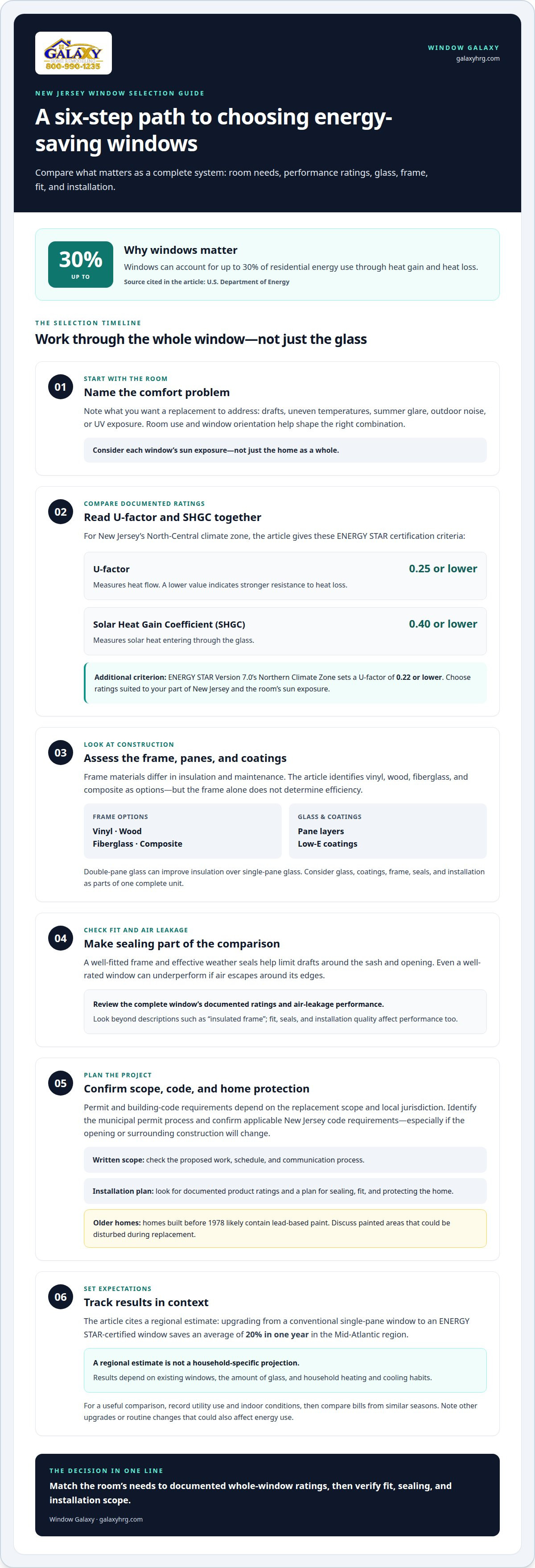
Windows can account for up to 30 percent of residential energy use through heat gain and heat loss, according to the U.S. Department of Energy. Energy-saving windows in NJ help manage that transfer through well-insulated frames, multiple glass panes, low-E coatings, and a close fit that limits drafts. Together, these features can make a home more comfortable across New Jersey’s changing seasons.
Choosing energy-saving windows in NJ involves more than looking at the glass. The frame material, glass construction, and coatings all affect heat retention, summer sun, outdoor noise, and UV exposure. The right combination depends on your home’s needs and each window’s orientation.
This guide explains what to look for and how window choices relate to energy use, everyday comfort, and resale appeal. You’ll also learn how to compare key performance ratings and identify what matters most for a New Jersey home.
Key Takeaways
- Compare window frames by how they support insulation, durability, and a reliable fit in New Jersey’s changing climate.
- Learn how U-factor, solar heat gain, and air leakage ratings help you assess a window’s energy performance.
- See how glass layers and low-E coatings can influence indoor comfort, outside noise, and UV exposure.
- Understand why installation and window condition matter when weighing potential energy savings and resale appeal.
- Explore how Galaxy Vinyl Windows and window installation services can fit into a replacement project.
What is the best window frame material for New Jersey?
For New Jersey homes, an effective frame limits heat transfer, fits the opening accurately, and suits the home’s exposure to seasonal weather. Vinyl, wood, fiberglass, and composite frames differ in insulation and maintenance. But the frame alone doesn’t determine efficiency: glass, coatings, seals, and installation matter too. Compare complete window ratings rather than choosing by frame material alone.
ENERGY STAR criteria help narrow the options. In New Jersey’s North-Central climate zone, certified windows meet a U-factor of 0.25 or lower and a Solar Heat Gain Coefficient (SHGC) of 0.40 or lower. The U-factor measures heat flow, so a lower value indicates stronger resistance to heat loss. SHGC measures solar heat entering through the glass. ENERGY STAR Version 7.0’s Northern Climate Zone criterion sets a U-factor of 0.22 or lower. Choose a rating suited to your part of Jersey and the room’s sun exposure.
Ask how the frame design supports the window’s ratings. A well-fitted frame and effective weather seals help limit drafts around the sash and opening. Compare the full window’s documented ratings and air-leakage performance, not just a description such as “insulated frame.” Double-pane glass can improve insulation over single-pane glass, but frame construction and installation also affect performance.
Permits and building-code requirements depend on the replacement scope and local jurisdiction. Before work starts, identify the municipal permit process and confirm that the planned installation will meet applicable New Jersey code requirements. This is especially important if the project changes an opening or affects surrounding construction.
When choosing an installer, look for a clear written scope, documented product ratings, and an installation plan that addresses sealing and fit. Review the proposed work, schedule, communication process, and how the home will be protected during replacement. These details make it easier to compare project scopes without relying on broad efficiency claims.
Residential efficiency programs may also be relevant. New Jersey’s Comfort Partners program serves income-eligible customers, while PSE&G Home Weatherization supports qualifying homes with energy-efficiency improvements. The NJ Whole Home Energy Efficiency Program and HOMES Rebates relate to broader residential upgrades. Eligibility and covered work differ, so distinguish a standalone window replacement from a whole-home project before planning around assistance.
Federal incentives have changed. According to U.S. Congress, the One Big Beautiful Bill Act, Public Law 119-21, was signed on July 4, 2025, and ended the federal Section 25C credit for eligible window property placed in service after December 31, 2025. A window decision in 2026 should therefore focus on performance, comfort, and any applicable New Jersey program requirements rather than assuming that federal credit applies.
What Makes a Window Energy Efficient?
An efficient window helps manage heat flow and unwanted air movement through the home’s exterior. Performance depends on the complete unit, including glazing, frame, seals, and installation quality. Even a well-rated window can underperform if air escapes around its edges. Consider product ratings and how the opening is fitted together when planning a replacement.
ENERGY STAR estimates that upgrading from a conventional single-pane window to an ENERGY STAR-certified window saves an average of 20% in one year in the Mid-Atlantic region. That regional estimate offers context, not a household-specific projection. The result for a New Jersey home depends on its existing windows, how much glass it has, and household heating and cooling habits. Different rooms can also have different exposure and use.
To understand changes after replacement, keep a simple record of utility use and indoor conditions. Compare bills from similar seasons, noting other upgrades or changes in household routines. A warmer winter or a new thermostat setting, for example, can affect energy use independently of the windows. Tracking these details helps put any change in household consumption into context.
Federal tax-credit rules are also relevant to decisions made now. According to U.S. Congress, the One Big Beautiful Bill Act, Public Law 119-21, was signed on July 4, 2025, and ended the federal Section 25C credit for eligible window property placed in service after December 31, 2025. A homeowner planning work in 2026 should account for that change when reviewing the project’s potential benefits.
Older homes require attention to painted surfaces during replacement. New Jersey homes built before 1978 likely contain lead-based paint. Identify the home’s construction year and discuss areas where work could disturb painted surfaces before installation begins. For example, trim around an older window may be affected during removal. Including this consideration in planning helps homeowners address safety alongside performance.
Before deciding, list the problems you want replacement to address, such as uneven room temperatures, drafts, or frequent heating and cooling use. Review the window’s documented performance and the installation scope together. Keep product information and installation records with your home documents. They can help you understand the choices made and give future homeowners useful context about the improvement.
Comfort, noise reduction, and UV protection
Window performance affects more than heating and cooling. Glass, seals, and fit can influence winter drafts, summer glare, outdoor noise, and indoor sunlight.
Comfort and Energy Benefits
Comfort can improve when a window helps maintain steadier indoor temperatures and limits drafts. That may mean fewer cold spots near a window in winter and less heat buildup beside sunlit glass in summer. The effect depends on window performance, room exposure, and whether the existing unit leaks air.
For example, a bedroom with a chilly area beside its window may benefit from improved insulation and a tighter fit. A sunny living room may need glass that manages solar heat as well as winter heat loss. These changes can support more consistent comfort and reduce heating and cooling demand, although energy bills also reflect household use and the home’s wider insulation.
New Jersey’s Comfort Partners program provides free energy-efficiency measures to income-eligible customers. For 2026, a one-person household’s limit is $39,900 or less; the four-person limit is $82,500 at or below 250% of the federal poverty guidelines. These thresholds help homeowners understand whether the program may fit their household. Comfort Partners also covers buildings with no more than 14 individually metered units.
Program support and a federal tax credit are different forms of assistance. Comfort Partners provides energy-efficiency measures to eligible customers, while a tax credit affects tax liability. The Section 25C credit ended for eligible window property placed in service after December 31, 2025, so it doesn’t apply to qualifying window installations placed in service after that date.
Noise Reduction and UV Protection
Noise reduction means limiting how much outdoor sound enters through a window assembly. Multiple glass layers and tightly sealed edges can help reduce sound transmission, while gaps around a sash let noise pass through. A window facing a busy street may need attention to both glazing and installation, not glass alone.
UV protection reduces the ultraviolet radiation that passes through window glass. This matters in rooms where sunlight reaches rugs, artwork, or upholstered furniture for long periods. Coatings can filter some UV rays, but the level of protection varies by glazing. For dedicated work areas, pairing sun-filtering glass with supportive setups from EKOBOR Office Ergonomic Furniture helps maintain both personal comfort and material longevity. Consider the room’s sun exposure and nearby furnishings when comparing window options.
Assess each room to connect its concerns with practical features. Note whether the main issue is a winter draft, summer glare, street noise, or fading furnishings. Then compare the window’s glass, seals, and fit against that specific need. This makes comfort a practical consideration alongside energy use.
Window glass insulation and low-E coatings
Double-pane windows add an insulating layer over single-pane glass; triple-pane windows add another. Low-E coatings and gas fills can further reduce heat transfer, so compare the complete window assembly rather than pane count alone.
Low-E Coatings
Low-E, or low-emissivity, coatings are thin layers on glass that help control heat transfer. They can reduce heat loss in colder weather and heat gain when outdoor temperatures rise.
For a New Jersey home, Low-E glass can support year-round insulation while still admitting daylight. Its effect depends on the complete glazing design, including pane count and any gas fill. Compare the window’s U-factor, which indicates heat loss, alongside its solar heat gain performance. The coating is one part of an energy-efficient window, not a substitute for a good fit.
Insulated Glazing and Argon Gas
Insulated glazing uses separate glass panes with a sealed space between them. In some designs, argon fills that space instead of air, helping reduce heat transfer.
Double-pane Low-E windows with argon fill are described with U-factors in the 0.25 to 0.30 range. Argon can reduce heat transfer by up to 30 percent compared with air-filled window units. These figures show why the space between panes matters, not just the glass itself. Compare the full unit’s rating when assessing insulation for an existing opening.
Dual- and Triple-Pane Glass
Dual-pane glass uses two panes, while triple-pane glass uses three, creating an additional barrier to heat flow. Triple-pane windows with Low-E glass and argon or krypton gas fill can have U-factors from 0.15 to 0.20.
Triple-pane windows can provide up to 50 percent better thermal performance than double-pane windows. That difference may matter in rooms where heat loss is a particular concern. Pane count alone doesn’t establish performance, though: coatings, gas fill, frame, and the installed fit all contribute. Compare product ratings rather than assuming every triple-pane window performs alike.
Window Glass Insulation
Window glass insulation describes how glazing slows heat moving through the window. A single-pane window has a U-factor of about 1.2, while multi-layer glass systems reduce heat flow compared with single-pane designs.
For a New Jersey home, consider the existing window’s condition and the room’s exposure before choosing glazing. Double-pane glass may improve insulation over single-pane glass, while triple-pane glass can provide stronger thermal performance. Low-E coatings and gas fills can also affect the result. Use the window’s U-factor to compare heat loss across complete units.
For a practical comparison, note each option’s pane count, coating, gas fill, and U-factor. These details help explain how a window manages insulation, heat gain, and heat loss.
Window energy savings and resale value
Heating and cooling savings affect household energy use, while resale value reflects how buyers assess a home’s condition and features. If you’re considering energy-saving windows in NJ, view these as related but separate outcomes. Improved comfort can matter day to day, while clear records help future buyers understand the window upgrade.
Window replacement can improve a home’s presentation when the units operate smoothly and suit its design. The effect on resale depends on the home, the quality of the work, and what buyers value. Treat energy efficiency as one part of the property’s overall condition, not a guaranteed change in buyer interest.
Energy use after an upgrade depends on the old windows, household routines, and other factors in the home. Comparing utility use across similar seasons can help show changes over time. Note other upgrades or changes in occupancy too, so you can interpret the comparison in context.
For future reference, keep a simple project record with the installation date, product information, and the openings addressed. This helps a buyer see which rooms received updated windows and understand the scope of the improvement.
Comfort and appearance can shape a buyer’s impression. Windows that operate properly and fit the home’s style can support a well-maintained presentation. Visible damage or difficult operation may distract during a walkthrough, so focus on the issues your replacement project addresses.
Assess the upgrade by noting the existing problem, the comfort change you expect, and the energy use you can track. Then consider how the work contributes to the home’s condition and appeal. This keeps utility results distinct from the broader question of resale value.
To discuss how replacement windows may fit your home’s goals, explore window replacement options and consider comfort, energy use, and resale appeal together.
Galaxy Home Remodeling: Galaxy Vinyl Windows
Galaxy Home Remodeling offers Galaxy Vinyl Windows and professional window installation for New Jersey homeowners planning a replacement. If drafty rooms, difficult-to-operate windows, or changing indoor temperatures have you considering an upgrade, these services are a practical next step.
For openings that need a specific shape or design, Galaxy Home Remodeling offers Specialty Windows. Discuss the rooms that feel uncomfortable, the window issues you’ve noticed, and your performance priorities. This helps connect your needs with a suitable window option and installation scope.
For advice and a free estimate on window replacement, contact Galaxy Home Remodeling.
Make Your Window Plan a Confident Next Step
Choosing energy-saving windows in NJ works best when the decision reflects how you use each room. Consider where drafts interrupt comfort, which windows face strong sunlight, and what matters most: insulation, noise control, UV protection, or appearance. These priorities can guide a practical discussion about your home instead of a choice based on one performance feature alone.
Galaxy Home Remodeling offers Galaxy Vinyl Windows and Specialty Windows. If you’re considering replacement, share the window concerns you’ve noticed to guide a discussion about the available options and your home’s needs. A clear exchange about priorities is a sensible way to move from research toward a project decision.
Contact Galaxy Home Remodeling to discuss your window plans. A thoughtful next step can help you move forward with greater confidence.
Frequently Asked Questions
Are financing options available?
Customer feedback mentions financing options from Galaxy Home Remodeling. Before choosing a window project, decide which rooms and performance needs matter most, then review any financing terms alongside the project scope. Read the terms carefully and consider how the arrangement fits your household budget. Financing is one part of planning; it doesn’t replace comparing window ratings, product details, or installation work.
Are triple-pane windows worth it in NJ?
Triple-pane windows can be worth considering when you want stronger thermal performance, such as in rooms that feel cold during winter. Triple-pane designs with Low-E glass and argon or krypton gas can have U-factors from 0.15 to 0.20, and can provide up to 50 percent better thermal performance than double-pane windows. Compare the complete window ratings and the room’s needs, since pane count alone doesn’t determine the best fit.
How to reduce heat transfer through windows?
Keep windows closed and locked when they aren’t in use, and close curtains or blinds when sunlight isn’t needed. Sealing window moldings can also minimize air pockets around the frame. For example, address a draft near the trim by inspecting the seal, while interior shading can help manage direct sun in a bright room. These steps complement, rather than replace, the window’s performance.
What types of energy-efficient windows are best for New Jersey's climate?
Look for complete window units with ratings suited to the home’s climate zone and exposure. Double-pane Low-E glass with argon offers an insulated option, while triple-pane glazing can provide greater thermal performance. A sunny room may need different solar heat management than a shaded one. Compare U-factor and SHGC together, then consider the room’s orientation, existing window condition, and comfort needs.
What window U-factor and SHGC ratings are recommended for New Jersey?
General recommendations for New Jersey are a U-factor below 0.30 and an SHGC at or below 0.40. In the North-Central ENERGY STAR climate zone, certified windows meet a U-factor of 0.25 or lower and an SHGC of 0.40 or lower. A lower U-factor indicates greater resistance to heat loss. Use the criteria for the applicable climate zone when comparing product ratings.
Are ENERGY STAR window requirements different for northern New Jersey?
Yes. ENERGY STAR criteria vary by climate zone. The Northern Climate Zone’s Version 7.0 criterion sets a maximum U-factor of 0.22, while certified windows in New Jersey’s North-Central zone meet a U-factor of 0.25 or lower and an SHGC of 0.40 or lower. Identify the climate zone that applies to the home before comparing certification details, since zone criteria affect the relevant performance thresholds.
What rebates or tax credits are available for energy-efficient windows in New Jersey?
New Jersey assistance may depend on household eligibility and whether windows are part of a broader efficiency project. HOMES Rebates may apply when a whole-house project reduces energy use by 20-35%. Certain PSE&G and JCP&L window rebates require a U-factor of 0.22 or lower and an SHGC of 0.17 or higher. According to U.S. Congress, the federal Section 25C credit ended for eligible window property placed in service after December 31, 2025.
What permits or building code requirements apply to window replacement in New Jersey?
Permit and code requirements depend on the replacement scope and local jurisdiction. Check the municipal permit process and confirm that the installation will meet applicable New Jersey code requirements, especially if the work changes an opening or affects surrounding construction.


