

Galaxy Home Remodeling helps homeowners plan exterior updates around their home’s needs and the look they want. If you’re considering low maintenance siding options, start by identifying what matters most, from the finished appearance to the care routine you’re comfortable managing.
Galaxy Home Remodeling offers Hardie plank siding and vinyl insulated siding, giving you options to consider for an exterior update. This guide explains the upkeep and practical trade-offs to weigh as you plan your home project.
Key Takeaways
- Galaxy Home Remodeling offers Hardie plank siding as an option for homeowners planning an exterior update.
- Galaxy Home Remodeling also offers vinyl insulated siding for homeowners considering low maintenance siding options.
- Galaxy Home Remodeling offers window installation services for homeowners planning window work.
- Keep your project priorities in mind when considering Galaxy Home Remodeling’s siding and window offerings.
- Contact Galaxy Home Remodeling to discuss the offerings that fit your home project.
How Much Maintenance Does Each Type of Siding Really Need?
When comparing Galaxy Home Remodeling’s siding options, consider the care each material needs. Hardie plank siding and vinyl insulated siding both benefit from proper installation and routine exterior checks.
The lower-maintenance fit depends on which tasks you prefer: occasional sealing and painting, or regular cleaning and checks for gaps or damage.
Fiber Cement Durability and Maintenance
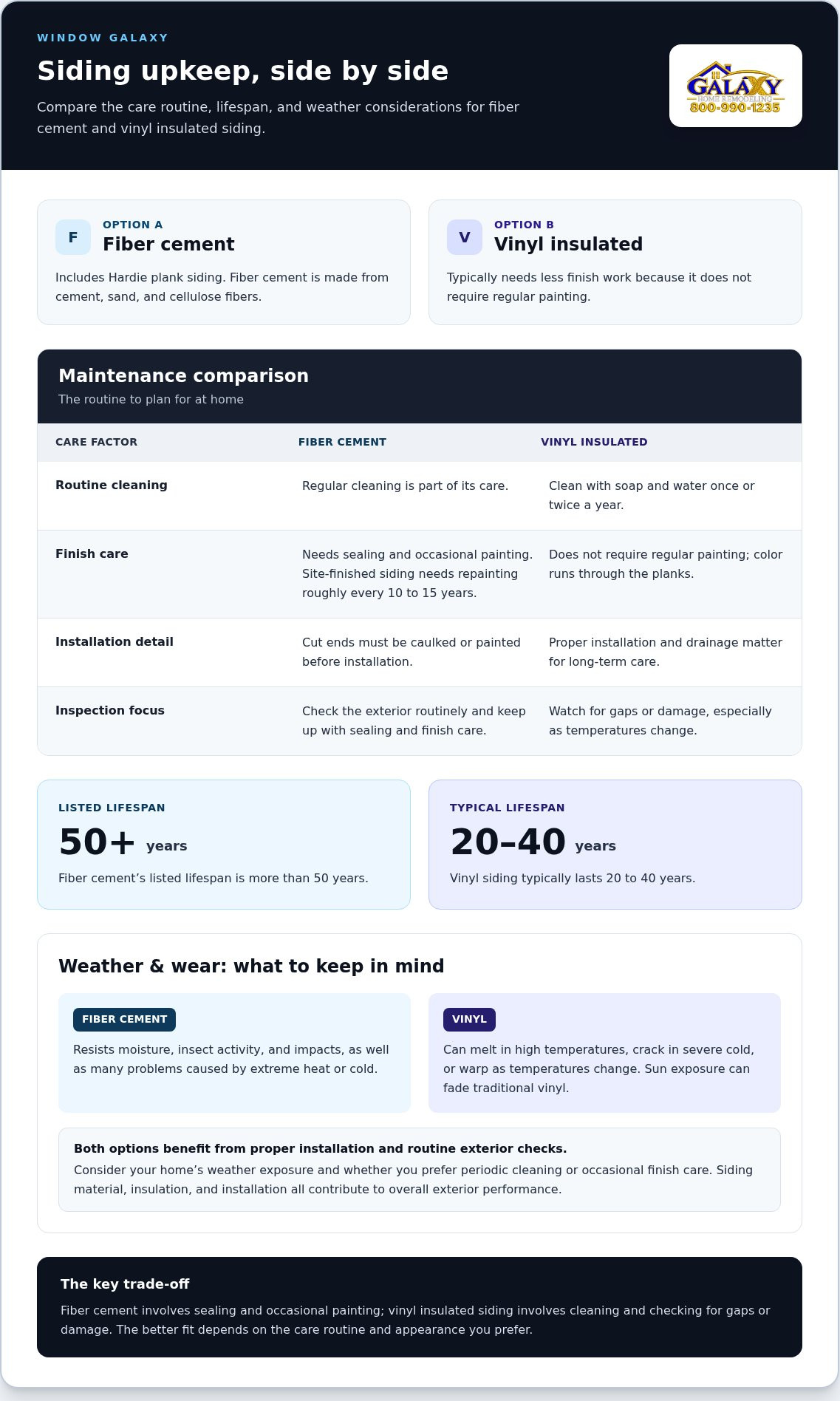
Galaxy Home Remodeling offers Hardie plank siding and fiber cement siding. Fiber cement is made from cement, sand, and cellulose fibers. It resists moisture, insect activity, and impacts, and its listed lifespan is more than 50 years. Fiber-cement siding can simulate wood without the same maintenance issues, according to the National Institute for Occupational Safety and Health (NIOSH).
Its care still includes regular cleaning, sealing, and occasional painting. Site-finished fiber cement needs repainting roughly every 10 to 15 years. Cut ends must be caulked or painted before installation, so preparation is part of the maintenance picture. Available styles include lap siding, board and batten, shiplap, architectural panels, and cedar-look options. These choices help homeowners compare the appearance they want with the upkeep they’re prepared to manage.
Lowest-Maintenance Siding Options
Galaxy Home Remodeling offers vinyl insulated siding and Hardie plank siding. Vinyl typically needs less finish work because it doesn’t require regular painting, while fiber cement needs occasional sealing and painting. Clean vinyl siding with soap and water once or twice a year, and watch for gaps that may need caulking as temperatures change.
For a useful comparison, look beyond the material name. Consider the installation, your home’s exposure to weather, and whether you’d rather manage periodic cleaning or occasional finish care. A material that needs less painting may still need inspection for damage or gaps.
| Galaxy Home Remodeling siding option | Routine care | Maintenance detail to consider |
|---|---|---|
| Hardie plank siding | Regular cleaning | Sealing and occasional painting; protect cut ends before installation |
| Vinyl insulated siding | Soap-and-water cleaning | Inspect for gaps or damage after temperature changes |
Choose by matching the care routine to your priorities: compare Hardie plank’s finish upkeep with vinyl insulated siding’s cleaning and inspection needs, then consider which appearance best suits your home.
Comparing siding by budget, durability, and energy efficiency
For heat and cold, fiber cement resists many related problems, while vinyl can melt in high temperatures or crack in extreme cold. Aluminum may dent in hail, and wind or coastal exposure makes sound installation and protected seams important.
Compare siding materials by upkeep, likely wear, and how they contribute to your home’s overall energy performance. The material alone doesn’t determine efficiency: insulation, the rest of the exterior, and installation also matter.
Vinyl Siding Upkeep and Durability
Vinyl siding is durable and needs relatively little upkeep, but temperature extremes can affect it. It may melt in heat, crack in severe cold, or warp as temperatures change. Sun exposure can fade traditional vinyl, and moisture trapped behind siding can contribute to mold, mildew, and wood rot. Proper installation and drainage matter for long-term care.
When weighing affordability, consider routine cleaning as well as possible repairs if panels are damaged or moisture gets behind them. Vinyl’s color runs through the planks, so it doesn’t peel or chip like paint, but fading and temperature-related damage can still occur.
Aluminum Siding Durability and Appearance
Aluminum resists moisture problems and insect activity, and it’s flame retardant. Its appearance involves a trade-off: color may fade into a chalky residue, so repainting may be needed every few years. A stray ball or hailstone can dent the surface, and metal siding can scratch.
Consider the surroundings before choosing aluminum. Where hail or frequent impacts are concerns, dents may affect appearance even if the material continues to protect the exterior. In coastal conditions, moisture resistance is useful, but careful installation and maintenance still matter.
Siding Performance in Extreme Conditions
Fiber cement resists moisture, impacts, insect activity, and many problems caused by extreme heat or cold. Vinyl is more vulnerable to temperature extremes, while aluminum can dent when struck by hail. These differences matter where local weather repeatedly exposes siding to heat, cold, or impact.
Wind and coastal exposure make the handling of panels, seams, and gaps especially important. Incorrect installation or exposed seams can increase future maintenance. Temperature swings can also make some siding expand and contract, creating gaps that may need caulking. Weigh these risks alongside each material’s upkeep.
For energy efficiency, assess siding as part of the whole exterior rather than as an isolated upgrade. Insulation and installation affect the home’s overall performance, while the siding material influences durability and maintenance. If vinyl is on your shortlist, consider vinyl insulated siding as one material option for your project.
Comparing siding materials by upkeep, lifespan, appearance, and installed cost
Material lifespan and care requirements help show the trade-offs between common siding choices. Vinyl typically lasts 20 to 40 years, while stucco has a listed lifespan of 50 to 100 years. Those ranges provide a useful comparison, but appearance, weather exposure, and maintenance also shape a material’s long-term fit.
Local building codes and HOA rules can affect which siding materials, colors, or installation details are allowed. Requirements vary by location and association, so the rules that apply to your home determine which choices are permitted.
Environmental impacts and recyclability depend on a siding material’s composition, manufacturing, service life, and end-of-life handling. Compare these factors for each material rather than assuming a long-lasting product is automatically recyclable.
Engineered wood has a listed lifespan of 20 to 30 years and needs repainting and resealing every 5 to 10 years. It can offer a wood-like appearance, but that finish requires more regular attention than vinyl, whose color runs through its planks. Composite siding typically lasts 30 to 50 years, making its expected service life another useful point of comparison.
Stucco can last 50 to 100 years, but it should be resealed or repainted every 5 to 10 years. It can also crack in certain weather conditions. Stone veneer offers a different appearance and doesn’t need scraping or painting; however, installing it across an entire home can be difficult. Consider both the visual effect and the scope of installation before choosing it.
Ground-contact ratings and installation conditions depend on the specific siding product. Don’t assume a rating based only on material category or appearance. Follow the product instructions for placement, fastening, and clearances, especially where siding approaches soil. This helps keep the installation within the product’s stated use.
Installation quality affects future maintenance for every material. Exposed seams and gaps can increase upkeep, while poor fitting can leave vulnerable points where weather reaches the exterior. Before work begins, review how the installation will handle seams, edges, and transitions. These details matter for engineered wood, composite siding, and other panel or plank materials.
For lasting appearance, match the material’s maintenance rhythm to your priorities. Cedar siding needs staining or repainting every 3 to 5 years to help prevent deterioration. Engineered wood’s 5-to-10-year repainting and resealing cycle asks for more regular attention than stone veneer’s no-scraping, no-painting upkeep. Compare these routines alongside lifespan, style, and installation requirements to narrow your choices.
Siding materials to avoid for low maintenance
Natural wood, cedar shakes, and T1-11 siding demand regular attention, making them less suitable for homeowners prioritizing minimal upkeep. Wood siding needs painting or staining, while cedar should be stained or repainted every 3 to 5 years to help prevent deterioration. T1-11 also needs frequent sealing, painting, or staining.
Moisture is a major concern for wood. Rain, snow, and standing water can cause wood siding to rot, sag, and weaken. Birds, rodents, and insects are also more attracted to natural siding, especially where open seams or installation gaps provide access. Natural wood’s appearance may appeal to homeowners, but maintaining its finish is part of the trade-off.
Vinyl and brick aren’t maintenance-free. Vinyl can fade in the sun, crack or warp in extreme temperatures, and conceal moisture problems behind panels. Brick may also need care to keep its exterior in good condition. Neither material should be treated as entirely maintenance-free.
Compare lifespan with care requirements, not as a guarantee of how long any particular siding will last. Vinyl typically lasts 20 to 40 years, while engineered wood has a listed lifespan of 20 to 30 years. Engineered wood also needs repainting and resealing every 5 to 10 years. These cycles affect the long-term effort of keeping the surface finished and resistant to weather.
Stucco presents a different trade-off. Its listed lifespan is 50 to 100 years, but resealing or repainting is recommended every 5 to 10 years. Stucco can also crack in certain weather conditions. Homeowners weighing its appearance should account for both recurring finish care and the possibility of addressing cracks.
Warranty coverage depends on the specific siding product and its written terms. Repair needs vary with material, damage, exposure, and installation quality, so no single repair expectation applies to every home. Review the product warranty’s coverage, exclusions, and maintenance requirements before choosing a finish.
Use these practical steps to compare options:
- List the routine tasks each material requires, such as staining cedar or resealing engineered wood.
- Consider local exposure to moisture, temperature swings, and direct sun, which can affect upkeep and fading.
- Include installation details in the decision. Exposed seams or gaps can increase future maintenance.
- Choose a texture and appearance you’re prepared to maintain, rather than judging only by the initial finish.
For homeowners seeking less recurring painting and sealing, vinyl, metal, and fiber cement are lower-maintenance choices. Each has different vulnerabilities: temperature can affect vinyl, impacts can dent metal, and fiber cement needs occasional sealing and painting.
Vinyl and aluminum siding maintenance and drawbacks
Vinyl and aluminum can reduce routine upkeep, but each has specific weaknesses. Climate, sun exposure, impacts, and installation details affect appearance and repair needs. A practical comparison looks beyond cleaning to what can damage the exterior and what maintenance may follow.
Vinyl Siding: Cleaning, Temperature, and Moisture
Vinyl siding usually needs cleaning with soap and water once or twice a year. This routine helps remove dirt, while occasional power washing can clear dirt and mold buildup. Sun exposure can fade traditional vinyl, and temperature swings can make some siding expand and contract, leaving gaps that may need caulking.
Extreme heat can melt vinyl, while extreme cold can make it crack. Panels may also warp as temperatures change. Hidden moisture is another concern: vinyl can conceal water problems behind the exterior, where mold, mildew, and wood rot may develop. If you notice damage or gaps, address the affected area rather than treating cleaning as a substitute for repair. Vinyl’s low-maintenance appeal depends partly on keeping the installation intact and responding to visible problems.
Aluminum Siding: Surface Wear and Upkeep
Aluminum resists moisture problems and insect activity, but its finish can change over time. Sun exposure may fade the color into a chalky residue, and repainting may be needed every few years. Hail or a stray ball can dent the surface and affect the exterior’s appearance. Metal siding can scratch, too, so minimal routine maintenance doesn’t mean the surface will remain unmarked.
With aluminum, consider where impacts are likely, such as near play spaces or on exposed walls. If a dent or scratch appears, assess whether it affects the appearance or needs repair. Painting can refresh faded siding, but adds a maintenance task that color-through vinyl generally avoids. The choice comes down to which wear you’d rather manage: vinyl’s temperature and moisture concerns, or aluminum’s surface damage and fading.
Use this short inspection routine to keep upkeep focused:
- Clean vinyl with soap and water once or twice a year, and watch for dirt or mold buildup.
- Look for gaps after temperature swings, since expansion and contraction may call for caulking.
- Check for fading, chalky residue, dents, and scratches on aluminum surfaces.
- Pay attention to damaged panels and signs of moisture behind siding, not just the visible finish.
Installation quality matters for both materials. Exposed seams and gaps can increase future maintenance, while concealed moisture may go unnoticed behind vinyl. Choose based on your climate, exposure to impacts, and willingness to monitor the exterior. For a vinyl siding project, explore vinyl insulated siding as an option suited to your home’s needs.
Galaxy Home Remodeling: Galaxy Vinyl Windows
Galaxy Home Remodeling offers Hardie plank siding for homeowners planning a durable siding upgrade. If fiber cement’s resistance to moisture and range of styles appeal to you, Hardie plank siding may be worth considering. The right choice depends on the appearance you want and the maintenance routine you’re comfortable with, including occasional cleaning, sealing, or painting.
Use these material comparisons to clarify your priorities before planning an exterior project. Galaxy Home Remodeling also offers Galaxy Vinyl Windows, Specialty Windows, and Window Installation Services for homeowners considering window updates alongside siding work. Contact Galaxy Home Remodeling to discuss Hardie plank siding for your home.
Plan an Exterior Update That Fits Your Home
Choosing among low maintenance siding options is an opportunity to set priorities for your home’s exterior: the look you want, the care you’re comfortable with, and how siding fits into your renovation plans. Consider the whole project together, especially if window updates are also on your mind. A clear scope helps you plan work around your home’s needs.
Galaxy Home Remodeling offers Galaxy Vinyl Windows and Specialty Windows, as well as window installation services and Hardie plank siding. If you’re considering siding alongside new or replacement windows, discuss both needs together and decide what suits your home.
Contact Galaxy Home Remodeling to talk through your exterior project. A thoughtful next step can help you move forward with confidence.
Frequently Asked Questions
What About Brick, Stone Veneer, and Insulated Vinyl?
These materials involve different trade-offs in appearance and upkeep. Stone veneer doesn’t need scraping or painting, but covering an entire home can make installation challenging. Brick isn’t maintenance-free. Insulated vinyl is another siding format to consider, but insulation details depend on the specific product and wall assembly. Compare samples and installation scope, then consider how each option fits your home’s exterior and maintenance preferences.
How do vinyl, fiber cement, engineered wood, metal, and brick siding compare for maintenance?
Vinyl needs periodic cleaning, while fiber cement also requires sealing and occasional painting. Engineered wood needs repainting and resealing; metal needs minimal routine care but can dent or scratch. Brick isn’t maintenance-free. To compare materials for your home, list the tasks you’re willing to handle, then consider likely wear, appearance, and the care needed to keep the exterior in good condition.
How much does low-maintenance siding cost per square foot installed in the United States?
The installation scope varies by home and material, so compare what the work includes rather than relying on a material label alone. Account for existing siding removal, surface preparation, trim, and treatment of seams or transitions. An itemized scope makes it easier to compare proposed installations on the same basis and understand the planned work.
What is the lifespan of different low-maintenance siding materials?
Listed lifespans vary by material: vinyl typically lasts 20 to 40 years, fiber cement more than 50 years, and metal siding is described as lasting more than 50 years. Engineered wood is listed at 20 to 30 years, composite at 30 to 50 years, and stucco at 50 to 100 years. Treat these ranges as comparisons, and consider exposure and upkeep when planning.
What cleaning and upkeep does each siding type require?
Match care to the material: wash vinyl with soap and water, clean metal when dirt accumulates, and keep fiber cement clean while maintaining its seal and finish. Engineered wood needs recurring paint and sealant care; stucco needs periodic resealing or repainting. Natural wood requires painting or staining. Follow the chosen product’s care instructions, since cleaning tools or coatings suitable for one surface may not suit another.
Which siding options resist rot, insects, moisture, and mold best?
Fiber cement resists moisture and insect activity, while aluminum resists moisture problems and insects. Stone veneer can also resist moisture issues and insect activity. Vinyl can conceal moisture behind panels, where mold, mildew, or wood rot may develop. With any material, keep seams and transitions properly addressed, and look for signs of trapped water rather than judging protection by the visible surface alone.
How energy-efficient are low-maintenance siding options, and which can be insulated?
Siding is only one part of a home’s energy performance. Wall insulation, air leakage, windows, and installation details also affect how the exterior performs. Galaxy Home Remodeling offers vinyl insulated siding for homeowners planning an exterior upgrade. Assess siding alongside the wall assembly and existing insulation rather than assuming one material determines comfort or energy use.
How do you choose and install low-maintenance siding, and what mistakes or risks should you avoid?
Start by matching material upkeep to your preferred routine and your home’s exposure to sun, moisture, temperature changes, and impacts. Then plan the installation around edges, seams, openings, and transitions. Avoid exposed gaps or careless fitting, which can increase future maintenance. Follow the selected siding’s instructions and consider how its texture and color will look across the entire exterior.


