

Cheap replacement windows can create problems when poor materials or installation lead to early replacement, visible wear, drafts, or moisture damage. The risks of cheap replacement windows can also affect resale: buyers may see damaged frames, condensation, or difficult operation as problems that need attention. Low-cost windows typically need replacing within 5 to 10 years.
When planning a home improvement project, it’s natural to look for a practical solution. But the initial price is only part of the picture. How well a replacement window performs and holds up over time matters, too.
This article explains how low-quality windows can affect resale appeal, energy efficiency, repairs, and upkeep. You’ll also learn what to consider when choosing an installer, so you can make a more informed window replacement decision.
Key Takeaways
- Window performance depends on both product quality and careful installation; poor fit or sealing can lead to drafts, leaks, and operating problems.
- Air leaks can make heating and cooling less efficient, while Low-E coatings and argon gas fills are features to understand when comparing window options.
- Visible wear, condensation, or windows that are difficult to operate can affect a home’s appeal to future buyers.
- Lower-grade materials may warp, crack, or discolor over time, so consider durability and possible repairs alongside the initial choice.
- Clear communication, accurate measurements, and careful installation practices can help you make a more informed contractor decision.
Is it worth paying more for high-quality windows?
Window performance depends on its materials, fit, and installation. High-quality windows can last 20 to 50 years, depending on material and installation, so careful work helps the window perform as intended throughout its service life.
Professional Installation Expertise
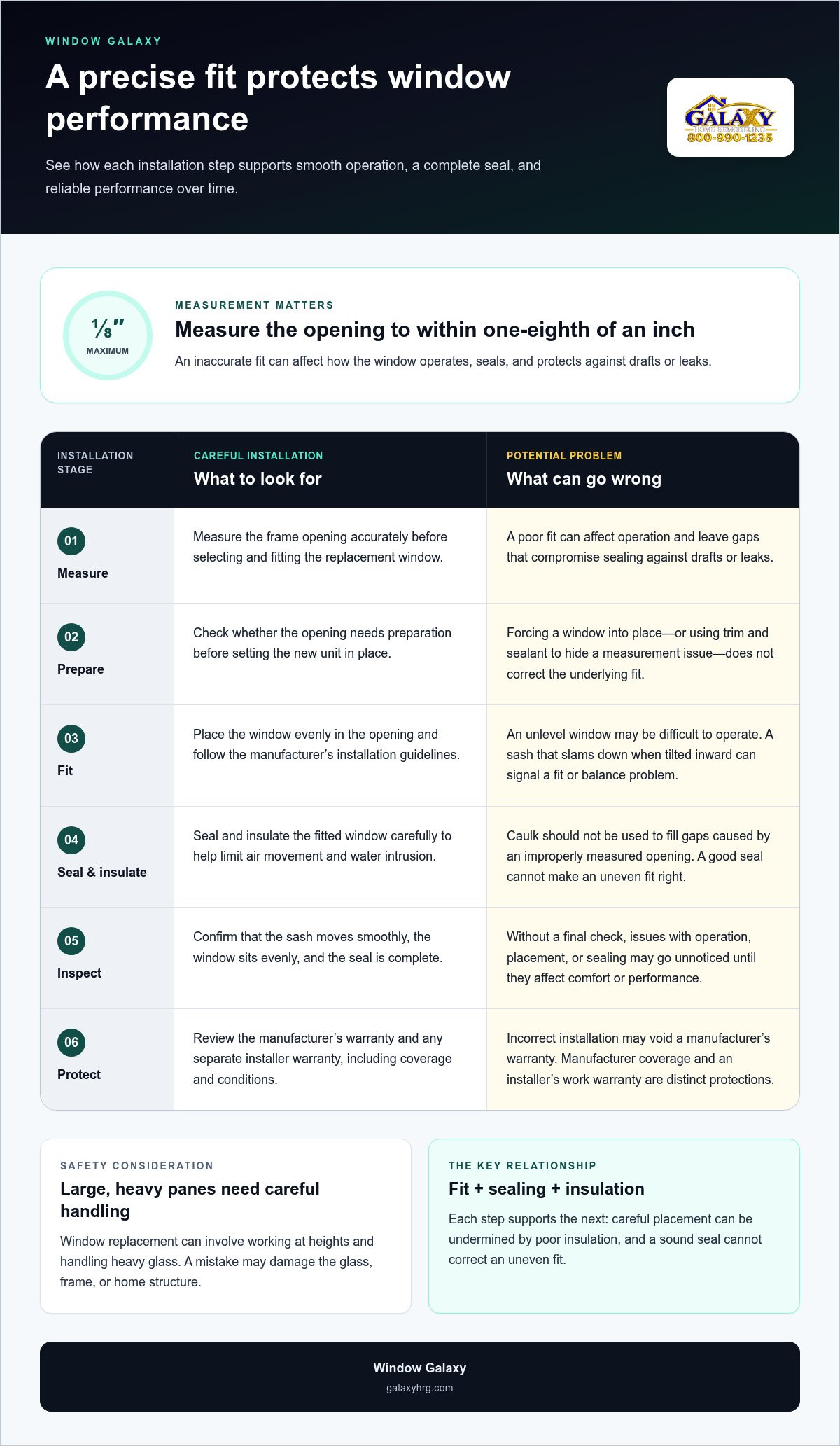
Professional window installation involves accurate measuring, safe handling, and careful fitting within the existing opening. A replacement window must be measured to within one-eighth of an inch to fit the frame opening. That precision matters: an inaccurate fit can affect operation, sealing, and protection against drafts or leaks.
Experienced installers can also identify when an opening needs preparation before the new unit is fitted. This helps prevent forcing a window into place or using trim and sealant to conceal a measurement problem.
Installation Process and Errors
Professional installation typically involves measuring and preparing the opening, fitting the window according to manufacturer guidelines, sealing and insulating it, and inspecting the finished work. Each step supports the next. A sound seal cannot correct an uneven fit, and careful placement can be undermined by poor insulation.
Gaps around a replacement window shouldn’t be filled with caulk to compensate for an improperly measured opening. An unlevel window may also be difficult to operate. For example, a double-hung sash that slams down when tilted inward can signal a fit or balance problem.
Installation errors can affect warranty protection. Incorrect installation may void a manufacturer’s warranty, while some professional installers offer a separate warranty on their work. These protections are distinct: one concerns the manufacturer’s terms, the other the installer’s work. Read each warranty’s coverage and conditions to understand how installation problems are addressed.
DIY installation also involves practical safety concerns. Replacing windows can require working at heights and handling large, heavy panes of glass. A mistake may damage the glass, frame, or home structure. Setting the unit square in the opening and handling it safely are essential parts of the work.
A clear installation plan should explain how measuring, opening preparation, sealing, insulation, and inspection fit together. The final inspection should confirm that the sash moves smoothly, the window sits evenly, and the seal is complete. These checks can identify problems before they affect comfort or operation.
Window quality and installation go hand in hand. Material durability matters, but so does the accuracy of each step. A properly fitted window should operate as intended and remain sealed against the weather. Together, these factors support protection and reliable performance over time.
Why are cheap windows more prone to energy inefficiency?
Yes. Poorly made or poorly sealed windows can allow drafts, water leaks, and condensation. Persistent moisture can create conditions favorable to mold. The U.S. Environmental Protection Agency explains that warm, humid air entering through a poorly sealed building envelope can condense on cool surfaces.
Energy performance depends on more than the glass. The frame, seals, and installation all affect how well a window limits air movement and heat transfer.
Drafts and Air Leaks
Drafts and air leaks let conditioned indoor air escape while outdoor air enters, making it harder to maintain a steady temperature. A gap around the frame or a damaged seal can create a cold spot beside a window in winter.
In warm weather, the same weakness can let cooled air escape, forcing the HVAC system to work harder to maintain the chosen temperature. Openings can also let dust and pollen inside, affecting comfort and cleanliness.
Energy Loss and Utility Bills
Energy loss occurs when heat moves through a window or air leaks around its frame. Windows can account for up to 30% of a home's energy loss.
That’s why each window’s condition matters to the home’s overall thermal performance. A window may look fine while its seals or frame still allow air to pass.
For example, a room that stays chilly near a closed window may point to air leakage or heat transfer. If the HVAC system runs more often to compensate, it has to work harder to maintain the desired temperature.
Condensation, Water Leaks, and Mold
Condensation forms when moisture in the air meets a cool surface; leaks can also let water reach the frame or wall. Repeated dampness can damage finishes and create conditions that support mold or mildew.
Watch for recurring fog, damp trim, water marks, or peeling paint near a window. Fog trapped between panes cannot be wiped away from either side and can signal a failed seal. Water around the frame may point to a separate leak.
Low-E coatings and argon gas fills are features used in some insulated glass units to limit heat transfer. Low-E coatings reflect some radiant heat, while argon between panes slows heat movement through the glass space. These features cannot correct a leaking frame or poor installation, so assess the glazing alongside the frame and seals.
Assess the entire window assembly: glass, frame, seals, and how each part meets the opening. This helps distinguish a glazing feature from a draft caused by a gap or damaged seal. Identifying the source can help limit ongoing energy loss and moisture damage while protecting the window and surrounding interior.
Choosing a qualified window contractor
Choose an installer who explains the work clearly, communicates consistently, and understands local homes. These qualities help connect the window choice with fit, comfort, and the installation details that affect performance.
A vague quote may hide unclear exclusions or charges that appear only after work begins. Compare written proposals by window count, product description, installation tasks, cleanup, warranty coverage, and exclusions. If you’re pressured to decide before these details are clear, pause and ask for clarification.
Look for clear answers and communication
A qualified installer should explain the project in plain language and respond consistently to questions. Ask how the team will handle measurements, prepare each opening, seal the frame, and check window operation after installation.
Local experience can matter because homes differ in their existing frames, layouts, and exposure to weather. An installer familiar with local conditions can explain how these details affect the work instead of offering the same answer for every opening. A clear online presence can also show how a business communicates and presents its work.
Compare the complete scope
Use the written scope to compare like with like, not just product names or a single line item. Check whether each proposal addresses removal, opening preparation, sealing, insulation, disposal, and final inspection. If any step is unclear, get the scope explained in writing before deciding.
Give warranty terms the same attention. Separate coverage for the window from coverage for installation work, and note what each document says about defects or correcting installation errors. A written explanation gives you a clear reference if repairs become necessary.
Choose for lasting comfort
Choosing affordable windows doesn’t mean choosing based on one feature alone. A double-pane description, for example, says nothing by itself about frame quality, seals, installation, or how the window suits the home. Consider the full assembly and the work needed to fit it properly.
To save money over time, weigh durability, energy performance, expected maintenance, and the likelihood of repairs. A low initial outlay may prove less useful if the frame warps or the seal fails. A well-matched window can support comfort and reduce drafts. The right decision depends on the home’s openings, weather exposure, and installation scope.
Look for clear answers, consistent communication, and a written project scope before choosing. These steps help you assess the risks of cheap replacement windows without treating a low initial price as the only measure of value.
Long-term costs of low-quality replacement windows
Low-quality windows can create repeat work when frames warp, seals fail, or operation becomes difficult. Low-cost windows typically need replacement within 5 to 10 years. That shorter service life can mean homeowners face another round of removal, installation, and interior finishing sooner than expected.
Long-term value includes more than the window itself. Consider whether it stays weather-tight, opens and closes smoothly, and protects the surrounding frame and wall. A poorly fitted unit can lead to repairs beyond the window, such as replacing damp trim or fixing damaged interior finishes. Those follow-up tasks add work and disruption.
Window styles also affect project scope. A single-hung window has a fixed upper sash and a movable lower sash, while other designs operate differently. The opening’s condition, window dimensions, and installation requirements shape the work involved. For windows and doors, compare the complete project scope rather than assuming similar-looking units require identical work.
DIY replacement may seem like a way to avoid installation labor, but the job involves more than fitting a unit. Account for safe handling, opening preparation, sealing, insulation, disposal, and inspection. Shipping and tool needs also vary with the window’s size and the work required. Damage to the frame or glass during removal can mean more work, and incorrect installation may leave air or water paths that need repair.
In the United States, permit requirements depend on local rules and the project’s scope. Local requirements may treat a like-for-like replacement differently from a change that alters an opening. The relevant building department’s rules determine whether a permit applies to the planned work.
For 2026, whether replacement windows qualify for an incentive or tax credit depends on the active program’s rules and the specific product and work. Eligibility is not automatic for every window replacement, so homeowners should distinguish a qualifying improvement from a routine product swap.
To assess long-term value, compare materials, operating style, installation scope, warranty terms, and likely maintenance needs. Then consider what happens if a frame or seal fails: who handles the repair, what work is covered, and whether surrounding finishes may need attention. These details help distinguish a durable investment from an option that could become expensive through repeated replacement and follow-up work.
Risks of poorly made replacement windows
Poorly made windows can lose performance as materials age, affecting comfort, appearance, and the home’s protection. Lower-grade materials can warp, crack, or discolor over time. These changes may make a window harder to operate, weaken its seal, and reduce the benefit homeowners expected from replacing it.
Look for practical signs rather than judging by appearance alone. A window that sticks, won’t close firmly, or looks uneven may point to a problem with the unit or its installation. Check for drafts, water damage, condensation, and cracked joints or panes. These clues can help distinguish a cosmetic issue from a problem affecting function or the surrounding wall.
Water deserves prompt attention. Repeated condensation can dampen interior wood, and moisture may seep into walls, potentially weakening interior structures. The U.S. Environmental Protection Agency explains that warm, humid air entering a poorly sealed building envelope can condense on cool surfaces, creating conditions for moisture damage and mold. Persistent fog between panes is another warning: trapped moisture cannot be wiped away, and correcting the damage may require replacing the entire window.
Failed seals and damaged frames can also let dust, pollen, insects, or rodents into the home. A drafty window may force the HVAC system to work harder, while water intrusion can affect nearby trim and finishes. In a storm, a window that won’t close and operate properly may leave the interior more exposed. A secure window should shut firmly, so test its operation rather than assuming the lock or sash works as intended.
Recurring fog, drafts, or operating trouble can signal that a window’s useful life is being limited by material or installation problems. Low-cost windows typically need replacement within 5 to 10 years. That timeline helps explain why the lowest initial outlay may not deliver lasting value: repeated repairs, disrupted rooms, and earlier replacement can erode the benefit over time.
For peace of mind, assess each window as a complete assembly: glass, frame, joints, seal, and operation. Note whether damage recurs in the same place, condensation returns, or the sash closes unevenly. These observations give a clearer picture of longevity than a fresh appearance alone. A durable replacement should support dependable operation and weather protection, not just improve the view.
The takeaway is simple: judge a replacement by how it performs over time, not by its initial appearance. Paying attention to material condition, signs of moisture, and smooth operation can help you catch problems early and protect the value of the improvement.
Galaxy Home Remodeling: Galaxy Vinyl Windows
Galaxy Home Remodeling offers Galaxy Vinyl Windows and professional window installation for homeowners planning a replacement. If you’re weighing durability, fit, and installation together, discussing the project with a team that handles both windows and installation can help clarify the choices for your home.
Galaxy Home Remodeling also offers Specialty Windows for projects where a standard window shape or configuration may not suit the opening. The right option depends on your home’s needs and the work involved, so consider the window and its installation as one project rather than separate decisions.
For a thoughtful conversation about window replacement, contact Galaxy Home Remodeling.
Make your next window decision with confidence
Use your next step to focus on what matters in your home: dependable operation, lasting comfort, and a window that suits the opening. The risks of cheap replacement windows are easier to weigh when you look beyond the product’s appearance and consider how the choice fits your home and plans.
Galaxy Home Remodeling offers Galaxy Vinyl Windows, Specialty Windows, and professional window installation. The right fit depends on your home’s needs, the window opening, and the work involved. A conversation can help you consider those details together and understand the options for your project.
Choose a path that feels clear and practical, with room to discuss your priorities and questions. Contact Galaxy Home Remodeling to talk about your replacement-window project and take the next step with confidence.
Frequently Asked Questions
How can cheap windows affect the resale value of my home?
Damaged or poorly functioning windows can make a home appear to need maintenance, affecting how buyers assess its condition. A sticking sash, visible moisture marks, or mismatched frames may prompt questions during a showing or inspection. Keep records of replacement and repair work, and address visible issues before listing. No single resale-value effect applies to every home.
What are the environmental implications of choosing cheap windows?
Windows with poor thermal performance can increase the energy a home needs for heating and cooling. If they wear out sooner, they must also be removed and disposed of earlier. Environmental impact depends on the window’s materials, useful life, and performance in the home. Choosing for durability and a suitable fit can help avoid premature replacement and unnecessary material waste.
What are common problems with cheap replacement windows?
Common problems include frames that warp or discolor, cracked components, difficult operation, drafts, and moisture between panes. These issues may appear separately or together. For example, a window that becomes harder to close while condensation persists may have both an operating problem and a compromised seal. Note when symptoms occur and whether they affect one window or several; the pattern can help clarify the problem’s scope.
How do low-cost replacement windows compare with midrange and premium windows?
Labels alone don’t establish how a window will perform in your home. Compare the material, frame construction, glass features, operating style, warranty terms, and installation scope instead. A higher product tier may include different components, but fit and installation still influence the complete window’s performance. Reviewing written specifications side by side makes meaningful differences easier to identify without relying on category names.
What energy-efficiency ratings should replacement windows have?
Look for the window’s U-factor and solar heat gain coefficient, or SHGC, on its performance label. U-factor indicates how readily heat passes through the window; SHGC describes how much solar heat enters. The best balance depends on climate, window orientation, and household comfort needs. Compare ratings across the same window type, and consider the frame and air sealing alongside the glass.
How long do budget replacement windows typically last, and what warranties do they include?
Warranty coverage varies, so read the written terms for the window and installation separately. Check which components are covered, what conditions apply, and how to report a defect. Installation errors can affect manufacturer warranty protection, so understand how the product warranty treats installation-related issues before work begins.
What installation mistakes can cause replacement windows to fail?
Incorrect measurements, an uneven fit, poor sealing, and inadequate insulation can all contribute to failure. Caulk shouldn’t be used to disguise a window that doesn’t fit its opening correctly. After installation, check that each sash moves smoothly, closes securely, and sits evenly in the frame. Drafts, water marks, or recurring condensation can signal trouble that needs attention before surrounding materials are affected.
How can homeowners evaluate a window installer’s credentials, reviews, and references?
Consider local experience, a clear online presence, direct answers, and consistent communication. Reviews are most useful when they describe specific parts of a project, such as scheduling, installation care, or follow-through, rather than offering only a star rating. Look for a written project scope and clear explanations of responsibilities. References can add context about how an installer communicated and resolved concerns during completed work.


