

Replacing worn or damaged siding with a material and style that suit your home is a practical way to improve exterior siding curb appeal. A clean, cohesive exterior looks well cared for, while a considered color and profile can make the house feel more welcoming.
Choosing replacement siding involves more than appearance. Consider upkeep, the condition of the existing siding, and how each material and style works with your home. The right choice should complement the house, not simply follow a passing trend.
This guide compares popular siding materials and styles, explains how maintenance affects your exterior’s appearance, and considers the first impression siding can make on buyers. You’ll also find practical points to weigh when replacement could give your home a more polished, unified look.
Key Takeaways
- Regular cleaning and attention to gutters, windows, and walkways can help your home look cared for.
- Compare siding materials by their appearance and upkeep needs, then choose a style that complements your home.
- Coordinate siding with landscaping, the front entry, and other exterior details for a more cohesive first impression.
- Assess color and profile in the context of your surroundings before deciding whether replacement is the right update.
- Explore Hardie plank siding with Galaxy Home Remodeling when you’re considering a siding change.
1. Exterior maintenance and perceived home condition
Your home’s exterior is the first thing visitors and potential buyers see. Clean siding, windows, and walkways help the property look cared for, while grime or visible damage can raise questions about upkeep elsewhere. Regular maintenance keeps the focus on your home’s features rather than signs of neglect.
Seasonal cleaning removes dirt, mildew, and grime from siding, windows, garage doors, and porches. Start with a hose and sponge for surfaces that need gentle cleaning. A pressure washer can address stubborn stains or hard-to-reach areas, but use care around siding joints and finish. Clear leaves and other debris from walkways and driveways, then clean windows so the exterior looks consistent.
Pay attention to gutters: leaks, rust, and clogs can leave stains and contribute to water damage. Clear debris so water can drain, and look for visible leaks or rust during routine upkeep. Stains below a gutter or damp areas near siding may signal an issue that needs attention. Keeping gutters clear helps protect the appearance of siding and trim.
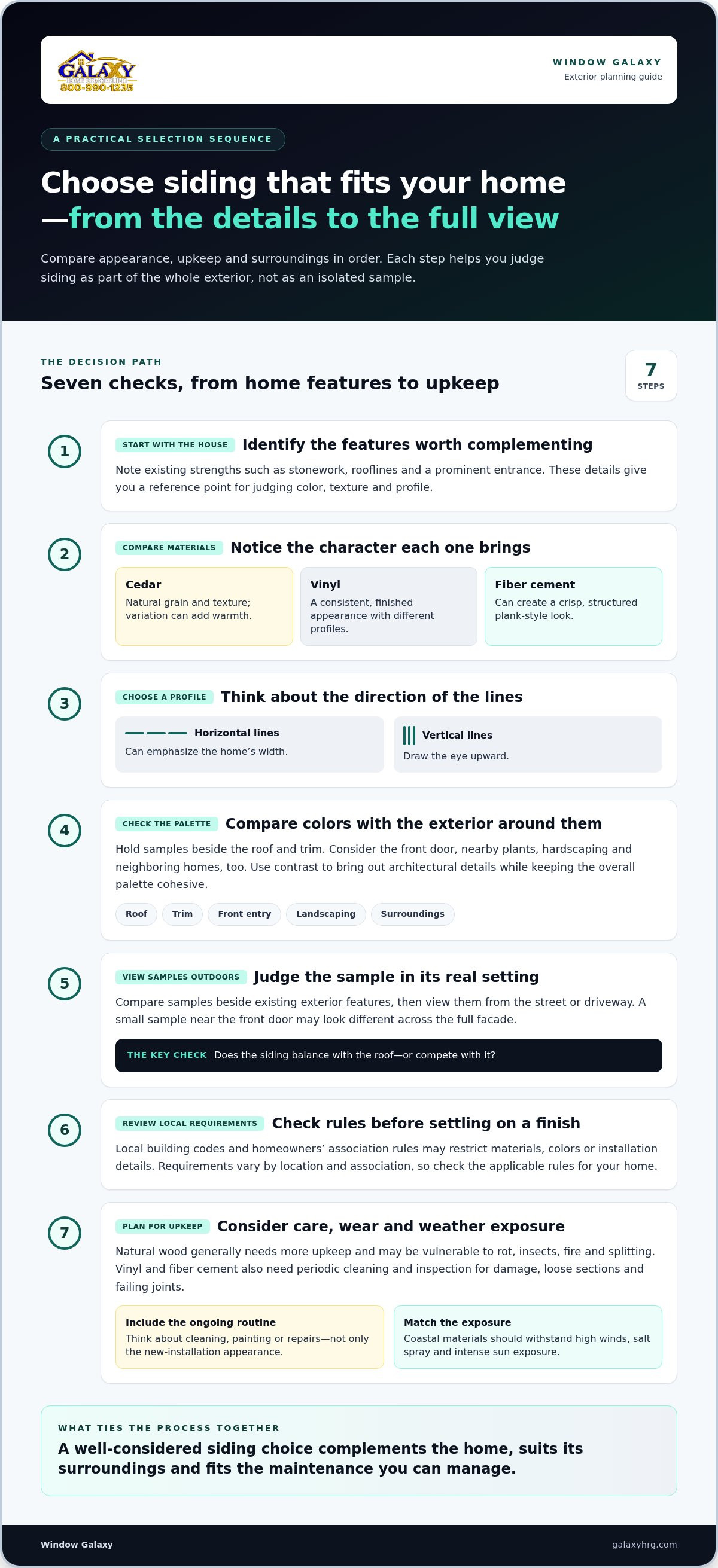
Yes. Local building codes and homeowners’ association rules may restrict siding materials, colors, or installation details. Requirements vary by location and association, so review the applicable rules before choosing a finish.
To coordinate siding with roofing, trim, and landscaping, compare their colors together rather than choosing each in isolation. Hold samples beside the roof and trim, then consider nearby plants, hardscaping, and neighboring homes. Use contrast to bring out architectural details while keeping the overall palette cohesive. Shutters can repeat the trim color or add a restrained accent.
Maintenance needs and weather exposure vary by material. Natural wood siding generally needs more upkeep than engineered wood and may be vulnerable to rot, insects, fire, and splitting. Monitor wood for wear, especially in extreme climates. Vinyl and fiber cement also need periodic cleaning and inspection for damage, loose sections, and failing joints.
Factor maintenance into your siding comparison. A finish that needs frequent attention may require more time for cleaning, painting, or repairs than one with simpler upkeep. Consider the ongoing routine, not just how the siding looks when newly installed. Prompt repairs can stop a small defect from spreading and requiring more extensive work.
Proper installation affects more than appearance. Poorly installed siding can leave gaps or weak points in an exterior wall. The U.S. Environmental Protection Agency notes that repairing such issues can help seal exterior walls. Look for uneven courses, loose edges, and openings around trim. Addressing them supports a clean finish and more manageable exterior maintenance.
2. Cedar, vinyl, and fiber cement siding
Cedar, vinyl, and fiber cement create different impressions from the curb. Cedar has natural grain and texture, while vinyl offers a consistent, finished appearance. Fiber cement can create a more substantial look, including with plank styles. Compare each material against the same features: roof color, window trim, front door, driveway, and the character of the neighborhood.
Cedar works well when visible wood texture complements the home’s architecture. Its natural variation can add warmth to a simple exterior, especially alongside stone or mature landscaping. The finish affects the result: a lighter color can feel open, while a deeper tone gives the siding more visual weight. Consider how the cedar will look with existing shutters, trim, and nearby shrubs.
Vinyl siding comes in a range of appearances, from horizontal lap profiles to vertical lines. Compare how each profile changes your home’s proportions: horizontal lines can emphasize width, while vertical boards draw the eye upward. Choose a color that works with the roof and trim, then view it from the street. A small sample by the front door may look different across the full facade.
Fiber cement suits homeowners who want a plank-style exterior with a crisp, structured look. Hardie plank siding is one option to compare with cedar or vinyl. The profile, color, and trim placement shape the finished effect. For example, a contrasting shade on the gables can distinguish those areas without changing the main color across the entire home.
Make the comparison practical. First, identify the home’s strongest existing features, such as stonework, rooflines, or a prominent entrance. Next, view siding samples beside those features outdoors. Then step back to the driveway or sidewalk to see the whole facade. This helps you judge whether the siding competes with the roof or contributes to a balanced exterior.
Consider the neighborhood without copying the homes around you. A familiar palette can help your house feel at home, while a distinct profile can add character. Keep siding as the main surface and use trim, shutters, or landscaping for smaller accents. Planning these choices before installation helps the result feel intentional from the street.
Lap siding has been a staple of residential architecture in the United States and Europe for centuries. Some engineered wood siding products are made in 16-foot lengths, compared with traditional 12-foot siding. Coastal materials should withstand high winds, salt spray, and intense sun exposure.
3. Curb appeal and property value
A buyer often forms an impression before stepping inside. A tidy exterior, clear entry, and coordinated siding can help the home feel cared for. Strong curb appeal may also support resale interest: homes with inviting exteriors can sell for up to 7% more than similar homes with less inviting exteriors. That figure describes a potential difference, not a guaranteed result for an individual property.
Can replacing siding increase home value or resale appeal? Updated siding can improve the home’s exterior presentation and appeal to potential buyers. The effect depends on the home’s condition, its overall presentation, and how well the new siding suits the architecture.
Which siding colors improve curb appeal and resale appeal? There is no single best color for every home. Choose a shade that complements the roof, trim, hardscaping, and nearby homes, then see how it looks from the street. A balanced palette can make the exterior feel cohesive to prospective buyers.
For a practical color check, view samples beside the roof and trim, then step back toward the sidewalk. A shade that looks subtle up close may dominate the full facade. Consider the neighborhood and natural surroundings, too. Keep the main siding color consistent and use shutters or trim for definition. This helps architectural details stand out without making the exterior feel crowded.
Siding is only one part of a home’s first impression. A clean driveway, trimmed shrubs, and a maintained front porch reinforce the same sense of care. Add flowers near the entrance for color, or use outdoor lighting to draw attention to the front door and walkway. These details focus attention on your home’s strongest features, not neglected areas.
Before listing, walk from the street to the front porch as a visitor would. Notice anything that interrupts the view, such as overgrown plants, a faded entrance, or worn siding beside fresh landscaping. Address the most visible distractions first. A polished entrance, coordinated colors, and clean surrounding surfaces create a more unified view from the curb.
Property value reflects the whole home, not siding alone. New siding can strengthen the exterior’s presentation, while a well-kept roof, windows, and landscaping complete the impression. A cohesive exterior gives buyers a sense of the home’s style and condition before they enter. That first impression may encourage a closer look, though it cannot determine a sale outcome on its own.
4. Shakes versus board-and-batten siding
Shakes and board-and-batten create distinct patterns on a home’s exterior. Shakes use smaller, repeated shapes to add texture and visual detail. Board-and-batten uses broad vertical boards with narrower strips covering their seams. Its vertical rhythm can make a facade feel taller and more contemporary. Choose a style by considering the home’s architecture, rooflines, windows, and surrounding landscape together.
Shake-style siding can suit a traditional cottage or a home with varied rooflines, emphasizing texture and established character. Its repeated shapes draw attention across gables and upper walls, particularly when the main facade has simple lines. A muted shade keeps the pattern from overwhelming windows or trim. On a contemporary home, board-and-batten can create a cleaner, more structured appearance.
Which siding styles complement different home architecture styles? Match the profile to the home’s strongest design cues. Shakes can suit cottage-inspired or traditionally detailed facades, while board-and-batten can complement contemporary forms and tall gables. If your home has both, use shakes on one distinct feature and vertical siding elsewhere to define separate sections.
Scale matters. A small shake pattern can add interest to a large, plain wall, while a strong vertical profile can make a low, wide facade feel taller. View the house from the sidewalk, not just the porch. Check whether siding lines compete with window frames, roof edges, or existing trim. A balanced exterior gives each feature room to stand out.
Color affects how each profile reads. A neutral shade can soften the contrast between board-and-batten strips and boards, while a darker tone can make the vertical lines more prominent. For shakes, a consistent color keeps the focus on texture. Compare samples beside the roof and windows, then view them from the driveway to see how the pattern and color work from a distance.
Buyers notice whether siding looks intentional across the facade. Avoid switching profiles without a clear boundary, such as a gable or entrance section. Align transitions with architectural edges and keep trim consistent around windows. These choices help different textures complement one another rather than look patched together. Board-and-batten makes a deliberate contemporary statement; shakes create a more textured, traditional effect.
Before choosing, sketch which walls would receive each profile. Mark the main entrance, window groupings, gables, and any existing stone or brick. Compare the plan with the home’s proportions and the neighborhood’s visual character. A restrained combination often looks more coherent than competing patterns on every wall. Choose a design that supports the architecture and gives the exterior a clear visual rhythm.
5. Replacing siding to improve curb appeal
Siding replacement is a chance to rethink the home’s exterior, not just cover worn surfaces. Start by identifying what needs to change: faded colors, mismatched repairs, dated profiles, or visible damage. Then decide which features the new siding should highlight, such as the entrance, gables, or distinctive windows. A clear goal keeps each design choice connected to the home’s overall appearance.
Judge color contrast from the street, where visitors first see the house. Harry Adler recommends viewing siding from about 30 feet away, as if viewing a billboard while driving 25 miles per hour. At that distance, colors and trim read as broad shapes rather than small samples. Compare the main siding color with roofing, trim, and hardscaping before settling on a palette.
Next, consider the surroundings. A color that looks balanced on a sample board may feel too strong across the full facade. Look at neighboring homes, natural features, and the driveway together. Choose a main shade that complements them, then use a contrasting accent to highlight gables or the entrance. This adds definition without making every exterior feature compete.
Profiles can also change the home’s visual proportions. Horizontal lap siding emphasizes long lines, while board-and-batten draws the eye upward. Shakes add texture to a gable or another defined area. Mixing materials and profiles can create a distinctive exterior, especially when transitions follow clear architectural boundaries. For example, a different profile on the upper gable can frame the roofline without breaking up the main walls.
Plan transitions before installation begins. Mark where each material or profile starts and ends, and note how it meets corners, windows, and trim. Consistent edges help the new siding look intentional from the sidewalk. Consider outdoor lighting as well. A fixture near the entrance can reveal texture after dark and highlight the home’s focal points.
Replacement is also an opportunity to choose a modern, durable material that supports the home’s appearance and energy efficiency. Match the choice to the house’s architectural style and local exposure. Homes facing intense sun, wind, or salt spray need materials suited to those conditions. A thoughtful selection balances the look you want with the demands placed on the exterior.
Before approving a design, review the complete palette and profile together. View samples outdoors in changing light, then step back to assess the whole facade. This final check can show whether the choices support your exterior siding curb appeal goals or overwhelm the roof and entry. For a siding replacement project, explore siding options for your home.
To improve exterior siding curb appeal, make every material, color, and profile work together in a considered design.
Galaxy Home Remodeling: Galaxy Vinyl Windows
Galaxy Home Remodeling offers Hardie plank siding for homeowners planning an exterior update. If your siding needs replacement, this plank profile can help refresh the facade and complement your home’s architecture and exterior details.
Choosing siding involves more than selecting a color. The material, layout, and finish should work with your roof, trim, and windows. Galaxy Home Remodeling provides project management, quality control, and communication throughout installation, keeping homeowners informed as the project progresses.
Consider replacement when cleaning or minor upkeep no longer gives you the appearance you want, or when you’re ready to plan a broader siding update. Share your goals and the features you want to highlight, then discuss how Hardie plank siding could suit your exterior. Contact Galaxy Home Remodeling to talk about your siding project.
Plan an Exterior That Feels Cohesive
Your home’s exterior should feel like one considered design, not a collection of separate updates. Decide which feature should lead: the siding, entrance, or windows. That choice can guide the surrounding colors and details, helping your exterior feel intentional rather than trend-driven.
If windows are part of your plans, Galaxy Home Remodeling offers Galaxy Vinyl Windows and Specialty Windows. Considering window choices alongside siding helps you plan a cohesive exterior. Focus on the look you want and the features that matter most to your household.
A clear direction makes it easier to discuss the project and consider suitable options. Contact Galaxy Home Remodeling today to talk about your home’s exterior plans. A thoughtful design can give you a welcoming look that feels right for your home.
Frequently Asked Questions
Looking for a siding replacement?
Yes. Galaxy Home Remodeling offers Hardie plank siding and vinyl insulated siding. Replacement may suit a home with widespread wear, mismatched repairs, or an exterior appearance you want to change. Before planning, note which sections need attention and what finish you prefer. For example, you may want a consistent profile across the facade or a distinct treatment for one architectural feature.
What Can I Do To Improve My Home’s Curb Appeal?
Start with a street-level walkaround and note what draws your attention first. Make house numbers easy to read, clear clutter from the entrance, and inspect porch railings. A tidy mailbox and coordinated door hardware can give the entrance a more finished look. These focused updates can help visitors find the front door and make arriving feel more welcoming.
What siding materials improve curb appeal the most?
No single material suits every home. Choose based on the look you want and the upkeep you’re prepared to handle. Cedar adds natural grain, while vinyl and fiber cement offer different plank profiles and visual rhythms. Natural wood generally needs more upkeep than engineered wood. Compare the options with your home’s architectural details and decide which appearance suits the property.
How much does new exterior siding cost per square foot?
Plan the replacement scope by identifying the wall areas involved and the details that shape the work. Note whether the project covers the entire exterior or selected elevations, and mark features such as gables, corners, and window openings. Record visible damage or areas needing preparation. A clear scope helps define the materials, profile, and installation details for the update.
How do vinyl, fiber cement, wood, and engineered wood siding compare?
Compare materials by appearance and maintenance needs. Vinyl can create a consistent, finished look, while fiber cement suits a defined plank profile. Wood offers visible natural grain but needs more upkeep and monitoring for rot, insects, fire, and splitting. Engineered wood generally requires less upkeep than natural wood. Consider your preferred exterior style and the maintenance routine you can manage.


