

The installation is only the final stretch: for an average home, a window replacement project timeline is typically 4 to 8 weeks from the initial consultation to final installation. The on-site work usually takes 1 to 3 days. Window style, manufacturing and delivery, project size, and any required inspections all shape the schedule.
It’s understandable to want a clear idea of how long your home will be affected and when the new windows will arrive. The full window replacement project timeline extends beyond installation day because assessment, ordering, production, delivery, and scheduling happen beforehand.
This article explains what happens at each stage, what can extend the wait, and how installation time differs from the full project timeline. You’ll learn what to expect from the initial home assessment through delivery, installation, and any required inspections.
Key Takeaways
- Plan for the full process, not just installation day: an average home’s replacement project typically takes 4 to 8 weeks from consultation to final installation.
- Installation itself usually takes 1 to 3 days, depending on the number of windows and the complexity of the work.
- Custom manufacturing and delivery can shape the schedule most, so window type and customization matter when planning ahead.
- A thorough home assessment helps establish the project scope and identify conditions that may affect installation.
- Permit requirements, inspection scheduling, and any homeowners association approval can affect when the work is ready to begin.
Custom window manufacturing and delivery lead times
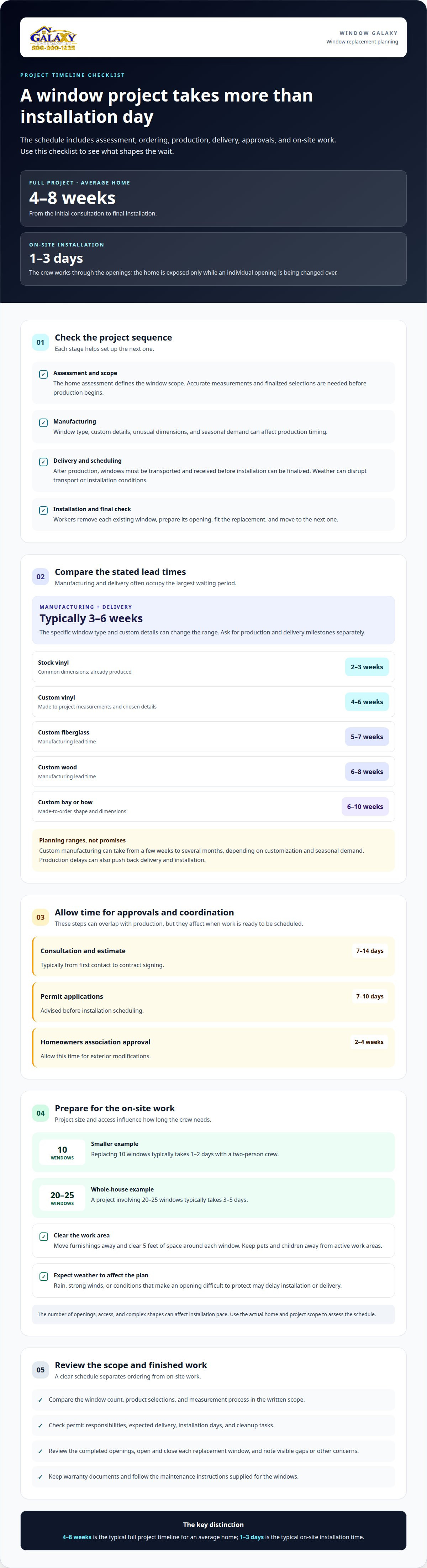
Manufacturing and delivery often occupy the largest waiting period in a window replacement project timeline. Together, they typically take 3 to 6 weeks, while the specific window type and custom details can change that range. The clock generally starts after measurements and selections are finalized, because production depends on accurate dimensions and the approved configuration. Delivery follows manufacturing, so a production delay can also push back the arrival date and installation schedule.
Standard-size stock vinyl windows typically have a delivery lead time of 2 to 3 weeks. Custom vinyl windows typically require 4 to 6 weeks of manufacturing. These figures describe different orders: a stock window is already produced for common dimensions, while a custom unit is made to fit the project’s measurements and chosen details. Custom wood windows typically require 6 to 8 weeks, and custom fiberglass windows typically require 5 to 7 weeks.
- Stock vinyl: typically 2 to 3 weeks for delivery.
- Custom vinyl: typically 4 to 6 weeks for manufacturing.
- Custom fiberglass: typically 5 to 7 weeks for manufacturing.
- Custom wood: typically 6 to 8 weeks for manufacturing.
- Custom bay or bow windows: typically 6 to 10 weeks for manufacturing.
These are planning ranges, not promises. A custom bay window, for example, may take longer to produce than a stock vinyl unit because its shape and dimensions require a made-to-order build. Custom manufacturing can take from a few weeks to several months, depending on customization and seasonal demand. Unusual sizes, shapes, or configurations may add production steps, while busy periods can affect when an order enters production.
Delivery adds time too. Once manufacturing is complete, the windows still need to be transported and received before installation can be finalized. Ask for production and delivery milestones separately, so one estimated arrival date doesn’t obscure where a delay occurs. If an opening needs a specialty shape, such as a custom bay or bow window, that unit may affect scheduling for the wider project.
Weather and approvals can also shift the schedule around the delivery date. Severe weather may disrupt transport or make installation conditions unsuitable, affecting coordination between arrival and the crew’s visit. Permit applications are advised 7 to 10 days before installation scheduling. Homeowners association approval for exterior modifications should be allowed 2 to 4 weeks. Starting those approval steps while windows are being made can reduce avoidable waiting, though approval timing and production timing remain separate parts of the overall schedule.
Is the home exposed during installation?
A replacement project has two different clocks: the overall schedule and the on-site work. For an average home, the full process typically takes 4 to 8 weeks from initial consultation to final installation. Installation itself typically takes 1 to 3 days, depending on window quantity and complexity. The home is exposed only while an opening is being worked on, so the crew’s sequence matters.
During installation, workers remove an existing window, prepare its opening, fit the replacement, and move to the next window. That means an individual opening is temporarily exposed during the changeover. Homeowners can protect furnishings by moving them away from windows and clearing 5 feet of space around each one. Keep pets and children away from active work areas.
Weather can disrupt the workday. Rain, strong winds, or conditions that make an opening difficult to protect may delay installation or delivery. Ask how the schedule will adapt to weather interruptions and whether the crew plans to finish one opening before moving on. This helps you understand what to expect inside your home during the work.
The project schedule also includes steps before installation begins. The consultation and estimate phase typically takes 7 to 14 days from first contact to contract signing. Permit applications are advised 7 to 10 days before installation scheduling, while homeowners association approval for exterior modifications should be allowed 2 to 4 weeks. These steps can take place alongside product production, but approval timing affects when work can be scheduled.
To compare project timelines, review each written scope side by side. Match the window count, product selections, measurement process, permit responsibilities, expected delivery, installation days, and cleanup tasks. A schedule that separates ordering from on-site work is easier to assess than one broad completion estimate.
Project size gives a useful sense of installation time. Replacing 10 windows typically takes 1 to 2 days with a two-person crew. A whole-house project involving 20 to 25 windows typically takes 3 to 5 days. The number of openings, access, and complex shapes can affect the pace, so an estimate should reflect the actual home rather than a generic daily rate.
At the end of installation, the crew removes the old windows and work debris, then checks the completed openings. Ask what cleanup is included and review the finished work before the team leaves. Open and close each replacement window, look for visible gaps, and promptly note any concerns.
Afterward, keep the warranty documents and follow the maintenance instructions supplied for your windows. Regularly remove dirt from accessible surfaces and report operating problems through the appropriate service process. Coverage and maintenance requirements depend on the written terms, so review those documents rather than assuming every issue is handled the same way.
Initial consultation and home assessment
The assessment turns a general request into a defined window scope. A consultant typically visits within 3 to 7 days of initial contact, and the appointment usually lasts 90 to 120 minutes. That time allows the homeowner and consultant to discuss goals, inspect the openings, take measurements, and identify details that affect product selection. A clear record of these decisions helps prevent avoidable changes after an order is placed.
Measurements are central to the home assessment. The consultant records each opening’s width and height, notes differences between windows, and checks access inside and outside. Two windows that look alike may not have identical dimensions, especially in older homes. The assessment also considers how each window is used, such as a bedroom window that needs to open easily or a large living-room opening with a distinctive shape.
Proper measurement and assessment account for 90% of successful installations. The figure highlights why the visit is more than a quick visual estimate. Accurate measurements guide ordering and help align the selected windows with the home’s openings. A missed detail can affect fit, installation planning, or the final appearance, so homeowners should point out hard-to-reach windows and any concerns noticed during daily use.
- Count and identify: Walk through each room and list the openings included in the project.
- Discuss function: Note concerns such as difficult operation, light, privacy, or ventilation.
- Review selections: Match window styles and configurations to the home’s needs.
- Clarify scope: Confirm which openings are included and how the work will be organized.
For projects replacing 8 or more windows, a structural assessment is recommended. This can help identify conditions that may affect a larger group of openings before the order and installation plan are finalized. The number of windows alone does not determine the scope; their locations, shapes, and access also matter. For example, windows above a porch may require a different work plan than ground-floor openings.
Consultation and ordering for a typical replacement project may take one to two weeks. Product selection, measurement review, and finalizing project details all contribute to this stage. Schedule a consultation and select products several weeks before your preferred installation window. This lead-in gives the project time to move from assessment to ordering, production, and scheduling.
Before the visit, prepare a room-by-room list and questions about operation, appearance, and work sequence. During the appointment, review the recorded measurements and confirm which openings are included. These simple steps create a shared reference for decisions and make it easier to understand how assessment details affect the schedule.
Permits, inspections, and scheduling
Permits and inspections can affect when installation begins, but requirements depend on the project and local rules. First, determine whether the planned replacement needs a permit. If it does, allow time for the application and any required review before work starts. Changing a window’s size or opening structure can involve different considerations from replacing it in the existing opening.
Permit applications are advised 7 to 10 days before installation scheduling. That timing gives the application a place in the planning process, rather than leaving approval until the crew is ready. Homeowners can gather the project scope, window details, and property information needed for an application. Keep copies of submitted documents and approval notices together, so they’re available during scheduling and any later inspection.
Exterior changes may also require homeowners association review. Allow 2 to 4 weeks for approval of exterior modifications. For example, a change that affects the visible appearance of a home may need review before installation dates are finalized. Starting that request early can help prevent association approval from becoming the last unresolved item in an otherwise ready project.
Inspection timing is another scheduling consideration. If an inspection is required, its place in the process depends on the approval and work sequence. Clarify whether it takes place before installation, afterward, or at another stage. Keep the inspection appointment, access arrangements, and required documents on the same calendar as delivery and installation dates. A missed appointment can add another scheduling step.
Coordinate milestones in sequence, while recognizing that some approvals can proceed alongside product manufacturing:
- Confirm the scope: Record which openings are changing and whether their dimensions or structure will change.
- Address approvals: Submit applicable permit paperwork and exterior-change requests early.
- Align delivery and work: Schedule installation around the expected window arrival and required approvals.
- Plan inspections: Reserve access and keep approval documents available for the relevant visit.
For example, if association approval is still pending when products are ready, the installation date may need to change. If an inspection is required after installation, leave room in the plan for that visit before treating the project as complete. These are separate scheduling dependencies, not part of the crew’s installation duration.
Use one written calendar to track application submission, approval status, product delivery, crew arrival, and inspection arrangements. Update it when a milestone moves and notify everyone involved in scheduling. A clear sequence helps identify whether a delay comes from approval, delivery, weather, or inspection coordination, and what next step can keep the project moving.
Condition of existing frames
The existing frame helps determine how straightforward each replacement will be. During removal, the installer can see parts hidden by trim or the old window. Sound, square frames may allow work to proceed as planned. A frame with soft wood, moisture damage, or a distorted shape may need attention before the replacement fits securely. That’s why a visible assessment alone cannot always reveal every condition inside the opening.
Look for clues before the visit. Peeling paint, water staining, drafts near the frame, or a window that sticks may signal a problem worth mentioning. These signs don’t establish the cause by themselves. A sticking sash, for example, could relate to the window’s operation, while a visibly bowed frame may affect how a replacement fits. Sharing what you’ve noticed helps focus the assessment on the right openings.
During the home assessment, note which windows have recurring issues and where they occur. A moisture mark under one sill, for example, gives the installer a specific place to inspect. The assessment can record the frame’s visible condition and identify questions that removal may resolve. If frame conditions vary across the home, the schedule may need to account for different types of openings.
Frame condition can affect the work sequence. If a hidden area needs repair after the old window is removed, the opening may need extra preparation before installation continues. This can change how the crew moves between windows, particularly if several openings have similar damage. It may also affect whether the original installation plan remains suitable. Ask how newly discovered conditions will be documented and discussed before work proceeds.
- Record symptoms: List sticking, drafts, visible staining, or damaged trim by room.
- Point out locations: Show the specific sill, corner, or frame section that concerns you.
- Understand the scope: Distinguish planned replacement work from any frame repair identified during removal.
- Review changes: Ask how a changed opening condition affects the sequence and completion plan.
For example, a dry, square frame may be ready for replacement, while a softened sill could need preparation first. These conditions aren’t interchangeable. A clear record explains why one opening may require a different approach from another, without assuming every window in the home needs the same work.
Before installation, make sure the project scope describes the included openings and explains how unexpected frame conditions will be handled. Clear communication about the affected opening helps everyone understand the next step and any schedule adjustment. For help planning replacement work around your home’s existing frames, discuss your window replacement project.
Galaxy Home Remodeling: Galaxy Vinyl Windows
Galaxy Home Remodeling offers Galaxy Vinyl Windows and professional window installation for homeowners planning replacement work. If you’re weighing options or organizing next steps, the team can connect product selection with installation planning. Discussing your home’s openings, frame condition, and preferred schedule helps shape the project scope. For distinctive openings, Specialty Windows are another option to consider.
Turn to Galaxy Home Remodeling when you’re ready to discuss replacing your windows and how product choices fit the installation process. Contact the team to talk through your project and schedule an estimate.
Plan your next window project with confidence
Your window replacement project timeline is easier to discuss when your priorities and your home’s specific needs are clear. Before taking the next step, consider which openings matter most, what you want from the finished result, and whether unusual shapes or existing-frame concerns need attention. These details create a useful starting point for discussing product choices and installation planning.
Galaxy Home Remodeling offers Galaxy Vinyl Windows and Specialty Windows. Sharing your goals helps focus the discussion on options that suit your home and the work involved. You can also discuss how project management and communication fit into the process, so you know what to expect as planning moves forward.
When you’re ready to discuss your window project, contact Galaxy Home Remodeling. A thoughtful conversation is a practical next step toward a well-planned replacement.
Frequently Asked Questions
How Long Does Window Replacement Take in 2026?
For an average home, the full process typically takes 4 to 8 weeks from the initial consultation to final installation. The installation visit itself is usually 1 to 3 days, so the overall wait is not the same as time spent working inside the home. Custom window choices, delivery, project size, and required approvals can all affect the schedule. Treat the estimate as a planning range, not a single workday count.
Can weather delay window installation?
Yes. Severe weather can interrupt delivery or make on-site work impractical, particularly when a window opening needs to be exposed during replacement. If rain, strong winds, or other conditions disrupt the planned work, the crew may need to adjust the sequence or reschedule. Ask how schedule changes will be communicated and which rooms are planned first. That helps you prepare for a change without assuming every opening will be affected equally.
How soon can old windows be removed and new ones set in place?
Once preparation is complete, a professional crew can typically remove and replace one window in 30 to 60 minutes. That is the hands-on changeover for an individual opening, not the entire appointment. Setup, access, and the condition of the opening also affect the broader workday. For instance, a crew may complete one prepared opening before moving to the next, helping limit how long any single space remains open.
Need the full process details?
Yes. The stages explain why a scheduled installation date comes after several earlier decisions. Keep a simple project record with the selected windows, measured openings, expected delivery, and any permit or inspection arrangements. If a date changes, note which milestone moved and what depends on it. This makes it easier to see whether the next step involves delivery, approval, access, or coordinating the installation visit.
What Can Change the Timeline?
Customization, seasonal manufacturing demand, delivery, weather, permits, association approval, and frame conditions can all affect the schedule. The impact depends on when each issue arises. An approval still in progress can hold up scheduling, while a damaged frame discovered during removal may change the work at one opening. Track milestones separately rather than treating every delay as a change to the crew’s installation time.
How long does a typical window replacement project take from consultation to completion?
A typical project for an average home takes 4 to 8 weeks from consultation through final installation. That span includes planning and waiting for windows, not simply the time workers spend at the property. Your project’s scope can make the schedule differ: a whole-house order, custom shapes, or approval steps may involve different timing. Ask for separate estimates for ordering, delivery, installation, and any required inspection.
How long does window installation take per window?
After preparation is complete, a professional crew can typically remove and replace an individual window in 30 to 60 minutes. That does not mean every window takes exactly that long from arrival to cleanup. Difficult access, a complex opening, or work that must be completed before fitting the replacement can affect the pace. The number of windows and their locations also determine how the crew organizes the day.
What steps are involved in a window replacement project?
The process generally moves from home assessment and measurements to product selection, ordering, delivery, installation, and any required inspection. Each stage informs the next: measurements guide the order, while delivery and approvals help determine scheduling. Before installation, make sure the written scope identifies the openings included. At completion, review the finished windows, keep project documents together, and follow the care instructions provided for your selected products.


