

Galaxy Home Remodeling provides roofing for homeowners considering roof repair or replacement. A clear conversation about your home’s needs can help you understand the work involved and decide on a practical next step.
A project manager is available on every project, with ongoing communication and hands-on quality control throughout. This guide explains how to recognize signs of a failing roof and what information to gather before discussing the work your home may need.
Key Takeaways
- Use your roof’s material and age as context, but weigh its visible condition when planning for repair or replacement.
- Look for missing, curled, cracked, or blistered shingles and tiles, along with granules collecting in gutters.
- Water stains indoors and a sagging roof need prompt attention; never walk on a roof that appears to sag.
- A professional inspection can help determine whether localized repairs may address the damage or a full replacement is needed.
- Schedule an inspection when you notice warning signs, especially after severe weather.
1. Missing, curled, cracked, or damaged shingles and tiles
For a Window Galaxy roofing project, missing or distorted materials are important clues to discuss. A gap can expose layers beneath the roof covering, while cracked, torn, warped, or cupped pieces may indicate deterioration. The U.S. Department of Housing and Urban Development identifies these conditions as signs of roof damage. Share where you see them and whether the affected area appears isolated or spread across several roof slopes.
Roofing material affects how damage appears. Asphalt shingles may shed granules into gutters, while clay or concrete tiles can crack or break. Slate may split or slip out of place. A visible gap should therefore be considered alongside the type of covering and the condition of nearby pieces. These details help clarify the potential scope of work instead of treating every roof defect the same way.
Storm exposure is another important part of the picture. Wind can lift roofing materials, hail can strip granules from asphalt shingles, and snow or ice can obstruct drainage. Ice dams may hold water near the eaves, increasing the risk of water entering the home. Note recent weather and any changes you have seen. This context helps connect visible damage with the conditions your roof has faced.
Moisture may also point to issues beyond the outer covering. Poor attic ventilation can allow humidity to contribute to curling or buckling shingles. Wet sheathing beneath shingles can trap moisture and cause blistering. Moss can hold rainwater and lift shingles. If your Window Galaxy roofing discussion includes a damp attic, ceiling mark, or musty area, mention its location and when it appeared. Those interior details can help clarify the concern.
Roof edges also deserve attention. Without a gutter apron, water can wick behind gutters and eventually damage fascia, soffits, and sheathing. Staining below a gutter may be a clue. Blocked or overflowing gutters can also contribute to water backing up near the roof edge. Note any rot or animal activity around the eaves and fascia when describing the home’s condition.
Local climate affects the weather exposure considered for roofing work, including wind, hail, snow, ice, and persistent dampness. Applicable local building codes can also shape acceptable repair materials and methods. Tell Window Galaxy what weather preceded the damage and what materials appear affected. This information helps keep the project discussion focused on your home’s conditions, rather than a generic repair scenario, and supports a clearer conversation about the work to consider.
2. Missing, curling, blistering, or cracked shingles
For a Window Galaxy roofing discussion, describe the shingle condition as clearly as possible. Note whether shingles are missing, curling at the edges, blistered, cracked, or buckling. These visible changes can indicate wear, but the pattern matters too. A few defects in one area present a different picture from similar deterioration across several roof slopes. Mentioning the affected locations helps keep the conversation specific to your home.
How can you tell if roof shingles need replacement? Widespread cracking, repeated curling, extensive blistering, or missing shingles can suggest the roof covering is losing effectiveness. Localized damage on a relatively young roof may be suitable for repair, while broader deterioration can point toward replacement. The right scope depends on how much of the roof is affected, the condition of nearby shingles, and whether moisture has reached layers below the covering.
For asphalt shingles, look for loose granules in gutters or near downspouts. Granules protect the shingle surface, so noticeable shedding can indicate wear. Hail may remove granules and leave exposed areas vulnerable to sunlight. If you notice bare-looking patches alongside brittle edges or cracks, include those details in your roofing discussion. Observations from the ground are useful, but climbing onto damaged roofing can be dangerous.
Blistering and buckling can raise questions about what lies beneath the shingle surface. Moisture trapped under roofing can contribute to blistering, while humidity in a poorly ventilated attic can contribute to curling or buckling. A damp attic, stained ceiling, or damaged insulation adds context to the visible roof condition. Describe these concerns alongside the shingle symptoms to cover both exterior and interior clues.
Shingle problems can also appear near roof edges. If water stains the fascia or soffit below a gutter, a missing gutter apron may be allowing water to wick behind the gutter. This differs from a cracked shingle, but either issue can affect the project’s scope. Note where stains or deterioration appear to help distinguish roof-covering wear from water-management concerns.
Before discussing roofing, organize what you have observed: the shingle type, affected areas, extent of visible wear, and any signs of interior moisture. Repair may address limited damage, while widespread deterioration can make replacement more relevant. The condition of underlying materials also matters. Sharing concrete observations creates a useful starting point for discussing which roofing work fits your home’s needs.
3. How often should a roof be replaced?
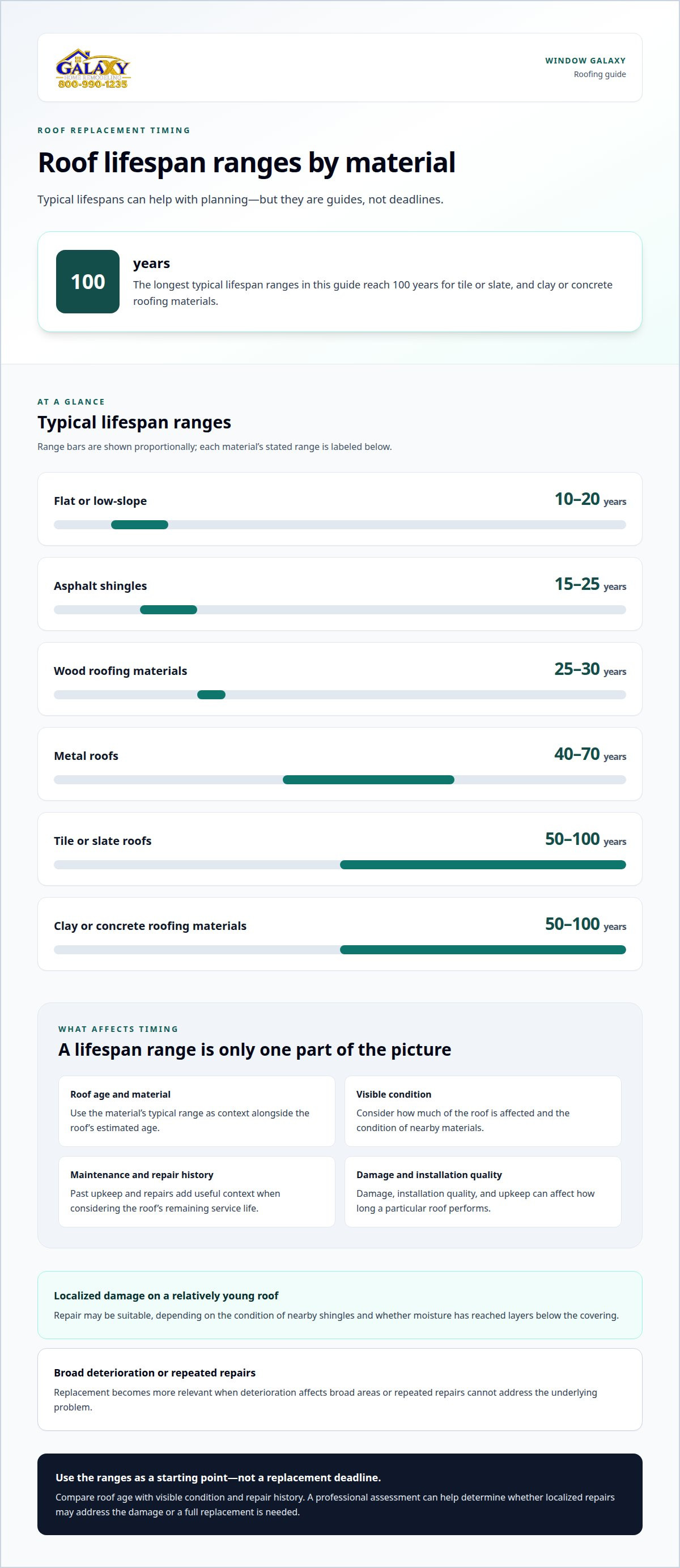
Roof replacement timing depends on its material, age, maintenance, and condition. Asphalt shingle roofs typically last 15-25 years, while metal roofs typically last 40-70 years. Tile or slate roofs typically last 50-100 years. Flat or low-slope roofs typically last 10-20 years. These ranges are planning guides, not deadlines: damage, installation quality, and upkeep can affect how long a particular roof performs.
Material gives you a useful starting point. Wood roofing materials have an expected lifespan of 25-30 years, while clay or concrete roofing materials have an expected lifespan of 50-100 years. Compare the roof’s estimated age with its visible condition and history of repairs. A roof near the end of its typical lifespan may still be in good condition, while an earlier leak or structural concern can bring replacement planning forward.
Repair may suit localized damage on a relatively young roof. Replacement becomes more relevant when deterioration affects broad areas or repeated repairs cannot address the underlying problem. A professional assessment should explain which sections are affected, whether supporting layers are sound, and why the proposed scope fits the findings. Ask for the inspection results and the repair-versus-replacement rationale in writing, so you can base your decision on the roof’s condition rather than age alone.
Insurance coverage depends on what caused the damage. Homeowners insurance typically covers roof repair or replacement when damage results from a covered peril, such as wind, hail, fire, or falling trees. It generally does not cover replacement due to normal wear and tear, age-related deterioration, or lack of maintenance. Document the damage and when it occurred, then review your policy’s terms before assuming it is covered, or consult guides from specialists like Cleroux & Sons Roofing to better understand how insurance claims work.
Regular maintenance can help identify small problems before moisture reaches ceilings, framing, or insulation. Clear debris from gutters, watch for interior stains, and arrange professional inspections. A roof should be inspected at least annually. An inspection can document developing concerns and help distinguish a repairable issue from widespread deterioration.
Seasonal conditions also affect replacement scheduling. Shingles typically need temperatures above 40-45°F to seal correctly. This makes temperature an important factor when planning asphalt-shingle work, especially during colder periods. Weather, the roof’s condition, and the material being installed all affect the practical timing. If active leaks or structural damage appear, address the concern promptly rather than relying on a calendar estimate.
To plan the work, gather the roof’s age, material, previous repair records, and current inspection findings. Use these details to discuss scope and timing with a roofing professional—companies like Heroic Roofing recommend reviewing these factors carefully to evaluate whether repair or replacement is the best path forward. Regular upkeep can extend a roof’s service life, but it cannot reverse widespread deterioration or make an unsafe roof sound.
4. Roof Failure: What Are the Signs My Roof is Failing?
A sagging roofline is more serious than uneven shingles. From the ground, look for a dip along the ridge, a bowed slope, or a section that appears lower than nearby areas. Compare the same roof edge from different viewing angles. A new or growing change deserves attention, especially after heavy snow, ice, or prolonged rain has added weight.
Sagging can indicate that the roof structure is weakening. Accumulated snow, ice, or water may contribute, and improper installation can also leave the structure vulnerable. On a flat or poorly sloped roof, trapped water can add weight and worsen sagging. The visible dip may involve roof sheathing, framing, or both, so appearance alone cannot show the full extent.
Moisture can damage sheathing over time. A leak near a chimney, vent, or roof joint may allow water into layers beneath the covering. Look for a roof depression alongside water staining on attic wood, damp insulation, or interior ceiling marks. These signs do not prove a single cause, but together they can help an inspector trace where water may be entering and whether structural materials are affected.
Notice whether the sag is isolated or spans a wider section. A dip near one roof edge may point to a localized concern, while a long, uneven ridge can suggest broader structural movement. Broken or loose flashing around chimneys can also allow moisture to enter nearby. Record the location and visible changes from a safe position, then share them with a professional roof inspector.
Never walk on a sagging roof. If the structure is compromised, a person’s weight could increase the danger of collapse. Keep people away from the area below, and do not climb a ladder to investigate the dip. A professional should examine the roof and its substructure to identify the cause and determine the necessary work.
Roof age alone does not establish whether a sagging structure is safe. Even a roof within its expected lifespan needs attention if its shape has changed or water has reached the sheathing. An inspection should assess the slope, framing, sheathing condition, drainage, and nearby flashing. These findings help distinguish a localized repair from damage affecting a larger part of the roof.
After severe weather, compare the roof’s visible lines with earlier photos, if available. Note when the change appeared, whether it is worsening, and whether interior stains have developed. Share these observations during an inspection. A prompt structural assessment is the safest next step for a roof with a visible dip, especially if water or snow may have contributed.
5. When to schedule a professional roof inspection
Schedule a professional roof inspection at least annually, and sooner if damage appears. After severe wind, hail, or a heavy snowstorm, an inspection can identify problems that are not visible from the ground. Interior stains deserve prompt attention because a small leak can spread into ceilings, framing, and insulation. Do not wait for a routine visit if water is entering the home.
Spring and fall are useful times to check visible roof areas. From the ground, use binoculars to look for displaced roofing, exposed edges, debris, or granules collecting below asphalt shingles. Check visible gutters for sagging or overflow as well. These checks help you describe changes, but they do not replace a professional assessment of the roof’s condition.
A thorough inspection considers exterior and interior clues. Outside, a professional examines roofing materials, flashing, seams, joints, and roof vents for openings or damage. In the attic, the inspection can look for damp sheathing, water marks, and moisture around roof penetrations. Connecting an attic stain with a roof seam or flashing defect can help identify where water may be entering.
Flashing deserves particular attention around chimneys, vent pipes, and roof intersections. A professional should inspect roof flashing every 10 years for corrosion, cracks, and related deterioration. An inspection may also check whether vents are covered or clogged, since blocked airflow can contribute to moisture problems. If the roof’s age is unknown, an inspection can help estimate its age and current condition.
Make safety part of the plan. If you are not comfortable on a ladder, inspect from the ground with binoculars. Never walk on a sagging roof, where compromised framing or sheathing could make the surface unsafe. After severe weather, record visible changes from a safe location and note any new interior stains. Share those observations with a professional instead of climbing up to investigate.
If more than a year has passed since the last professional inspection, schedule one, especially if the roof is aging or has recent weather damage. The findings can clarify whether repairs may extend the roof’s life or replacement deserves planning. If the inspection raises questions about the next roofing step, discuss your roof concerns with our team.
Galaxy Home Remodeling: Roofing
Galaxy Home Remodeling provides roofing for homeowners considering repairs or planning a roof replacement. If an inspection identifies widespread deterioration, recurring leaks, or structural concerns, the company can help you move from understanding the damage to discussing next steps. Share what you have noticed, such as missing shingles, interior stains, or a changed roofline, and discuss the project’s scope and priorities. With a project manager available on every project, constant interaction, and hands-on quality control, you can discuss the work in relation to your home’s condition. Contact Galaxy Home Remodeling to discuss your roofing project.
Take the Next Step With Confidence
A roofing decision is easier to manage when the next step is clear. Set aside your observations, inspection findings, and questions so you can discuss the home’s needs in one focused conversation. The signs of a failing roof can feel unsettling, but a thoughtful plan turns concern into practical choices about the work ahead. You don’t need to decide every detail at once. Start by discussing what matters most for your home and what should happen next.
Galaxy Home Remodeling can talk with you about roofing needs and the project ahead. Contact Galaxy Home Remodeling today to start the conversation. A clear next step can help you move forward with greater confidence.
Frequently Asked Questions
When should you get a professional roof inspection?
Arrange an inspection at least annually, and sooner after severe weather or if you notice a new interior stain. An inspection is also useful before planning repairs on an aging roof, since its condition may matter more than its age alone. If you do not know when the roof was last assessed, an inspection gives you a current reference point for tracking changes and planning maintenance.
How long does a roof typically last?
A roof’s expected lifespan depends on its material. Asphalt shingle roofs typically last 15-25 years, metal roofs 40-70 years, tile or slate roofs 50-100 years, and flat or low-slope roofs 10-20 years. These ranges help with planning, but they don’t establish a replacement date. Installation, maintenance, weather exposure, and existing damage all influence the condition of an individual roof.
Roof Failure: What Are the Signs My Roof is Failing?
Look for changes suggesting the roof may no longer shed water reliably or could have structural trouble. A dip in the roofline, recurring leaks, widespread material deterioration, or water marks in the attic can signal a developing problem. A single symptom may have several causes, so note where it appears and whether it changes after rain or snow. Never walk on a visibly sagging roof.
What are the most common signs of a failing roof?
Common signs of a failing roof include missing or cracked shingles, curling edges, blistering, and granules collecting in gutters. Look for more than one clue: shingle damage alongside a ceiling stain, for example, may suggest water is getting through. From the ground, note the affected area and take a photo if it is safe. A professional can assess whether the damage is isolated or widespread.
What are signs of roof leaks inside a house?
Ceiling stains, damp patches, peeling paint, and wall discoloration can indicate moisture entering the home. A stain may appear below a roof leak, but water can travel along framing before becoming visible, so its location may not match the entry point. Check for changes after rain and note the room and location. Addressing interior signs of water promptly can help limit further damage.
How do you inspect a roof for damage safely?
Start from the ground and use binoculars for a closer view. Look for visible gaps, uneven roof edges, damaged materials, or debris in gutters, then check the attic for water marks after severe weather. Do not climb onto a roof to investigate, especially if it is wet, damaged, or sagging. Leave close inspection of steep or unstable areas to a professional.
When should a roof be repaired versus replaced?
Repair may be appropriate when damage is localized and the surrounding roof remains sound. Replacement is more likely to be considered when deterioration is widespread, leaks recur, or the underlying roof structure is affected. For example, one damaged area on a relatively young roof differs from problems across multiple slopes. An inspection can establish the extent of the damage and explain which scope fits the roof’s condition.
Can a failing roof cause mold, structural damage, or health risks?
Yes. Roof leaks can allow moisture to damage sheathing, framing, insulation, and ceilings, while damp conditions can contribute to mold or mildew. The risk depends on how much water enters and how long materials stay wet. If you find a new stain, damp insulation, or visible mold, arrange an assessment promptly. A professional can trace possible roof entry points and evaluate affected materials.


