

Waiting for the “perfect” season could leave a siding problem exposed longer than necessary. The best time of year to replace siding in NJ depends on more than the calendar: weather, the siding material, your home’s condition, and your household schedule all affect the plan.
Mild weather may feel ideal for an exterior project, but spring and fall aren’t automatically right for every home. Spring can bring rain and changing temperatures, summer heat and humidity, and winter cold, snow, or ice. If siding is damaged, waiting for a preferred season may not be practical. The goal is to match the project to your home’s needs, the selected material, and workable conditions.
This guide compares New Jersey’s spring, summer, fall, and winter conditions, then covers the details that can influence timing. You’ll also find practical questions to consider when planning around CraneBoard® Solid Core insulated siding, fiber cement siding, or stone siding. A season-by-season view can help you choose a realistic project window without relying on a one-season-fits-all rule.
Key Takeaways
- The best time of year to replace siding in nj depends on your home’s condition, the material, and the weather during the work.
- Compare spring, summer, fall, and winter with your household schedule and the project’s needs in mind.
- Assess the exterior and discuss whether CraneBoard® Solid Core insulated siding, fiber cement siding, or stone siding fits your home and plans.
- Share your priorities and scheduling constraints early so they can be considered as the project is planned.
- Galaxy Home Remodeling assigns a dedicated project manager and emphasizes ongoing communication and hands-on quality control throughout the project.
When Is the Best Time to Replace Siding in New Jersey?
No single season suits every New Jersey home or siding project. The best time of year to replace siding in nj depends on the home’s condition, the chosen material, weather during installation, and your household schedule. Spring and fall may bring moderate conditions, but they don’t guarantee a smooth project. Summer and winter have their own planning considerations. Choose a project window based on your needs and the conditions at the home, rather than assuming one season is always best.
Siding project timing in New Jersey depends on your home’s readiness, the forecast, the siding material’s installation guidance, and your schedule. Regional climate patterns can help you plan, but they can’t predict conditions at your home on a specific workday. New Jersey experiences seasonal shifts in temperature and precipitation; the overview of New Jersey's Climate provides broader context. For scheduling, the conditions and forecast near your home matter most.
Begin with the condition of your exterior. If damaged siding leaves part of the home exposed, waiting for a preferred month may not be practical. An assessment can clarify the project scope and help determine whether the work needs prompt attention or can be planned around a more suitable weather window. The home’s readiness matters as much as the season.
Spring and summer: planning around changing conditions
Spring can bring fluctuating temperatures and rainfall, while summer may bring heat, humidity, and shifting forecasts. Treat both as possible planning windows, not automatic installation advantages. Consider whether rain could affect the work area, whether temperatures align with the selected product’s instructions, and how heat or wind may affect working conditions. Seasonal patterns provide context, but the forecast on the actual work dates should guide the plan.
- Spring: Allow flexibility for changing weather, and consider whether the exterior is ready for work after winter.
- Summer: Account for heat, humidity, and forecast changes, as well as how the work fits your household schedule.
Before settling on dates, discuss the siding material and its manufacturer’s installation guidance. Requirements can differ by product, so don’t assume conditions suitable for one material apply to another. Since forecasts can change, agree on how schedule updates will be communicated if weather affects the planned work.
Fall and winter: balancing urgency with workable conditions
Fall may suit homeowners who want exterior work completed before colder weather, but rain or an early cold spell can affect scheduling. Winter brings additional considerations, including cold, snow, and ice. Whether work can proceed depends on conditions at the home and the selected siding’s installation guidance. No season guarantees suitable workdays.
- Fall: Consider your preferred completion window and leave room for weather-related changes.
- Winter: Base the schedule on current conditions and product guidance, particularly if the siding needs attention.
In any season, weigh urgency against readiness. If siding is in poor condition, arrange an assessment rather than assuming you should wait until spring or fall. If the exterior is stable, you may have more flexibility to coordinate the project with family routines and other plans. A practical schedule considers the home, the material, and the conditions together.
How New Jersey Weather Can Affect Siding Replacement Timing
A seasonal forecast is a starting point, not a guarantee of workday conditions. Weather can shift between planning and installation, and conditions may vary across New Jersey. The best time of year to replace siding in NJ depends partly on what crews encounter at your home, as well as the selected siding’s installation guidance. Rain, temperature, humidity, and wind are all relevant when planning and sequencing the work.
Plan installation around both the forecast and the product’s requirements. This keeps the schedule grounded in actual conditions and material guidance instead of assumptions about what a particular month usually brings.
Weather factors to consider before work begins
Rain and damp conditions are worth discussing because they can affect the work area and the order of tasks. They don’t automatically mean all work must stop. The decision depends on site conditions and the work planned for that day. If the forecast changes, the team may adjust the task order or revisit the schedule. Clear updates help everyone stay aligned as conditions develop.
Consider temperature and humidity in relation to the selected product’s instructions instead of applying broad rules to every siding type. Wind is another practical factor: an exposed wall may face different conditions from a sheltered area, even when the general forecast is the same. A site assessment connects the regional outlook with your home’s exposure, access, and surroundings.
- Rain: Consider how wet conditions may affect the work area and the order of tasks.
- Temperature and humidity: Use the product’s installation instructions to guide planning.
- Wind: Account for your home’s exposure, not just a region-wide forecast.
- Forecast changes: Keep the schedule flexible enough to respond to conditions on the planned work dates.
Regional patterns help with advance planning, but they don’t describe every property. A home on an open lot may face different wind exposure from one surrounded by nearby buildings or trees. Likewise, rain in one location doesn’t establish conditions at another. The weather at your home and work area is what matters for the day’s plan.
Why siding material matters to the schedule
Material choice is part of weather planning because installation requirements differ. Galaxy Home Remodeling installs CraneBoard® Solid Core insulated siding, fiber cement siding, and stone siding. Each material should be considered according to its own manufacturer guidance. Don’t assume instructions for one apply to another. Product guidance and a site assessment help shape decisions about suitable work conditions and sequencing, without assigning a particular siding type to a particular season.
Before work begins, review the forecast alongside the material’s installation instructions and discuss site-specific concerns. If conditions change, timely communication helps clarify whether the day’s plan needs adjustment. That doesn’t mean every shower or temperature shift requires stopping the entire project. Decisions should reflect the task, product guidance, and conditions where the work is taking place.
If you’re weighing these factors for your home, a siding project assessment can bring the material, site conditions, and scheduling priorities into the same conversation.
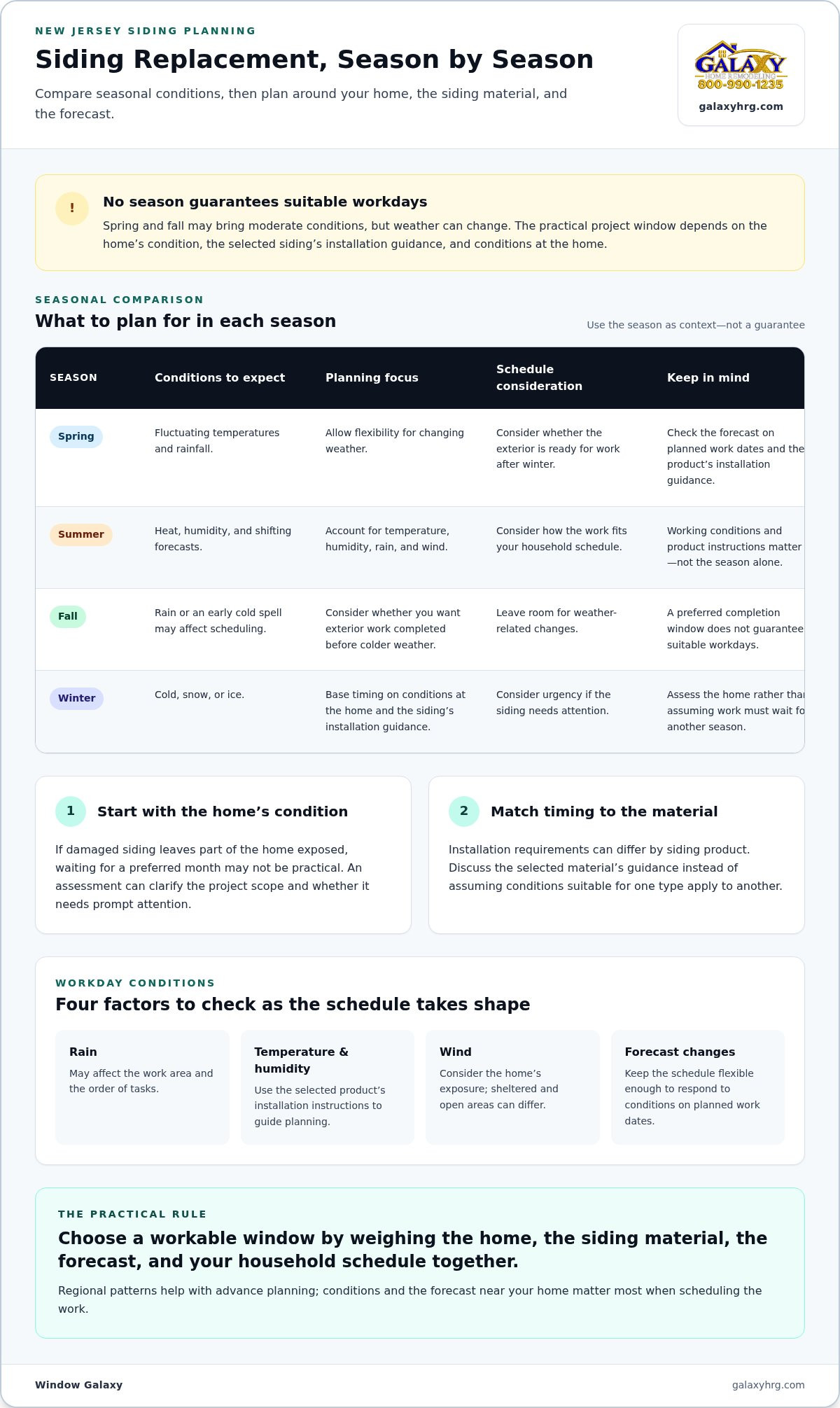
Which Season Fits Your Siding Project and Material?
The right season is the one that fits your home’s needs, the selected siding, and the conditions expected during the work. A season-by-season comparison can help narrow your preferred window, but the questions in the final column matter as much as the calendar. The best time of year to replace siding in NJ isn’t determined by season alone.
Project scope, existing exterior conditions, and product guidance should shape the plan together. Replacing one section and replacing siding across the full exterior may call for different planning conversations. The condition of the existing siding and what an assessment reveals can also affect the scope and schedule.
| Season | Planning considerations | Questions to resolve before scheduling |
|---|---|---|
| Spring | Consider changing forecasts and whether the home is ready for exterior work. | Does the planned window align with the product instructions and household routines? |
| Summer | Consider forecast shifts and how the work will fit around family plans. | What conditions does the chosen material’s guidance require? |
| Fall | Plan around the preferred completion window and allow for schedule flexibility. | Is there enough flexibility to account for changing conditions or project findings? |
| Winter | Base the plan on the home’s needs, actual conditions, and product instructions. | Can the work proceed under the conditions and guidance for the selected siding? |
Compare siding materials without assuming one season fits all
Galaxy Home Remodeling installs CraneBoard® Solid Core insulated siding, fiber cement siding, and stone siding. These are distinct options, and the right fit depends on your home and project priorities. Discuss the scope, existing exterior, and manufacturer’s installation guidance for the material you’re considering. That keeps the timing decision grounded in your project rather than assumptions about a product or season.
Match project priorities to a realistic season
Think through household routines before choosing a target window. Consider busy periods, access around the home, and how much flexibility you have if conditions or project scope change. Share those priorities during the initial planning conversation so the schedule can reflect what matters to your household as well as the work itself.
If the exterior needs attention, don’t postpone an assessment solely to reach a preferred season. First understand the condition and scope, then discuss a workable plan informed by the material’s instructions. If the home is stable and timing is flexible, compare the seasons against your calendar and preferred project window. A useful plan leaves room for practical adjustments without treating any month as a promise of better workmanship.
How to Prepare for a Siding Replacement Project in NJ
Preparation can make siding replacement planning easier and help you cover the details that matter to your home. Start with what you’ve noticed, then discuss materials, preferred timing, and household needs. The best time of year to replace siding in NJ is easier to determine once the project scope and your priorities are clear.
Assess the home and clarify project priorities
Walk around the exterior and note the areas you’d like assessed. You might notice loose or missing siding, visible wear, or a section that looks different from the rest. These observations can focus the assessment, but they aren’t a diagnosis. A project review can clarify the home’s condition and the work that may be appropriate.
Before the initial conversation, consider which siding materials you want to discuss, which parts of the home need attention, and whether you have a preferred project window. Think about household routines too. Note busy weeks, access needs, or times when exterior work could be more disruptive. Sharing these details early helps shape a plan around both the home and the people living in it.
Coordinate a timeline with clear communication
Once the project scope and material are discussed, timing can be considered alongside manufacturer guidance, site conditions, and your schedule. Weather can change, so the plan should allow for updates rather than promise exact dates far in advance. Galaxy Home Remodeling assigns a dedicated project manager and emphasizes hands-on quality control and ongoing communication throughout the project.
Use this sequence to prepare for the planning conversation:
- Assess the exterior. Write down visible concerns and the areas you want reviewed.
- Discuss materials. Share your preferences and ask how the selected product’s installation guidance informs planning.
- Plan timing. Explain your preferred window, household routines, and scheduling constraints.
- Coordinate the project. Discuss how updates will be shared if weather or site conditions affect the plan.
It can also help to keep a short list of questions together. Ask which parts of the exterior will be included in the assessment, which project decisions may affect the schedule, and how you’ll receive updates. You don’t need to predict the weather or decide every detail before the first conversation. Clear priorities give the project team a useful starting point, and ongoing communication helps keep the plan aligned as details are clarified.
Galaxy Home Remodeling offers advice to help homeowners discuss their siding needs and timing. Discuss your siding project and share your priorities during the initial conversation.
Plan Your New Jersey Siding Project With Galaxy Home Remodeling
Planning a siding replacement is about more than picking a month. Galaxy Home Remodeling installs siding for homeowners and helps plan around the home’s needs, the material, and project timing. No season guarantees suitable conditions or a particular schedule. A clear conversation about your exterior and priorities can help set a practical direction.
What homeowners can expect from Galaxy
Galaxy Home Remodeling is licensed and insured. Its siding options include CraneBoard® Solid Core insulated siding, fiber cement siding, and stone siding. The right option and schedule depend on the project, so planning can cover the existing exterior, your material preferences, and the manufacturer’s installation guidance without assuming one product fits every home.
A dedicated project manager supports communication throughout the project. Hands-on quality control and ongoing communication are part of Galaxy’s approach, helping homeowners stay informed as project details and conditions are considered. If weather changes affect the plan, updates help keep expectations aligned without promising exact dates that conditions may alter.
Some customer feedback reports improved heating and cooling bills after siding insulation. That reflects individual customer experience, not a guaranteed result. During planning, homeowners can discuss whether insulated siding is relevant to their project and which factors should guide the decision.
Take the next step when you are ready
You don’t need to settle on a season before discussing your home. Bring your observations about the exterior, material preferences, and scheduling constraints. The conversation can help clarify your project needs and identify a workable timeline. If the work is urgent, mention that early. If you have flexibility, share the windows that best fit your household routine.
Galaxy Home Remodeling serves homeowners in Bergen, Burlington, Camden, Hudson, Mercer, Middlesex, Monmouth, Morris, Ocean, Passaic, and Union counties in New Jersey. Whether you’re weighing the best time of year to replace siding in NJ or are ready to discuss next steps, focus the conversation on your home’s condition and project priorities, not pressure to choose a particular season.
Discuss your siding project and timing when you’re ready.
Make Your Next Siding Decision With Confidence
You don’t need to find a perfect month on the calendar before taking the next step. Start with what your home needs, then use a project assessment to turn your timing preferences into a practical plan. This conversation can help you move forward thoughtfully, whether you’re ready to schedule or still weighing your options. The best time of year to replace siding in NJ is the time that makes sense for your home, material, and circumstances.
Galaxy Home Remodeling has served homeowners since 2005. The company is licensed and insured, and its approach includes a dedicated project manager and hands-on quality control. Homeowners have rated Galaxy an average of 4.8 stars across 407 Google reviews. These details offer context as you consider who will guide your project and keep communication clear.
When you’re ready to talk through your home’s siding needs and preferred timing, take a straightforward first step. Start a conversation about your siding project and share what you need. Clear communication can help you feel prepared to move ahead with confidence.
Frequently Asked Questions
What is the best month to replace siding in New Jersey?
There’s no single best month for every home. Spring and fall are common windows to consider, but the best time of year to replace siding in NJ also depends on the material, project needs, and conditions near the planned work dates. If you’re choosing between two possible months, start with an exterior assessment. Use the findings to decide whether the project is flexible or needs earlier attention.
Can siding be replaced during winter in New Jersey?
Winter work may be possible when site conditions and the chosen siding’s manufacturer instructions allow it. If you have a damaged section, arrange an assessment rather than assuming the project must wait until spring. The scope, access around the home, and conditions during the planned work period all matter. Scheduling should be based on those specifics, not on a blanket assumption that winter installation is always possible.
Is fall a good time to replace siding in NJ?
Fall can be a practical time to plan replacement, especially if you want to address exterior concerns before colder weather. Leave flexibility in your household calendar in case the project scope or conditions affect scheduling. An early conversation can clarify which areas need attention and which material you’re considering. That gives you a more useful plan than choosing a fall date first and fitting the project around it.
Does the siding material affect the best time to install it?
Yes. Installation guidance can vary by product, so the schedule should account for the selected material instead of assuming one set of conditions suits all siding. Galaxy Home Remodeling installs CraneBoard® Solid Core insulated siding, fiber cement siding, and stone siding. If you’re deciding among them, discuss the home’s existing exterior and project scope alongside each product’s manufacturer instructions. That connects material selection with a realistic work plan.
Should I wait for spring to replace damaged siding?
Not necessarily. If siding is damaged, don’t postpone an assessment solely because spring feels like a more convenient season. Note the location and appearance of the concern, then arrange a project review to understand its condition and whether the work is time-sensitive. For example, damage near a window or corner may deserve prompt attention, but an assessment is needed to clarify what’s required. The next step is to understand the issue, not guess at a repair.
How far ahead should I plan a siding replacement project?
Start planning as soon as you know replacement may be needed, particularly if you have a preferred season or household dates to work around. There’s no set lead time that fits every project, so share your ideal window early and discuss the home’s condition, material preferences, and scheduling constraints. If your plans are flexible, say so. That gives the project conversation room to account for changing details without relying on an assumed installation date.


