

What if the windows that make your home feel dated could become the details that pull its exterior together? If the facade looks inconsistent, it’s understandable to worry that new windows might stand out for the wrong reasons. The right choices can help you boost curb appeal with replacement windows while preserving the character of your home.
A cohesive refresh starts with more than choosing a window. Frame appearance, proportions, visible divisions, and the relationship between each opening and the trim and siding all shape the finished look. This checklist will help you assess those details, picture how replacement windows could change your facade, and plan an update that feels intentional rather than mismatched.
Window Galaxy’s residential window replacement process includes project management and clear communication to keep you informed as the work moves forward. Use the steps below to review your home, bring design choices together, and prepare for a window replacement project.
Key Takeaways
- Compare window styles and operation with your home’s architecture and proportions.
- Review frame appearance, visible divisions, and surrounding exterior details to boost curb appeal with replacement windows without making the facade feel mismatched.
- Use a practical process to assess your facade, prioritize worn or inconsistent windows, and plan a cohesive update.
- See how Window Galaxy’s project management and communication support homeowners through replacement-window installation.
How Replacement Windows Can Boost Your Home’s Curb Appeal
Windows are a prominent part of a home’s exterior. Their size, placement, frame appearance, and visible condition can reinforce the home’s architectural character or make the facade feel less coordinated.
Curb appeal is the visual impression a property makes from outside. Windows contribute to that impression because they repeat across the facade and sit alongside features such as siding, trim, doors, and rooflines. To boost curb appeal with replacement windows, consider how each opening relates to the whole exterior, not just whether one unit looks old.
Start by viewing the house from the sidewalk or across the street. Notice where your eye goes first. Do the windows align with one another? Do their proportions feel balanced against the surrounding wall space? A broad overview of Window components and types can help you recognize details that shape a window’s appearance. Let your home’s own lines and balance guide your choices.
Which visible window details shape the exterior?
Frame appearance, proportions, and alignment all affect how windows read on a facade. A frame that contrasts sharply with nearby trim may draw attention, while repeated visual details can help separate openings feel connected. Replacement is an opportunity to consider how the windows relate to the home’s existing features, not a reason to make every one identical.
- Frame appearance: Compare the visible frame with the trim and surrounding exterior.
- Proportions: Consider each window’s shape and scale in relation to the wall and nearby openings.
- Alignment: Check whether windows appear to follow consistent lines across the facade.
- Visible condition: Note frames or surrounding details that look worn, damaged, or out of step with the rest of the exterior.
Small differences can be especially noticeable when several windows sit close together. Review them as a group to make choices that feel integrated rather than piecemeal.
When can replacement windows make a noticeable difference?
Replacement windows can make a visible difference when existing units look dated, damaged, or inconsistent with one another. Before focusing on a single opening, assess the full facade. Step back, compare the front and side elevations, and note how windows relate to the trim, siding, and other exterior features.
For example, one visibly worn window might stand out against an otherwise orderly facade. In another home, several different-looking units may make the exterior feel uneven as a whole. Record what you notice before deciding what to update. The complete guide to house windows offers broader context for understanding window options and layouts.
Thoughtful planning can refresh the exterior without making it feel mismatched. Aim for a cohesive look that respects the home’s existing character, rather than assuming new windows will increase property value.
Match Replacement Window Styles to Your Home’s Architecture
Start with the home, not a trend. Rooflines, exterior openings, and existing patterns can help you judge which replacement-window styles look natural on the facade. A tall opening calls for a different visual approach than a wide one, and a style that suits one house may feel out of place on another. To boost curb appeal with replacement windows, consider both the architecture and how each window will operate.
Window styles differ in how they open, so appearance is only part of the decision. Use the comparisons below to identify options and questions to consider as you plan. For additional context on how window types relate to architectural design, explore Window Types and Considerations.
How do common window styles change a facade?
Double-hung windows have vertically arranged sashes that can create a traditional, upright look. Sliders open horizontally and often read as wider across the wall. Casement windows are hinged at the side and open outward, giving the opening a distinct frame. Specialty windows can suit distinctive openings or design goals. No single style is right for every home, so compare each option with the proportions and character of your facade.
- Double-hung: Both sashes move up or down, creating a vertical appearance. Consider whether the upright proportions suit nearby openings.
- Slider: A sash moves from side to side, creating a horizontal appearance. Consider whether the wider visual emphasis fits the wall and surrounding windows.
- Casement: A side-hinged sash opens outward. Consider how its shape relates to nearby exterior features.
- Specialty windows: These can suit distinctive openings. Consider how the shape and visual weight will sit within the facade.
Architectural fit is more useful than choosing a window style simply because it’s on trend. A style should make sense alongside the home’s lines, proportions, and existing details while also meeting your preferences for operation.
What should homeowners consider about proportion and consistency?
Compare each opening with nearby doors, trim, and other windows. Look at height, width, and spacing, then step back to assess whether the overall rhythm feels balanced. Repeating compatible frame details or visual divisions can help different openings feel coordinated without making every window identical. A custom window design guide offers more ideas for distinctive openings and a cohesive look.
Before settling on a style, view the facade from more than one angle and note where a change would have the strongest visual effect. Window Galaxy provides residential window replacement and installation, with project planning shaped around the home. To explore options for your exterior, view Window Galaxy’s window solutions.
Compare Window Appearance, Materials, and Exterior Details
A cohesive exterior depends on how window details work together, not on any one feature in isolation. As you compare replacement options, look at frame appearance and visible divisions, then consider how each opening relates to the home’s trim, siding, and other exterior elements. The goal is a combination that feels at home on your facade.
How can window details support a cohesive exterior?
Look for visual patterns already present around the house. Repeated shapes, trim lines, and spacing can guide your choice of window details. A change to one feature may be noticeable across the facade, so assess how it will look beside neighboring windows and exterior finishes.
Use this checklist to compare options as part of the whole exterior:
- Frame appearance: Consider how the visible frame relates to nearby trim and the home’s overall character.
- Visible divisions: Notice the pattern created by divisions within the glass and whether it echoes other details on the facade.
- Color and finish: View these beside the siding, trim, and surrounding materials rather than judging them on their own.
- Facade balance: Step back to assess whether the windows look coordinated across the front of the home, including their spacing and visual weight.
No single color or finish works for every exterior. A choice that feels balanced with one siding and trim combination may look different beside another. Review the options in the context of your home rather than relying on an isolated impression.
How do you compare window materials and design priorities?
Compare materials by considering the appearance you want, your household’s needs, and the character of the home. Vinyl is one window-material category, and Galaxy Vinyl Windows are among Window Galaxy’s offerings. Focus on the visible design and how the available options suit your project rather than assuming one material is right for every house.
For example, if you’re updating several openings, first decide whether you want the frames to blend with the existing trim or create a noticeable contrast. Then compare how the frame appearance and visible divisions work with the facade’s repeated lines. Considering these choices together can make the selection process clearer.
Before comparing options, write down what matters most: consistency with existing details, the look of the frames, and how the windows relate to the rest of the exterior. A window replacement guide can help you consider the broader planning process. These design priorities give you a practical basis for discussing replacement windows with Window Galaxy.
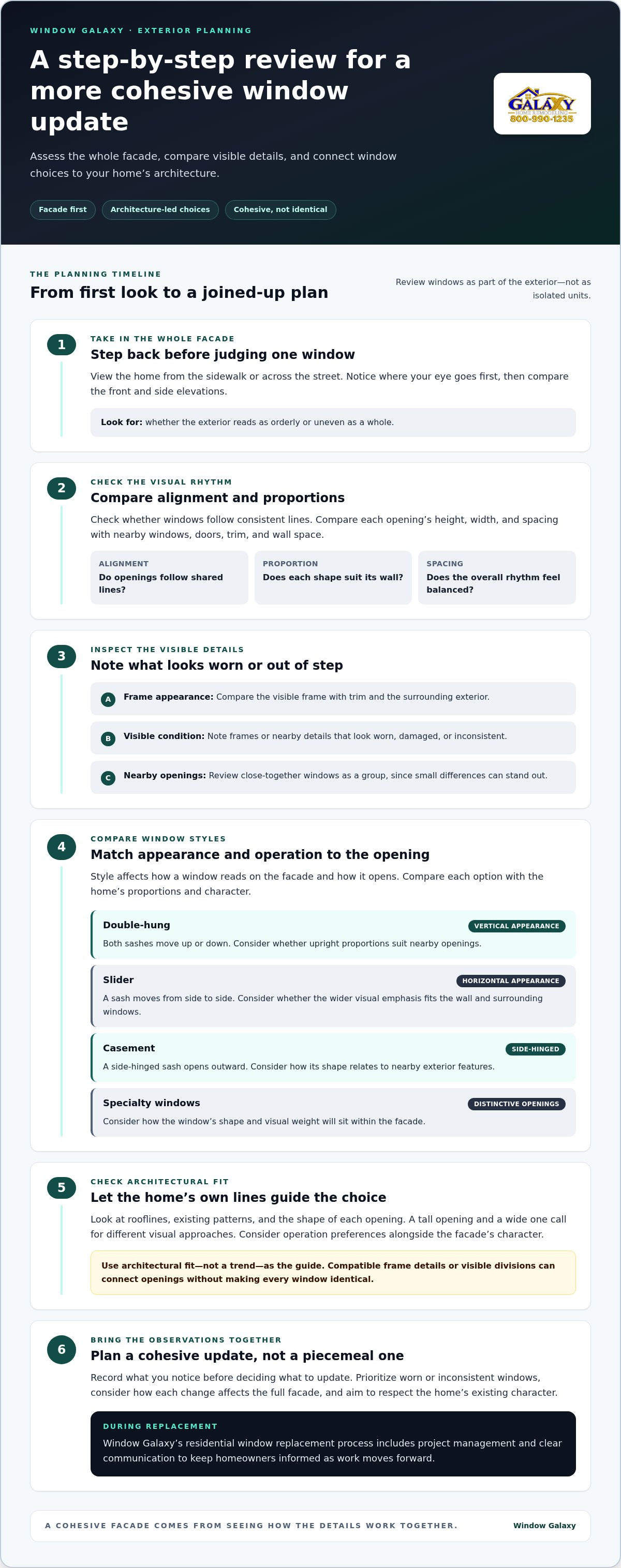
Use This Checklist to Plan a Curb-Appeal Window Update
A little preparation can turn a vague wish for a fresher exterior into clear design priorities. A facade review helps clarify which details matter most before you compare replacement windows. Set aside time to look at the home as a whole, take photographs, and write down what feels inconsistent or visibly worn.
Work through these stages in order. This keeps the focus on your home’s appearance before you compare product options.
What should you assess before selecting replacement windows?
Review the front, sides, and any rear elevations visible from nearby outdoor areas. A window that seems out of place on its own may look consistent from another angle, so photographs can help you compare the full exterior. Note both the openings that draw your eye and the specific detail you’d like to change.
- Observe: Photograph each visible elevation in natural daylight. Include enough of the exterior to show how the windows relate to doors, trim, and siding.
- Prioritize: Record windows that look worn or inconsistent, and identify the appearance concern, such as uneven patterns or details that don’t seem to fit together.
- Separate goals: Mark essential appearance goals, such as a more consistent facade, separately from optional preferences that aren’t central to the update.
How can you prepare for a window replacement conversation?
Bring your photos and notes when you discuss replacement options with Window Galaxy. Describe the home’s style in your own words and explain the impression you want the exterior to create. Specific observations make the conversation more useful. “These windows feel inconsistent with the others” gives a clearer starting point than “the front looks dated.”
Compare your priorities against the views of the house. If the same concern appears in several photographs, it may be a broader design goal. If it’s limited to one opening, discuss how that window fits into the overall plan. The window replacement company guide can also help you understand what to expect from a project conversation.
Before finalizing your notes, check that they cover the elevations you reviewed, the windows you’re considering, your essential visual goals, and any optional preferences. This gives you a practical brief to refer to as you compare choices and keeps the update focused on a cohesive result.
Ready to turn your observations into a replacement-window plan? Plan your window update with Window Galaxy.
Plan Your Replacement Windows With Window Galaxy
A well-planned window update brings your visual priorities and the installation process into the same conversation. Galaxy Home Remodeling provides residential window replacement and installation, with project management, quality control, and customer communication as part of its approach. These practices help homeowners follow the project’s progress and keep the intended exterior look in view.
What can homeowners expect from a coordinated window project?
Clear communication matters because replacement windows involve decisions about both appearance and installation. Share the exterior details you want to improve, such as windows that look inconsistent or frames that don’t feel aligned with the home’s character. Project management helps organize the work, while quality control supports careful attention to installation. Galaxy Home Remodeling keeps homeowners informed throughout the process, giving questions and updates a place in the conversation.
Keep your original goal in view as the project moves forward. If your priority is a more coordinated facade, for example, use that goal to guide discussions about the window choices and overall visual result. Galaxy Home Remodeling offers Galaxy Vinyl Windows and specialty windows for residential replacement projects. Focus the discussion on how the options relate to your home and priorities rather than assuming one category suits every exterior.
How can you take the next step toward a refreshed exterior?
Bring the notes and photographs from your facade review to the conversation. Point out which openings you’re considering, what feels visually inconsistent, and which changes matter most. Describe the impression you hope to create, whether that means a more unified appearance or a refresh that preserves the home’s existing character. A clear brief helps keep the discussion focused on your goals.
As you talk through options, separate essential goals from preferences that are more flexible. That distinction helps focus the discussion and gives the project a clear design direction. Galaxy Home Remodeling’s residential replacement-window work connects your exterior plan with professional installation, supported by project management and communication throughout the process.
If you’re ready to explore how replacement windows could support your exterior goals, start a window replacement conversation with Galaxy Home Remodeling. Bring your checklist, share the questions that matter to you, and use the discussion to shape a cohesive update. Thoughtful planning can help you boost curb appeal with replacement windows while keeping your home’s character at the center.
Take the Next Step Toward a More Cohesive Exterior
Let your home’s character guide the update. Before choosing a direction, look at your facade in different light and from places where you usually see it, such as the street or front walk. This helps you picture how a window’s appearance will work with the exterior as a whole, not just in a product sample.
Your notes can make it easier to explain what you want to change and what you hope to preserve. Whether your goal is a more consistent look or a refreshed detail that still feels true to the home, a clear visual priority gives the project a useful starting point. Thoughtful choices can help you boost curb appeal with replacement windows while keeping the result connected to your home’s style.
Window Galaxy provides residential window replacement and installation, with project management and customer communication throughout installation. Explore the possibilities, then take the next step for your home: Explore Window Galaxy’s replacement window options. A considered plan can make your exterior refresh feel more confident from the start.
Frequently Asked Questions
Can replacement windows really improve a home’s curb appeal?
Yes. Replacement windows can change the way the exterior reads by refreshing visible frames and bringing greater visual consistency to the openings. The effect depends on how the selected windows relate to the rest of the house, so assess the full facade rather than judging a sample by itself. To boost curb appeal with replacement windows, compare the proposed look with your home’s exterior from the street and entry.
Which replacement window style looks best on a house?
There isn’t one style that looks best on every house. Start with the shape of each opening and the home’s architectural character. A broad opening, for instance, may call for a different visual treatment than a tall, narrow one. Sketch the facade or mark up a photograph to compare how possible window formats might sit alongside nearby features.
Do all replacement windows need to match?
No. Windows can differ in operation or format while still feeling intentional as part of the same home. An unusual opening, for example, may suit a specialty window while standard openings use another style. Consider whether the differences make sense for each location and whether a shared visual element, such as a related frame appearance, can connect them.
Can I replace only the windows facing the street?
You can plan an update around the street-facing windows, but consider how the change will look from other visible angles. A refreshed front elevation may feel disconnected if nearby side windows have a noticeably different appearance. Take photographs from the sidewalk, driveway, and commonly viewed outdoor areas. These views can help you decide whether a focused update feels complete or needs a broader visual plan.
Do vinyl replacement windows suit traditional homes?
They can. Material alone doesn’t determine whether a window feels traditional; proportions, frame appearance, and details around the opening also shape the impression. Compare the proposed look with features that give your home its character, such as the trim and existing window patterns. Galaxy Vinyl Windows are one option to consider in a design that respects the home’s established style.
What should I consider before choosing replacement windows for curb appeal?
Consider the look you want, the windows that draw your attention, and how the proposed choices will appear beside nearby exterior details. Think about how you use each room and which openings matter most to your daily routine. Writing down your priorities can help you distinguish appearance goals from functional preferences, so the decision reflects both the facade and your household’s needs.
Will replacement windows make my home look more modern?
They can contribute to a more modern appearance, but the overall effect depends on the design choices and the home’s existing features. Changing frame appearance or visible divisions may shift the character of a facade. If you want a refreshed look without a dramatic change, keep recognizable architectural elements in view and consider how new windows will relate to them before choosing a direction.
How do I make new windows look cohesive with my home?
Choose a visual thread to carry across the exterior, such as consistent frame appearance or a related pattern of visible divisions. Check the effect from more than one viewpoint, including the front entry and street. An annotated photograph can help you compare openings and spot details that feel out of place. Allow distinctive openings to differ where the design calls for it.


