

What if a successful exterior remodel starts with deciding what can wait, not choosing every upgrade at once? Figuring out how to budget for a home exterior remodel can feel overwhelming when windows, siding, and roofing all need attention. The project can grow before you’ve identified which work matters most.
A clear plan helps you focus on your home’s needs, set practical priorities, and separate essential work from improvements you may want to tackle later. Start by defining the project scope, recording the reasons behind each priority, and tracking decisions as plans take shape.
This guide explains how to organize exterior work and coordinate windows, siding, and roofing without losing sight of your main goals. Galaxy Home Remodeling provides window replacement and installation, siding, and roofing, with an emphasis on project management and clear communication. Those services can help bring the parts of an exterior project together in an organized way.
Key Takeaways
- Record visible exterior concerns and desired improvements before deciding what belongs in the project.
- Prioritize work by considering condition, function, dependencies, and household goals.
- Compare plans by project area, intended outcome, included work, sequence, and unresolved decisions.
- Keep a decision record and track new ideas separately so they don’t blur the original project goals.
- Learn how to budget for a home exterior remodel with a priority-led plan, then consider how Window Galaxy’s window, siding, and roofing services fit into it.
How to Budget for a Home Exterior Remodel by Defining the Project Scope
A clear scope makes a complex exterior project easier to organize. Before choosing specific work, note what you see around the home and what you want to improve. This creates a boundary for your plan, whether you’re considering windows, siding, roofing, or several areas together.
Project scope is the exterior work and intended outcomes included in your plan, along with improvements you’re setting aside for later. Defining it helps separate functional concerns from optional appearance updates. For example, a window that is difficult to operate may be a practical concern, while a preferred color change may be a future design goal. Both can matter, but they serve different purposes.
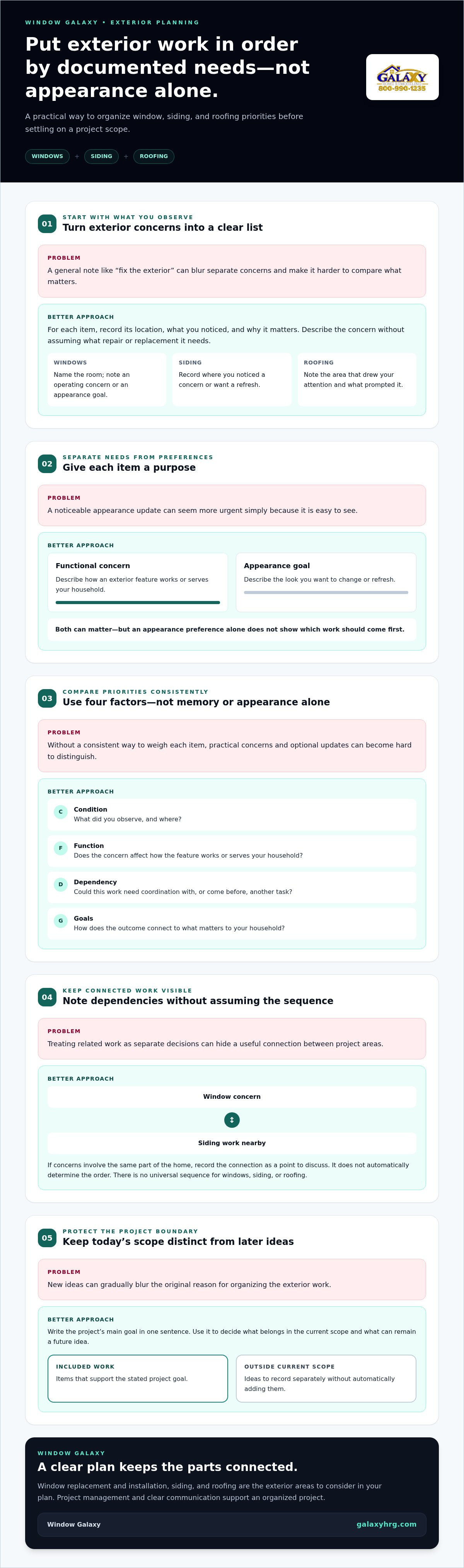
To begin figuring out how to budget for a home exterior remodel, make an observation list before deciding what work to include. For each item, note the location, what you’ve noticed, and why it matters to you. Describe the concern without assuming what repair or replacement it requires. This record gives you a clear starting point to discuss and refine as the project develops.
How do you list exterior remodel priorities?
Group observations by project area, and include enough detail to distinguish one concern from another. For example, identify the room for a window issue or the side of the home where you noticed a siding concern. A practical list might include:
- Windows: Identify the room and describe the issue, such as a window that’s difficult to operate, or note an appearance update you’d like to make.
- Siding: Record where you see a concern or where you want to refresh the home’s exterior look.
- Roofing: Note the area that drew your attention and what prompted you to include it in your plan.
Then label each item by purpose. Functional concerns relate to how an exterior feature works; appearance goals describe the look you want. An appearance preference is worth recording, but it doesn’t by itself show which work should come first. Keeping these categories separate makes it easier to compare priorities later.
How can you set a realistic remodel boundary?
Write the project’s main goal in one sentence before adding secondary improvements. It might focus on addressing a window concern, coordinating siding work with a broader exterior refresh, or organizing several observations into a clear plan. Use that goal to decide what belongs in the current scope and what should stay on a separate future-ideas list.
Record decisions under two headings: included work and ideas outside the current scope. When another improvement comes to mind, write it down without automatically adding it. That way, you can consider new preferences without losing sight of the original purpose. For window-specific planning, the ultimate guide to window replacement covers considerations related to that part of the project.
For a broader overview of renovation phases and process of renovations, consider how planning connects to the work that follows. A written scope keeps your decisions visible. Window Galaxy’s window replacement and installation, siding, and roofing services relate to the areas you may identify, while project management and clear customer communication support an organized exterior project.
How to Prioritize Home Exterior Remodel Work Before Setting Your Budget
Once you’ve listed the work you may want to include, decide what deserves attention first. A neat-looking exterior doesn’t necessarily tell the whole story. A cosmetic update may be easy to spot, while a concern affecting a window’s everyday function or the home’s weather protection may carry more practical weight. Rank possibilities using consistent criteria rather than appearance alone.
Project order should follow documented needs and dependencies, not appearance alone. Consider each item’s condition, function, relationship to other work, and connection to your household goals. Write a short note for each factor instead of relying on memory. You don’t need to rank every item immediately; the notes help distinguish choices prompted by current needs from those driven mainly by preference.
Which exterior improvements should homeowners consider first?
Start with documented concerns that may affect weather protection or everyday function. Then consider whether one task influences another, such as whether work in one area needs to happen before a related improvement. There’s no universal order for windows, siding, or roofing. The home’s condition, connected work, and your goals all shape the sequence.
- Condition: Record what you’ve observed and where, rather than ranking an item only by how noticeable it is.
- Function: Note whether the concern affects how an exterior feature works or serves your household.
- Dependency: Identify work that may need to be coordinated with or completed before another task.
- Goals: Keep the outcomes that matter to your household in view as you weigh practical needs.
For example, if a window concern and a siding update involve the same part of the home, record that connection before treating them as unrelated decisions. It doesn’t automatically determine the sequence, but it gives you a specific point to discuss while organizing the plan.
How can you compare essential work with optional upgrades?
Describe the purpose of each proposed improvement before deciding its priority. A functional concern and a preferred exterior refresh can both matter, but they may not serve the same immediate goal. Keep appearance choices on the list without labeling them urgent by default. If window design choices are influencing your plans, the complete guide to custom windows can help you consider that part of the project.
Next, separate linked tasks from work that can be planned independently. Mark each item “connected” or “standalone,” then explain the relationship in a short note. This helps keep dependent tasks visible without bundling unrelated upgrades together without a clear reason. Revisit your notes as priorities become clearer. How to budget for a home exterior remodel starts with understanding what each task should accomplish and how the pieces relate.
Window Galaxy’s window, siding, and roofing services address the exterior areas you’ve prioritized. Its emphasis on project management and clear communication can support an organized plan. The Window Galaxy exterior remodeling website provides information about these services.
How to Compare Exterior Remodel Plans Without Losing Sight of Your Goals
Once your priorities are clear, compare possible plans by what each is intended to accomplish, not simply by how many improvements it includes. Look at the work covered, the desired outcome, the order of related tasks, and how questions or changes will be communicated. This keeps the plan connected to your original goals as details are refined.
A useful comparison shows whether the proposed work addresses the needs you identified and makes unresolved decisions easy to see. If two versions of your plan differ, record what changed and why. That history can help you tell whether a revision supports the main goal or adds work that can be considered separately.
What should an exterior remodel plan make clear?
A plan should identify the parts of the home involved and the intended outcome for each. It should distinguish decisions already made from open questions, such as the final scope of a project area or a design preference. Clear communication helps you understand what’s settled, what remains undecided, and how the work relates to the plan.
Use this comparison table to keep the key details together:
| Project area | Goal | Included work | Open decisions |
|---|---|---|---|
| Windows | Address a window-related need | Write the work included in the plan | Record any unresolved choices |
| Siding | Improve or address a siding concern | Describe the planned scope | Note details still to decide |
| Roofing | Address a roofing priority | Summarize the work included | List questions to resolve |
Adapt the rows to your home. Remove areas that aren’t part of the project, and add a note about sequence or communication expectations where useful. The aim is a reference you can use to review the scope, not a more complicated document.
How do windows, siding, and roofing fit into one plan?
Treat each area as its own scope item, even when you’re considering more than one at a time. This makes it easier to see which goals relate to windows, siding, or roofing, and whether one planned task may depend on another. A possible connection is a question to explore, not proof that every project needs to combine these areas.
- Windows: State the goal and capture any decisions that remain open.
- Siding: Describe the intended outcome without assuming a particular material or specification.
- Roofing: Record the planned work and note any sequence questions.
For homeowners learning how to budget for a home exterior remodel, this approach keeps comparisons centered on project goals and scope rather than assumptions. Window Galaxy’s window, siding, and roofing services relate to these distinct planning areas. Its emphasis on project management and customer communication supports an organized discussion of how they fit together.
How to Keep a Home Exterior Remodel Budget Plan on Track
A useful plan needs a simple way to capture decisions as they happen. A written record keeps the original goals visible, makes open questions easier to follow, and helps prevent a new preference from quietly changing the project scope. Keep one shared document or notebook for notes about windows, siding, roofing, and related decisions.
Set communication checkpoints with the people involved in planning the work. At each check-in, review what’s been decided, what remains open, and whether the current scope still supports the project’s main goal. Keep questions together and add the answer when each is resolved. This makes progress easier to follow and reduces the chance of losing details across separate conversations.
What planning records help prevent scope confusion?
Maintain a short project summary that lists each area, its goal, and the work agreed for it. Put open questions in a separate section, then record the answer and date when each is resolved. Use the same document for meeting notes and scope updates. Consistent records give everyone a shared reference and make progress easier to review without relying on memory.
- Project summary: Keep the current scope and goals in one easy-to-find place.
- Decision log: Record the choice made, what it applies to, and when it was agreed.
- Open-question list: Track each unresolved item and update it once there’s an answer.
- Check-in notes: Capture progress, questions raised, and any follow-up decisions.
How can homeowners manage changes during planning?
Preferences can shift as plans develop. Before adding or changing work, revisit the original goals and consider whether the proposed update supports them. Record the change separately from the initial plan, including the project area it affects, how it changes the intended outcome, and whether it creates another decision to resolve. This preserves the original purpose while leaving room for considered adjustments.
For example, if a window design preference changes, keep a record of both the initial goal and the new preference. Review whether the updated choice affects other parts of the scope or creates a related decision. Label its status as proposed, discussed, or agreed. Don’t treat a proposed change as part of the plan until the decision is documented.
Use this sequence at each planning checkpoint:
- Review the current scope against the project’s original goals.
- Record decisions made and mark unresolved questions.
- Log proposed changes separately, including their effect on scope and outcome.
- Confirm the updated plan and review completed work against the agreed scope.
This tracking habit makes how to budget for a home exterior remodel more manageable by keeping decisions and scope changes visible. Window Galaxy emphasizes project management and clear customer communication for exterior work involving windows, siding, and roofing. Its website describes the exterior services that can relate to your plan.
How Window Galaxy Helps Homeowners Plan an Exterior Remodel
A well-organized exterior project begins with your goals. You’ve identified concerns, considered priorities, and outlined what belongs in the project. Bring those notes into a conversation with Window Galaxy to give the planning discussion a clear starting point, whether you’re considering windows, siding, roofing, or several areas together.
Window Galaxy provides window replacement and installation, siding, and roofing. Its focus on project management and customer communication helps keep the project areas connected to your intended outcomes. Clear dialogue gives you a place to raise questions, review decisions, and explain what matters most to your household. The aim is a plan you can understand, not an assumption that every possible improvement belongs in one project.
How can Window Galaxy support a clearly planned project?
Describe what you’ve observed, which exterior areas matter most, and what you want the work to accomplish. If windows and siding both appear on your list, explain whether they’re related priorities or separate goals. Sharing that context keeps the discussion centered on your home and the scope you’re considering. Window Galaxy’s project management and customer communication support an organized discussion of the relevant work.
As you learn how to budget for a home exterior remodel, remember that you don’t need a perfect plan before discussing the project. It helps to know which needs are central, what decisions remain open, and which preferences you may revisit later. Window Galaxy can discuss your exterior goals in the context of its window, siding, and roofing services, with communication focused on the areas you’ve identified.
What should homeowners prepare before discussing their project?
Bring a concise written list. For each concern, note where it appears, why it matters to you, and whether it’s a priority or a desired improvement. Mark the areas included in your current scope, such as windows, siding, or roofing, and separate ideas you’re not ready to include. For window-specific preparation, the guide to choosing a window replacement company covers related considerations.
A short preparation list keeps the conversation focused and makes it easier to explain your home’s needs. Consider bringing:
- Your observations: Write down the exterior concerns and where you noticed them.
- Your priorities: Identify the outcomes that matter most to you.
- Your scope: Mark which areas are part of this project and which ideas remain separate.
- Your questions: Keep open decisions together so they can be discussed clearly.
You don’t need to settle every detail beforehand. Bring your priority list and project scope to a focused conversation with Window Galaxy about the exterior work you’re considering. Clear goals make it easier to discuss the project’s next steps.
Take the Next Step Toward a Clear Exterior Plan
Your exterior plan doesn’t need to answer every question before you move forward. Treat it as a working guide: keep your goals clear, record decisions as they’re made, and adjust the scope thoughtfully when new information comes up. This approach can make how to budget for a home exterior remodel feel more manageable because each step has a purpose.
Bring your priorities and questions into a conversation with Window Galaxy. A focused discussion can connect your plans with the exterior work you’re considering and help clarify a path forward. You can start with one area of the home or explain how several priorities relate. Begin with what matters most to you.
Discuss your home exterior remodeling goals with Window Galaxy and take the next step with a plan shaped around your home.
Frequently Asked Questions
What should I include in a home exterior remodel budget plan?
List each project area, the outcome you want, and the work you currently expect to include. Add a separate space for open choices, such as a design decision you haven’t made or a project detail that still needs discussion. Note what prompted each item, such as a particular concern or household preference. This context will help you review the plan if it changes, without assuming every home needs the same work.
How do I decide which exterior remodeling project to do first?
Start by identifying what each improvement is meant to address, then consider whether completing one task affects another. If two items involve the same part of the home, record their connection and make it a specific question to resolve during planning. Avoid applying a fixed order to windows, siding, or roofing. Base your priorities on observed needs and the goals you want the project to meet.
Can I plan windows, siding, and roofing as one exterior remodel?
Yes. You can consider multiple areas under one overall project plan while keeping each area’s purpose clear. A shared plan can help you notice where tasks may relate, but it doesn’t mean every area needs work or must be completed together. For instance, list windows and roofing as separate scope items, then note whether their planned work affects sequencing. Keep independent improvements distinct.
What is a contingency in a home remodeling budget?
A contingency is an allowance set aside in your plan for uncertainties that may become clearer as the project develops. Keep it separate from the agreed scope, and don’t treat it as approval for additional work. The appropriate allowance depends on the home and project details. Record uncertainties and discuss how changes will be documented before deciding how they affect the plan.
How can I avoid scope creep during an exterior remodel?
Use a written change record whenever a new idea or adjustment comes up. Note what prompted it, which project area it affects, and whether it changes the intended result or the work under consideration. Compare it with the original goal before treating it as part of the plan. Keeping proposed changes distinct from agreed decisions helps you consider new ideas without losing track of what you set out to accomplish.
Should I remodel my home's exterior all at once or in phases?
Consider how the project areas relate and whether separate improvements can stand on their own. A combined plan can make connections between tasks easier to discuss; separate phases can keep independent goals distinct. Write down what each approach would include and any sequencing questions it raises. Then choose the plan that gives you the clearest understanding of the work and keeps your main priorities in view.
What information should I prepare before discussing an exterior remodel with Window Galaxy?
Bring brief notes describing what you’ve noticed, what you hope to change, and which parts of the home you’re considering. If useful, label photos with the location and concern they show so each observation is easy to discuss. Mark decisions you’ve made separately from questions you still have. This preparation gives your conversation with Window Galaxy a practical starting point and keeps it centered on your goals.


