

What if protecting a sunlit sofa didn’t mean giving up the daylight you love? Choosing UV protection windows for furniture fading starts with understanding that UV rays matter, but visible light and heat can also contribute to fading and discoloration. The challenge is figuring out whether window film, interior coverings, or replacement glazing best fits the room and your priorities.
This guide explains how sunlight affects furnishings and how window choices can influence the light and heat entering your home. Compare options by considering how much natural light you want to preserve, what you’ve noticed about your furnishings, and whether a broader window upgrade fits your plans. No window choice should be treated as a guarantee against fading. For homeowners considering replacement, Galaxy Home Remodeling professionally installs energy-efficient Galaxy vinyl windows. The company’s project management, hands-on quality control, and ongoing communication help keep the installation process organized.
Key Takeaways
- Look for patterns in color or finish changes to identify which furnishings may need more attention.
- Understand how UV and visible light affect interiors, and why glazing is one part of the sunlight path into a room.
- Compare options for UV protection windows for furniture fading against your daylight preferences and the scope of the work.
- Use a practical checklist to consider affected items, room orientation, and furniture placement.
- Learn how Galaxy Home Remodeling’s project management, hands-on quality control, and communication support a window replacement project.
Why Sunlight Fades Furniture Near Windows
A bright window can make a room feel inviting, but the same daylight may gradually change nearby furnishings. The U.S. National Park Service’s guidance on caring for museum collections identifies light exposure as a cause of damage to objects. In practical terms, fading is a gradual change in an object’s color or finish after repeated exposure to light. Sunlight can contribute to that change, though it isn’t the only possible cause.
Changes may appear as uneven color: a rug looks different where a table once stood, a sofa’s exposed side seems lighter, or artwork changes while the area shielded by a frame remains closer to its original appearance. These clues can help you spot a pattern, but they don’t establish the cause by themselves.
Which furnishings may show sunlight-related changes?
Upholstery, rugs, wood finishes, artwork, and displayed fabrics can all change after extended light exposure. Materials and dyes respond differently, so items in the same room may not change at the same rate or in the same way. Fabric color may shift, while a wood finish can look different across an exposed surface.
Room layout matters, too. Items near a bright window may receive more direct exposure than furnishings across the room. A rug partly covered by furniture, or fabric protected by a cushion or folded edge, can develop a visible contrast between exposed and shaded areas. Rotating or rearranging items may reveal these differences, but it won’t identify a single cause.
Does fading happen only because of UV rays?
No. Ultraviolet (UV) radiation is relevant to material changes, but it isn’t the only part of sunlight to consider. Visible light, the portion people can see, can also affect light-sensitive materials over time. The types of ultraviolet radiation and how they interact with materials are introduced in Understanding Ultraviolet Radiation.
That distinction matters when you’re considering UV protection windows for furniture fading. Reducing UV exposure may address one part of the concern, but it doesn’t guarantee that furnishings won’t fade. The result can depend on the material, its dyes or finish, the amount and pattern of light exposure, and other conditions in the room. A change in color may also have causes unrelated to sunlight, so don’t treat every faded spot as proof of UV damage.
Start by noting where changes appear and how they relate to the window, rather than assuming one factor explains everything. This gives you a clearer basis for weighing sunlight exposure alongside your broader goals for the room, including how much natural light you want to keep.
How UV, Visible Light, and Window Glass Affect Interior Exposure
Sunlight reaching furnishings has more than one component. Ultraviolet (UV) radiation is invisible energy from the sun. Visible light is the part the eye can see. Sunlight can also carry energy that contributes to indoor heat. These effects are related, but they aren’t interchangeable: glare describes visual discomfort from brightness or contrast, while heat describes a change in temperature.
Window glazing, meaning the glass or glass assembly in a window, is part of the route sunlight takes into a room. Depending on its construction, glazing can transmit, reflect, or absorb different portions of incoming light and energy. So a broad statement such as “UV protection” doesn’t tell you everything about daylight, heat, or how the window will look from inside. The details matter.
What does UV protection mean for a window?
UV protection generally means reducing some UV exposure passing through the window, not eliminating every possible contributor to fading. Materials can respond to both UV and visible light, and their sensitivity varies. A UV-focused claim therefore can’t guarantee zero fading, since other light exposure and material-specific factors may still affect furnishings.
Look for information about the specific glazing being considered rather than assuming every window described as protective performs the same way. The American Institute for Conservation’s discussion of Evaluating UV-Filtering Window Films offers useful context on assessing UV-filtering approaches. When comparing replacement windows, product-specific performance details help clarify what a particular option is designed to do. Galaxy Home Remodeling offers energy-efficient Galaxy vinyl and Andersen® windows. Consider the glazing information for the selected window alongside your priorities for the room.
Why natural daylight and fading protection are different questions
Reducing selected wavelengths and preserving a preferred level of daylight are separate goals. A room may receive plenty of visible light even when some UV is reduced, but protective window options can differ in appearance and brightness. Tint, reflectivity, and glazing design can affect how a window looks and how the room feels, depending on the specific product.
Think about the room at different times of day. Does it feel comfortably bright, or does direct sun create glare on a screen? Is your priority protecting sensitive furnishings, managing indoor warmth, maintaining an open view, or balancing all three? These questions help clarify which performance details matter. A UV-focused claim alone, for example, won’t tell you how much daylight passes through or whether glare is reduced.
If replacement is part of your plans, consider Galaxy window replacement options alongside the room’s natural light and overall needs. Keeping your priorities distinct makes it easier to discuss glazing without treating any one feature as a complete solution to every sunlight concern.
Window Film, Interior Coverings, or Replacement Windows: How to Compare
These options work in different ways. Film is added to existing glass, interior coverings can be adjusted to manage incoming light, and replacement windows involve a broader change to the window itself. The right fit depends on what you want to address, how much daylight you want in the room, and whether the existing window is part of a larger home improvement decision. None should be treated as a promise that furnishings won’t fade.
| Option | Purpose | Daylight considerations | Scope | Question it helps answer |
|---|---|---|---|---|
| Window film | An add-on applied to existing glass for a selected glass-related goal. | Appearance and light transmission depend on the specific film. | Works with the existing window. | Is an add-on to this glass a suitable direction? |
| Interior coverings | Adjust direct light within the room. | Opening, closing, or adjusting them changes the light entering the space. | Focuses on the room’s interior. | Would adjustable shade help manage exposure at certain times? |
| Replacement windows | Addresses the window as part of a broader home project. | Consider daylight and the room’s overall goals when evaluating options. | Involves replacing the window. | Does the window itself belong in a larger improvement plan? |
When do film or interior coverings fit the decision?
Film may suit a homeowner considering an add-on to existing glazing for a particular glass-related goal. Its suitability depends on the specific product and window, so don’t assume all films look or perform alike. Interior coverings offer a different kind of control: you can adjust them to manage direct light as you use the room, while also changing how much daylight enters.
Think about your daily routine. If sunlight falls on furnishings at a particular time, adjustable coverings may help you manage that exposure when needed. If you’re considering film, focus on information about the specific film and how it relates to your existing glass. These approaches are distinct from a window replacement project.
When should homeowners consider replacement windows?
Consider replacement when the window’s condition or your wider home goals make a window project sensible, not simply as a guaranteed response to fading. Think about whether you’re addressing one room or planning a broader update, and how you want the space to feel in terms of natural light. Weigh the window’s role alongside the furnishings rather than expecting one change to solve every concern.
Galaxy Home Remodeling professionally installs energy-efficient Galaxy vinyl and Andersen® windows. Galaxy window replacement can be part of a considered discussion about the project and your home’s wider needs.
When comparing UV protection windows for furniture fading, separate the options: Do you want adjustable interior coverings, an add-on to existing glass, or a full window replacement? Matching the scope to your priorities helps keep the decision practical and clear.
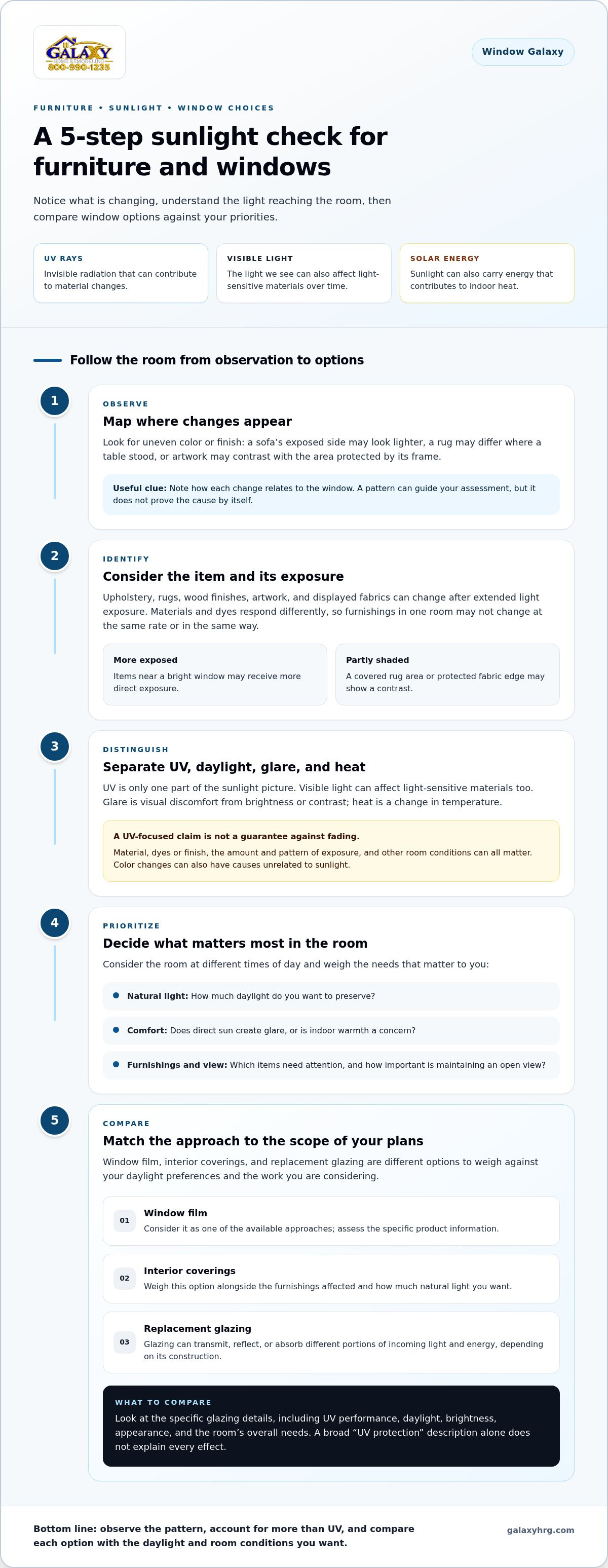
A Practical Checklist for Choosing Windows With Furniture in Mind
A room-by-room review can turn a broad concern about UV protection windows for furniture fading into a clearer window decision. Keep furniture preservation in view, but consider it alongside daylight, appearance, window condition, and the scope of work you want to take on.
- Identify affected items. Note which furnishings show color or finish changes, which areas look different, and how close each item sits to a window. Record whether the change appears on a surface facing the glass or in a spot that’s usually shaded. This gives you a useful starting point without assuming sunlight is the only cause.
- Assess the light exposure. Consider the room’s orientation and observe when direct sunlight enters. Notice whether exposure shifts during the day and whether nearby furniture can be repositioned. A simple room sketch can show which windows and furnishings are involved, especially if different rooms have different light patterns.
- Define your priorities. Decide how you want the room to balance daylight, privacy, an open view, and furniture preservation. Note whether the window’s condition or operation is also a concern. Separating these goals makes it easier to see what matters most and which tradeoffs you’re comfortable with.
- Compare options and project scope. Consider whether adjustable interior coverings, an addition to existing glass, or replacement windows best fit your priorities. For a replacement project, assess the windows as part of the home’s wider needs, not as a guaranteed way to prevent fading.
What should you assess in each room?
Make a short room record: list affected furnishings, their position relative to the window, and when direct light reaches them. Note whether rearranging a chair, rug, or display is practical. Include your preferences for daylight, privacy, and keeping the view as it is. These details turn general concerns into specific priorities.
What window details belong in your comparison?
Use documented glazing information when available, and don’t infer performance from a window’s appearance. Glazing means the glass or glass assembly in the window. Consider the window’s condition and operation, along with whether the project involves one opening or a broader replacement. Ask for unfamiliar terms to be explained plainly, and compare documented details rather than relying on unsupported rankings.
Galaxy Home Remodeling offers energy-efficient Galaxy vinyl and Andersen® windows. A clear project conversation can connect those window options with your home’s needs and natural-light preferences, without treating furniture protection as a guaranteed outcome.
Discuss your window project with Galaxy Home Remodeling and bring your room notes and priorities to the conversation.
How Galaxy Home Remodeling Supports a Window Replacement Decision
Choosing replacement windows involves more than selecting a frame. You’re also weighing the condition of your existing windows, how you use each room, and how you want to balance natural light with other home priorities. Galaxy Home Remodeling is a window replacement contractor offering energy-efficient Galaxy vinyl and Andersen® windows. The company is licensed and insured, and its project process includes dedicated project management, hands-on quality control, and ongoing communication.
What can homeowners expect from Galaxy’s window project process?
A dedicated project manager supports communication throughout the project, helping keep the work organized and giving you a consistent point of contact. Galaxy also provides hands-on quality control and ongoing communication from start to finish. This approach keeps attention on the agreed project scope and installation process, so you have support as the work progresses.
Clear communication matters because window replacement is part of your home, not an isolated product decision. Share which rooms concern you, which furnishings you’re trying to protect, and how you want daylight and views to feel after the project. Those priorities can frame a useful discussion about the window project without assuming a replacement will solve every fading concern.
How to take the next step with confidence
Before discussing a project, gather a few practical details: which windows are involved, what you’ve noticed about their condition or operation, and what matters most in the room. You might prioritize preserving an open view, maintaining a bright feel, or considering the window as part of a wider home update. A concise list helps keep the conversation focused on your needs.
Ask for plain-language explanations of the glazing details for the specific window being considered. UV performance and fade prevention depend on product details, so assess the information for that window rather than relying on a general description. Light exposure and material differences still matter, so keep expectations grounded in the documented information available.
Galaxy Home Remodeling brings project management and quality oversight to the replacement process, with communication throughout. That support can make the steps and decisions easier to follow. It also gives you room to discuss the window project as part of your broader goals for the home, rather than treating furniture preservation as the only consideration.
Ready to talk through your priorities? Discuss your window replacement project with Galaxy Home Remodeling and share which rooms, furnishings, and window concerns are shaping your decision.
Make Your Window Decision With Confidence
Protecting a room’s character starts with a clear sense of what matters most: the furnishings you want to preserve, the daylight you enjoy, and the condition of the windows themselves. Keep expectations realistic, too. UV protection windows for furniture fading may help address one part of sunlight exposure, but no window choice should be treated as a guarantee against every cause of fading.
If replacement is part of your home’s next step, Galaxy Home Remodeling can help you discuss window options in the context of your priorities. The company is licensed and insured, and its 4.8-star average from 407 Google reviews reflects customer feedback. Bring your questions and the rooms you’re thinking about to the conversation so the project can start with what matters to you.
Take a practical next step and schedule a free window estimate with Galaxy Home Remodeling. A thoughtful conversation can help you move forward with greater clarity and confidence.
Frequently Asked Questions
Do UV protection windows prevent furniture from fading completely?
No window should be treated as a complete fade-proofing measure. UV protection windows for furniture fading may reduce some exposure when the specific glazing has documented performance, but other light exposure and material sensitivity still matter. Keep vulnerable items out of direct sun when practical, and check them periodically for changes. A window choice can be one part of protecting furnishings, not a guarantee that every color or finish will stay unchanged.
Can window glass block UV rays while still letting natural light in?
Yes, some glazing can reduce selected UV wavelengths while allowing visible daylight through, but light transmission and appearance depend on the specific window. Don’t assume a UV-focused description means a room will look exactly the same. If daylight matters, compare documented visible-light information and consider how the glass looks in the room. A window’s appearance alone can’t establish its UV performance or predict how furnishings will respond over time.
Does window film protect furniture better than curtains or blinds?
Neither option is universally more protective. Film is applied to existing glass, while curtains or blinds can be opened and closed to manage direct light. Their effects depend on the specific products and how coverings are used. For a room where you want daylight at some times and shade at others, adjustable coverings offer flexible control. For a glass-related change, review film documentation and its suitability for the existing window.
Are replacement windows a good option for rooms with sun-faded furniture?
They may be worth considering if the windows need attention or replacement fits a broader home improvement plan. Faded furniture alone doesn’t establish that window replacement is the right choice, and new windows shouldn’t be treated as a guaranteed fix. Consider the window’s condition, the room’s daylight needs, and the project scope. If replacement is already a priority, include the affected room and its furnishings in the decision.
What should I look for in windows to help reduce UV exposure?
Look for product-specific glazing documentation rather than judging by glass color or appearance. The National Fenestration Rating Council (NFRC) label reports ratings such as visible transmittance, which describes visible light passing through, and solar heat gain coefficient, which describes solar heat entering. These ratings help compare light and heat characteristics, but they aren’t a UV-blocking percentage. Read UV claims separately and avoid assuming they guarantee fade prevention.
Can sunlight fade furniture even when it does not feel hot?
Yes. A room can receive bright light without feeling noticeably warm, because perceived heat and light exposure aren’t the same thing. Sunlight may still reach fabrics, finishes, or artwork even when the room feels comfortable. For example, a display near a bright window may receive steady daylight while a shaded part of the room stays cooler. The absence of a warm sensation doesn’t prove furnishings are unaffected by light.
Does Galaxy Home Remodeling install windows in my area?
Galaxy Home Remodeling serves homeowners in Bergen, Burlington, Camden, Hudson, Mercer, Middlesex, Monmouth, Morris, Ocean, Passaic, and Union counties in New Jersey; New York, Orange, Rockland, and Westchester counties in New York; Bucks and Montgomery counties in Pennsylvania; and Delaware. Galaxy Home Remodeling professionally installs energy-efficient Galaxy vinyl and Andersen® windows for residential window replacement projects.


